Melt properties at shallow levels

Class 4 - Conditions for magma reservoir emplacement

Sébastien Biass

Group of physical volcanology and geological risk - 1st floor, office 103

March 9, 2026

Question from last week

Viscosity of silica melts

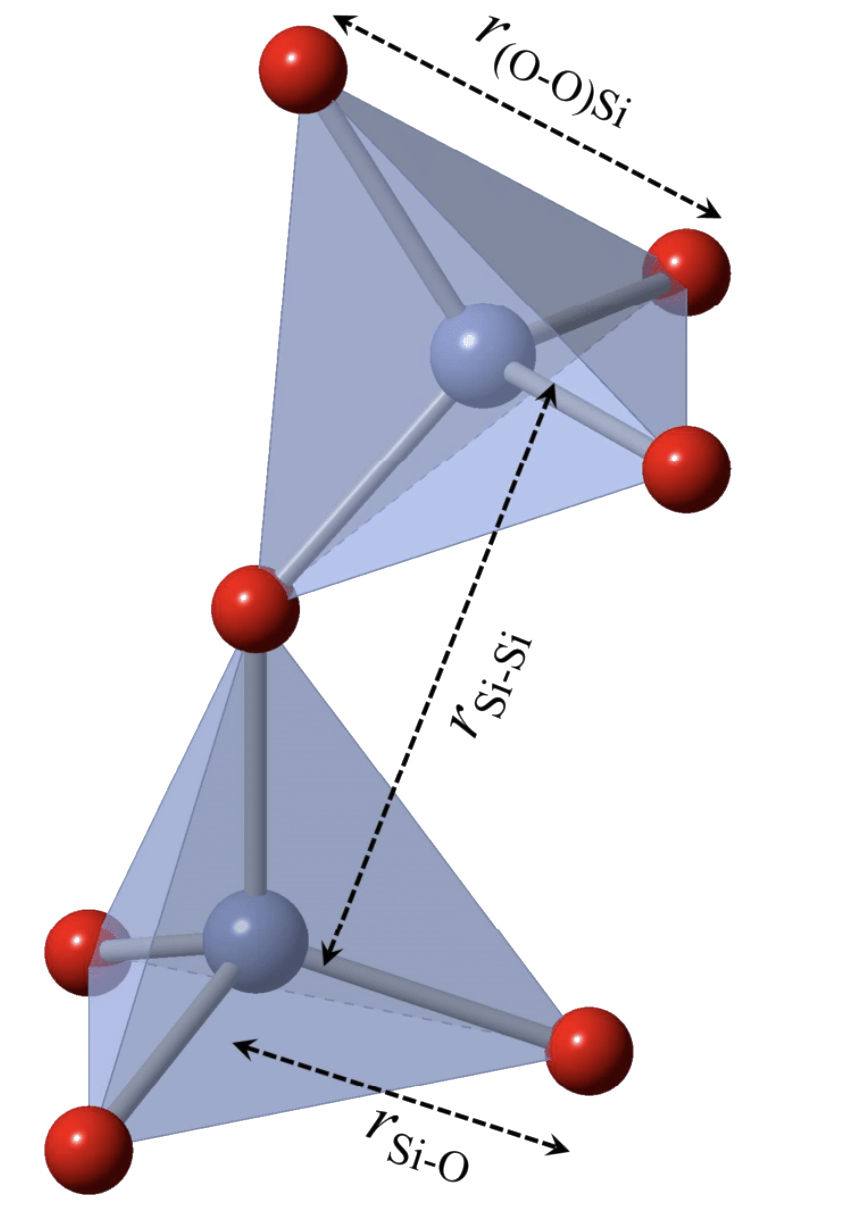
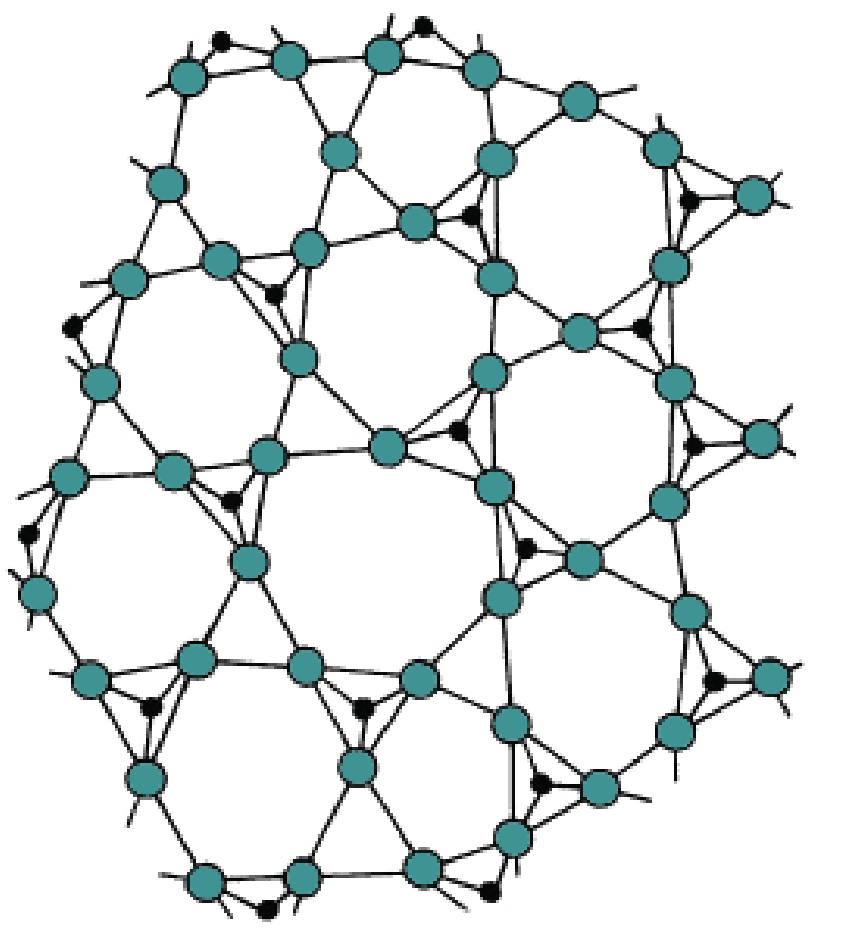
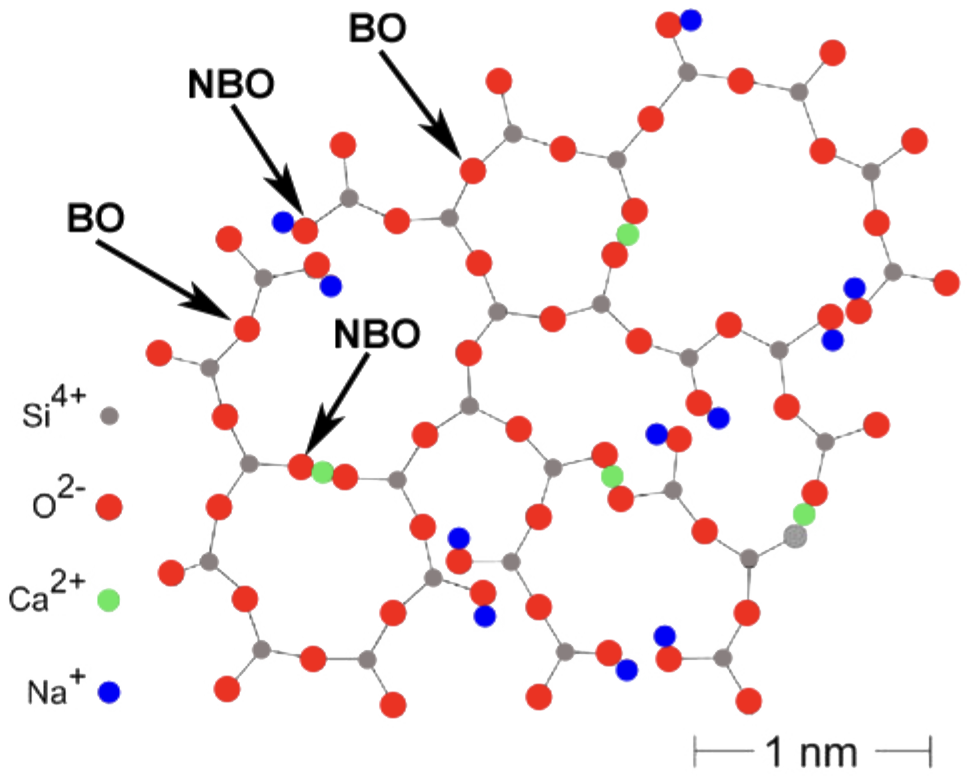
  • Network formers: \(Si^{4+}\), \(Al^{3+}\)
    • Occupy tetrahedral sites and link through bridging oxygens
  • Full polymerisation = high viscosity
  • Network modifiers: \(Na^+\), \(K^+\), \(Ca^{2+}\), \(Mg^{2+}\), \(Fe^{2+}\)
    • Create non-bridging oxygens
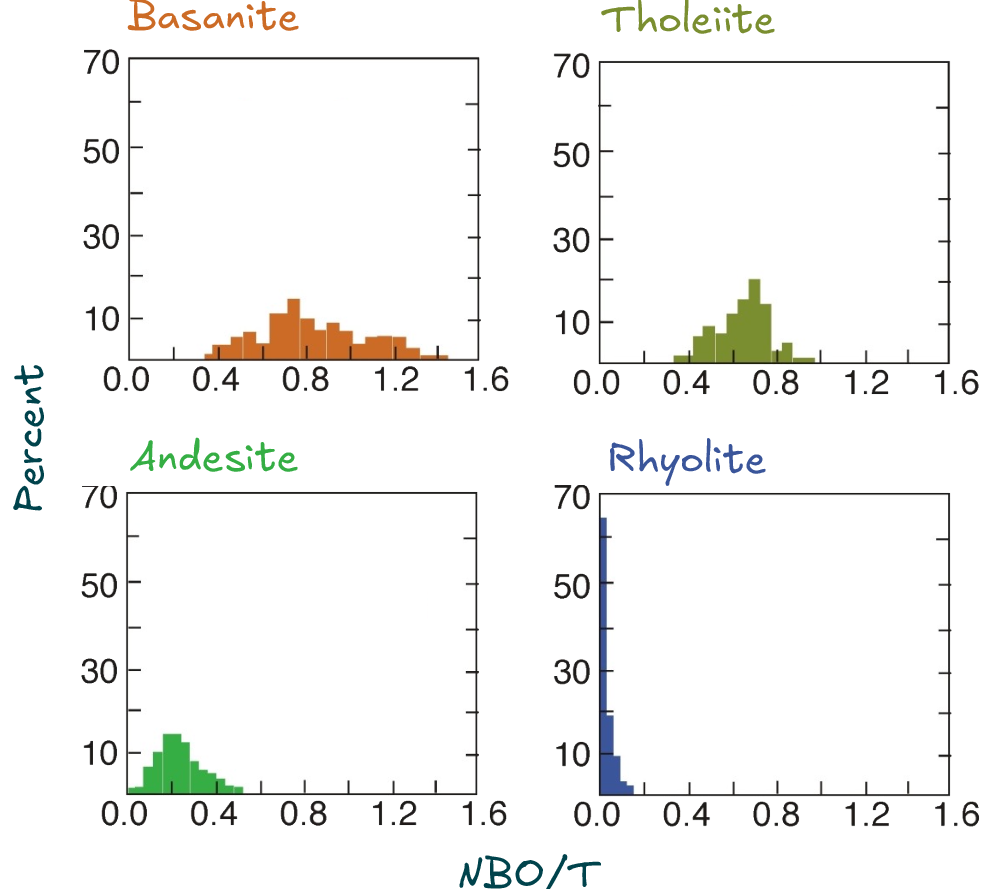
NBO/T Structure Viscosity
0 fully polymerized very high
0.5–1 chains/sheets intermediate
>1 depolymerized low

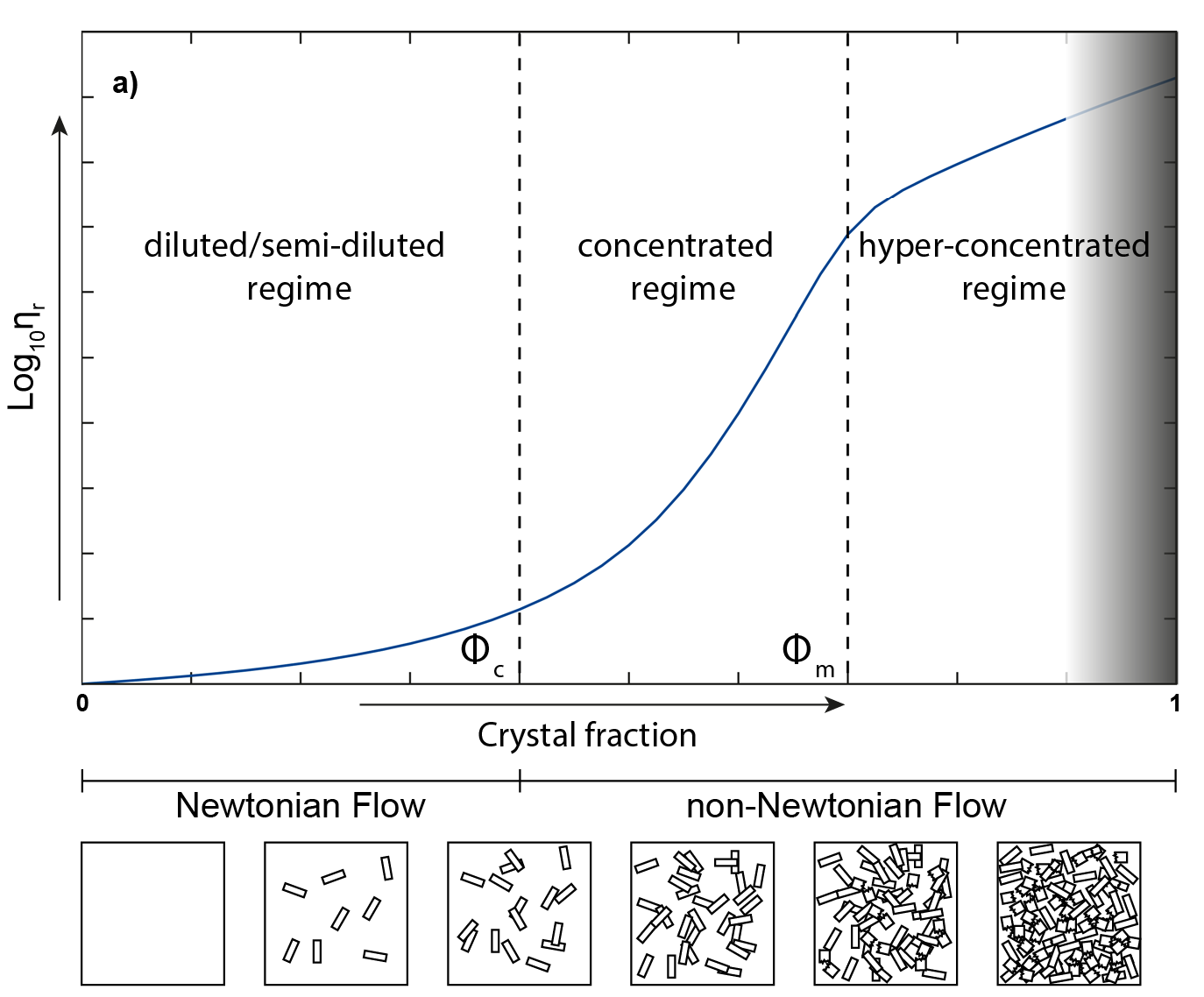
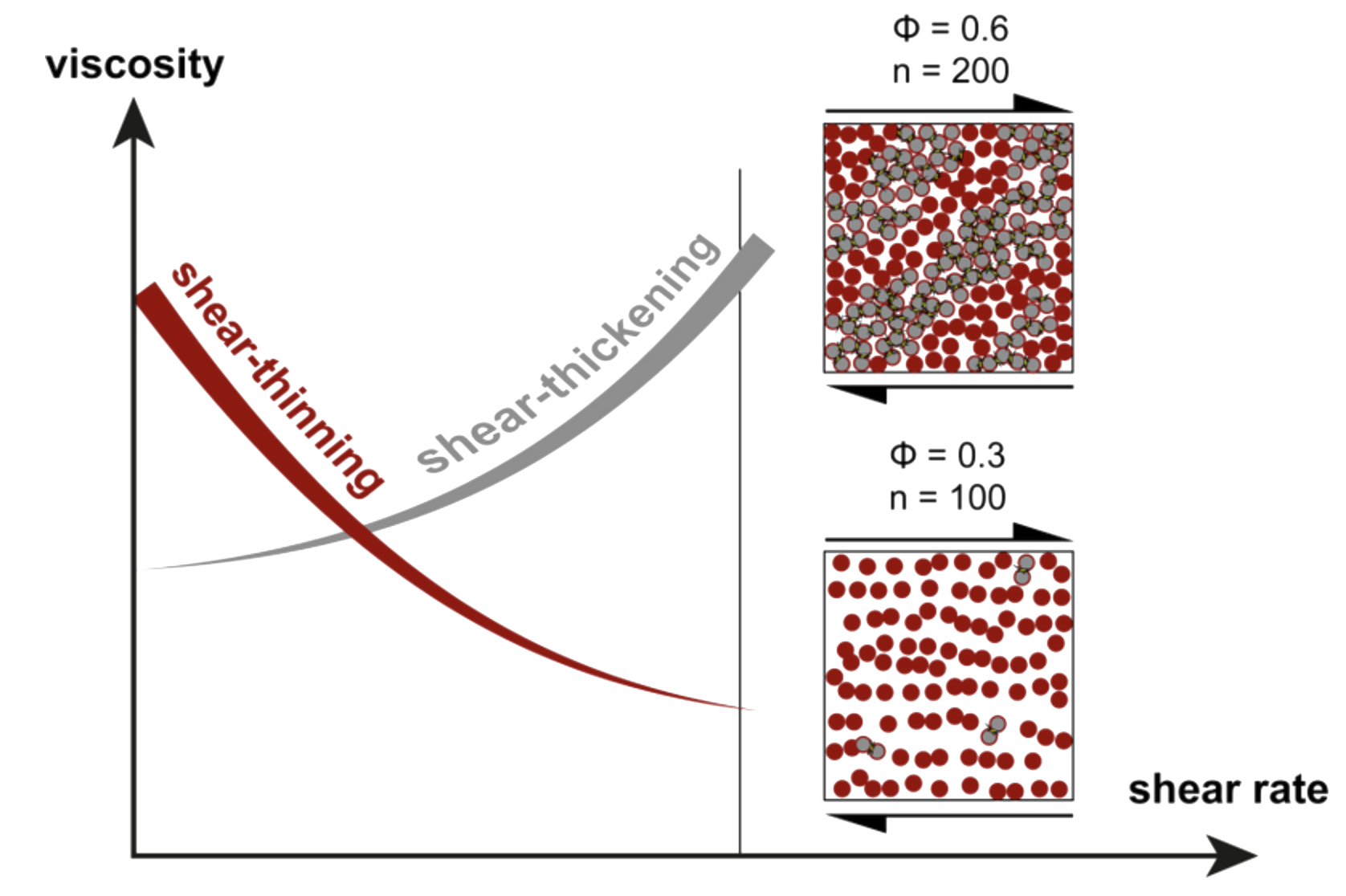
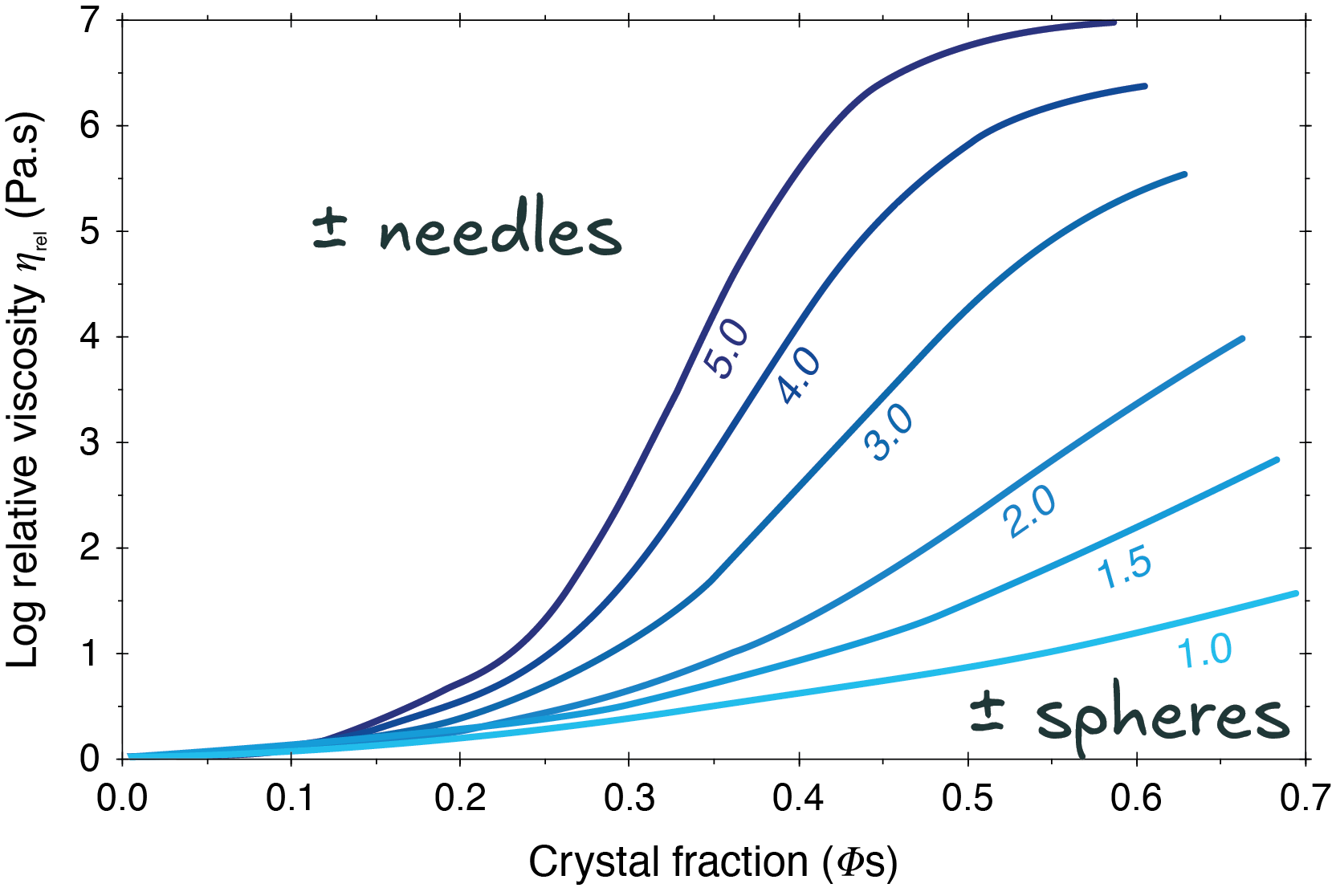
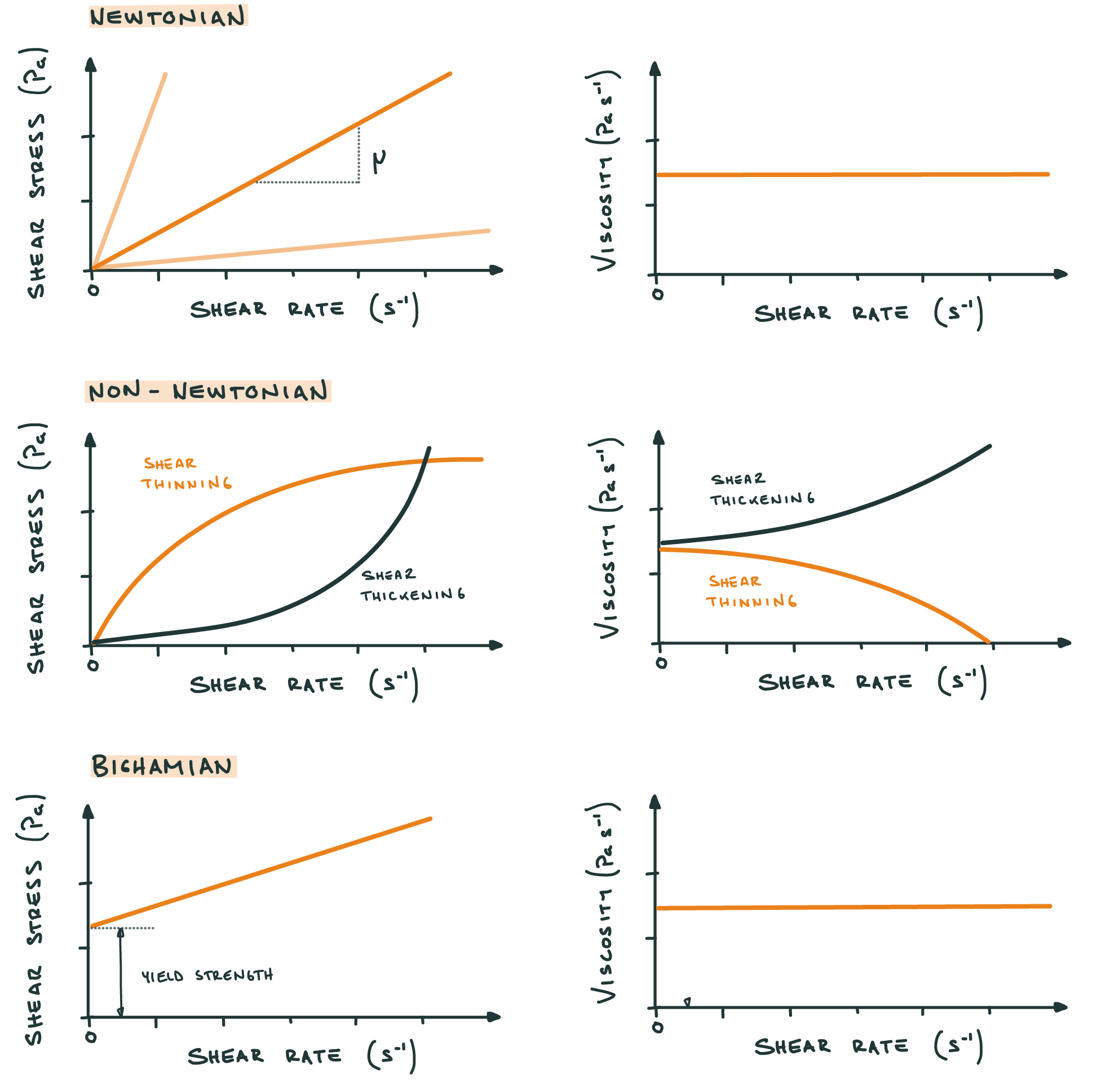
Viscosity behaviour

Frontoni et al. (2022)

Frontoni et al. (2022)

Laumonier et al. (2014)

Laumonier et al. (2014)

💡 Shear rate ≈ Strain rate

Spine back

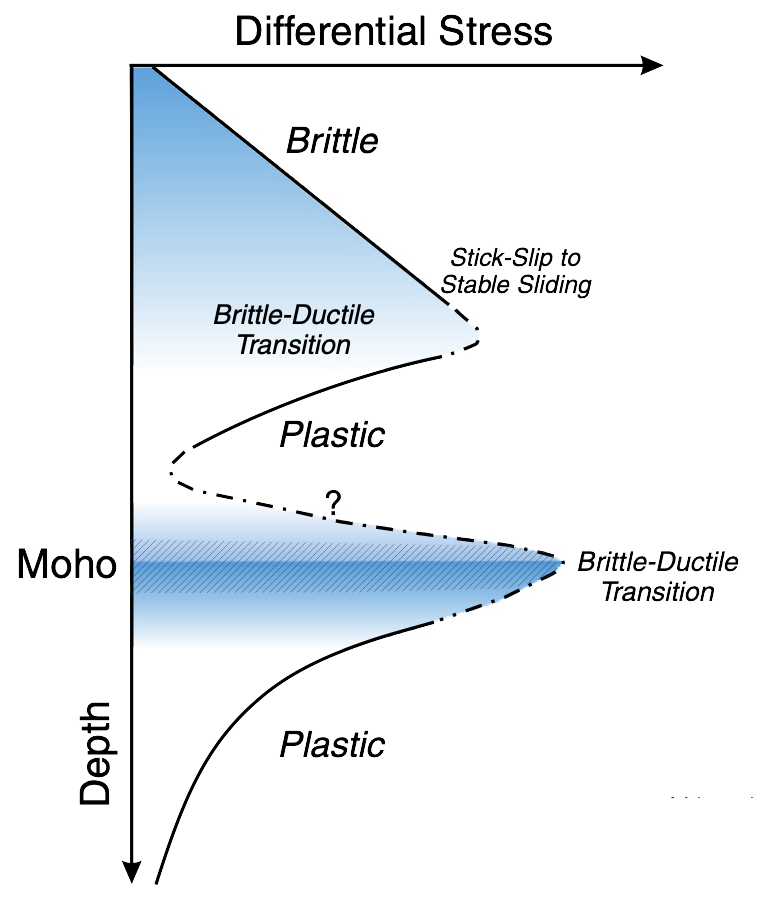
Modes of deformation

Failure mode:

  • Brittle → Fracture
  • Ductile → Distributed deformation

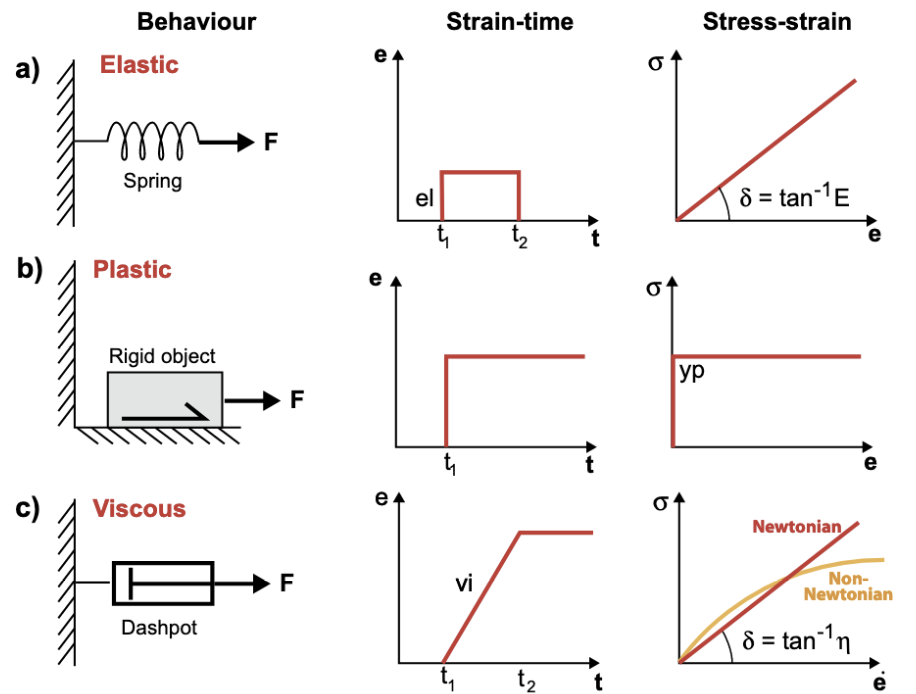
Reversibility:

  • Elastic → Reversible until rupture
  • Plastic → Permanent (i.e., creep)
  • Viscous → Permanent (liquid)

Chen et al. (2012)

Chen et al. (2012)

Rheology

Acocella (2021)

Acocella (2021)
  • \(e\): Elongation
  • \(t\): Time
  • \(\sigma\): Stress

Creep

Vernes

Last week on…

Magma properties and ascent at ± depth

Magma rheology

  • Controls on viscosity and density
  • Contrast between densities of magma + host rock → buoyancy = main driver
    • Felsic melts are more buoyant → tend to rise higher

Magma transport

  • Magma moves through fractures, not cavities → spectrum between
    • Diapirs → ductile host rock, mafic
    • Dikes → brittle host rock, fracturation

Ascent halt

  • Neutral buoyancy or strong horizon
  • If sufficient pressure → lateral sill emplacement

Today’s objectives


Exercise

  • Apply a Mogi model to understand surface deformation caused by an inflating magma reservoir

Reservoir emplacement

Reservoir importance

Today’s focus:

  • Storage region fed from deep plumbing system
    • Focus on max 10 km depth
  • Staging post for magma from source → surface
  • Sufficient cooling → differentiation
  • Controlled by:
    • Supply of magma from depth
    • Eruption frequency

Examples:

  • Hawaii: Constant supply → short residence time + frequent eruptions = constant chemistry
  • Iceland: Intermittent supply → cooling between events = magma evolution
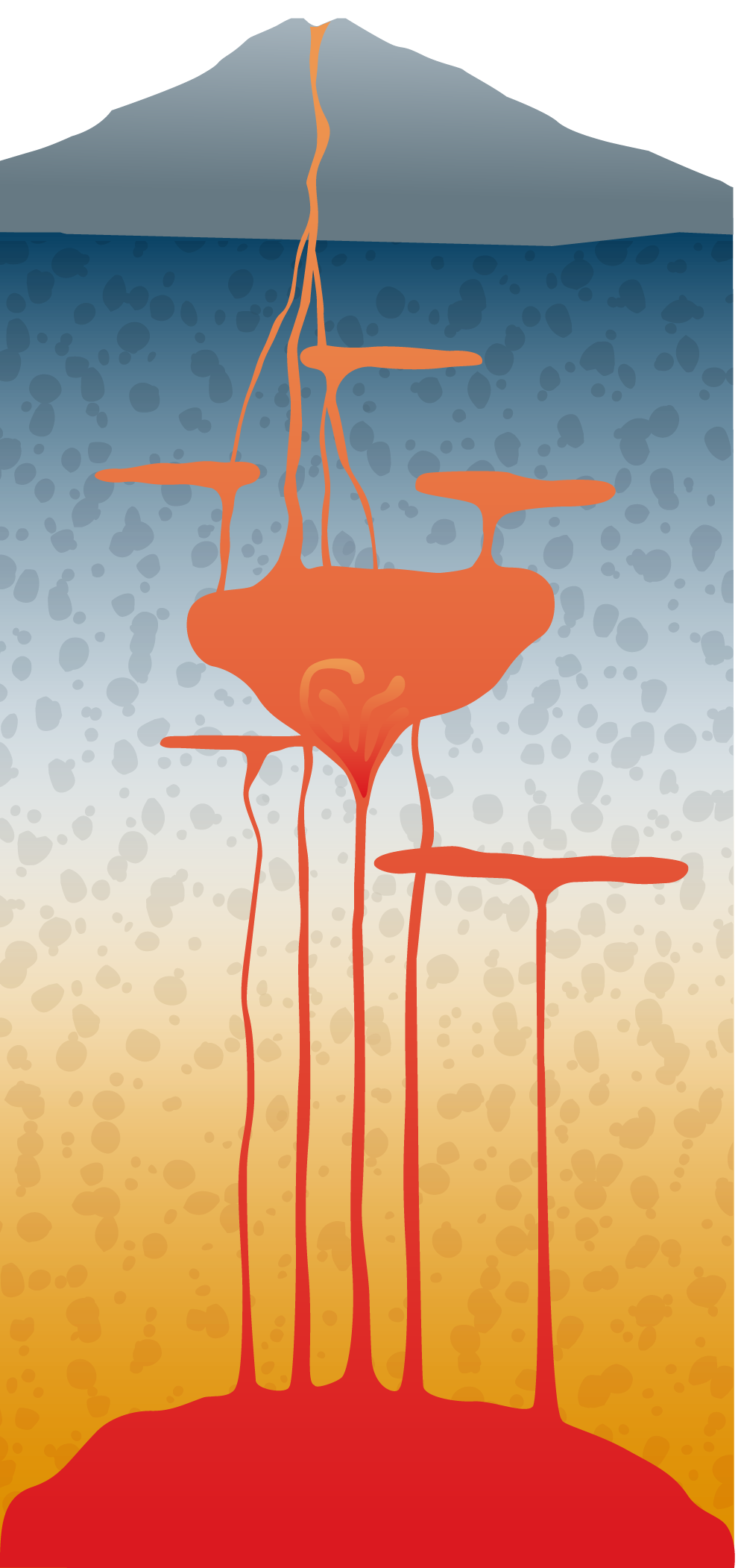
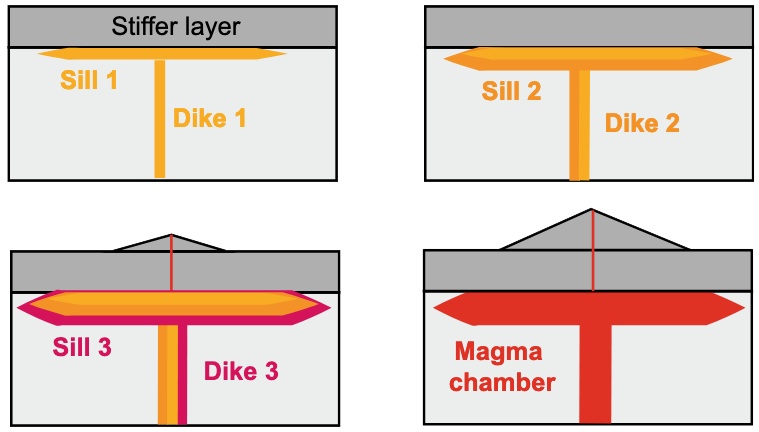
From sill to reservoir

Amalgamation of dike-fed sills

  • What are the conditions required to:
    • initiate a magma “chamber”?
    • keep it stable to grow?
  • Magma flux?
  • Cooling?
  • Space accommodation?

Acocella (2021)

Acocella (2021)

Chamber model

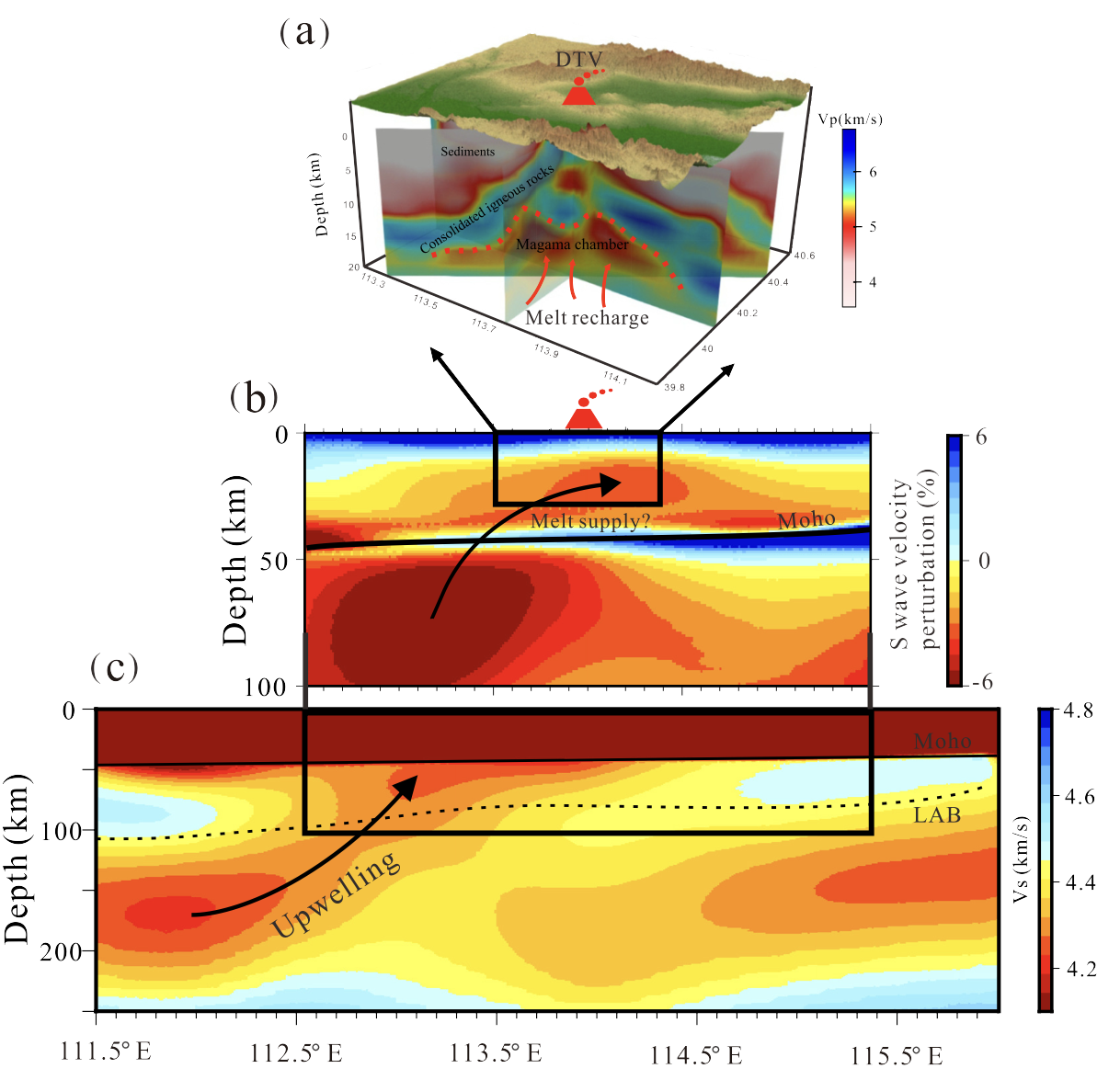
Geophysics and geochronology evidences

Geophysical imaging, Datong VF

He et al. (2021)

He et al. (2021)

Zircon ages, Taupo volcano

Rubin et al. (2016)

Rubin et al. (2016)

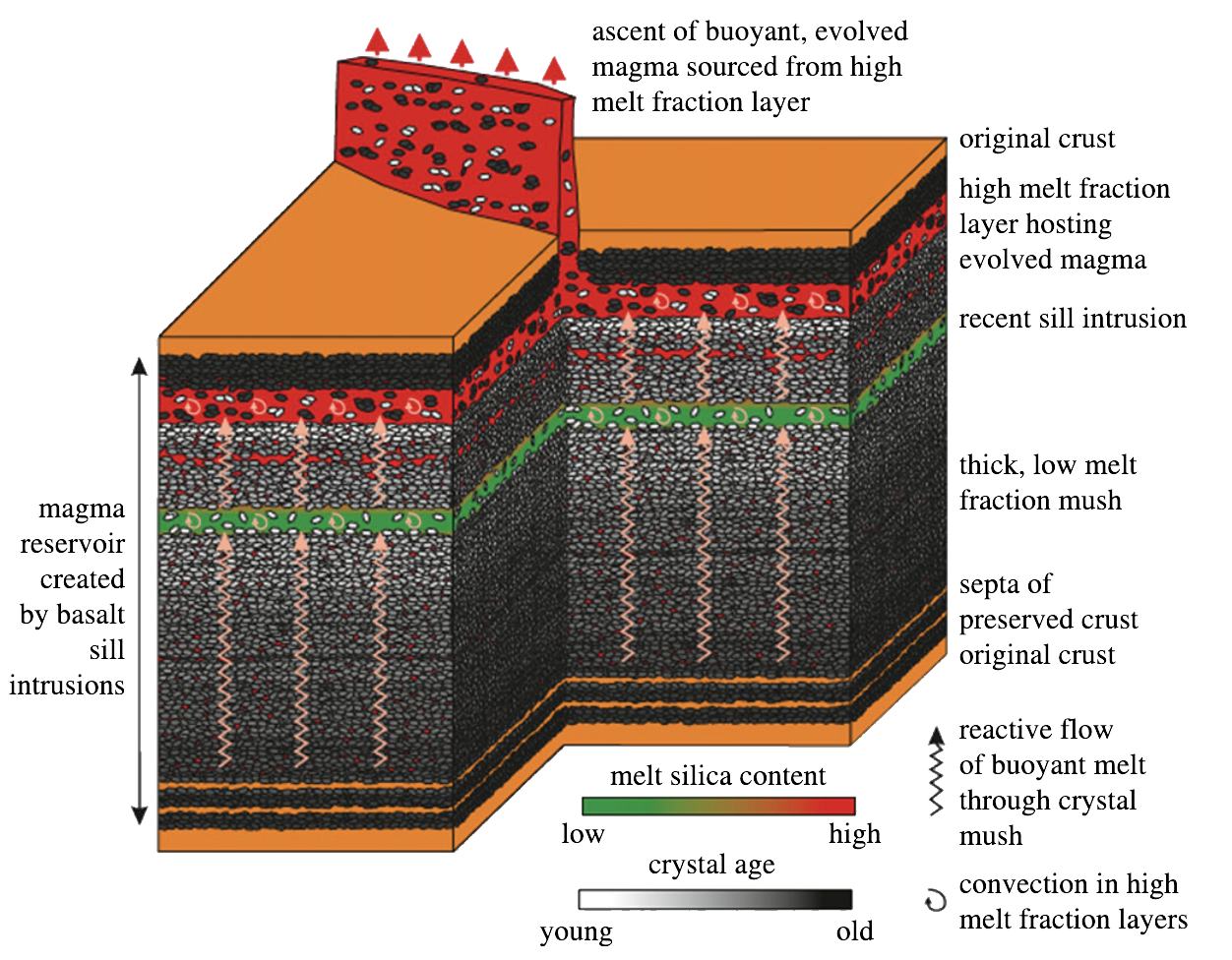
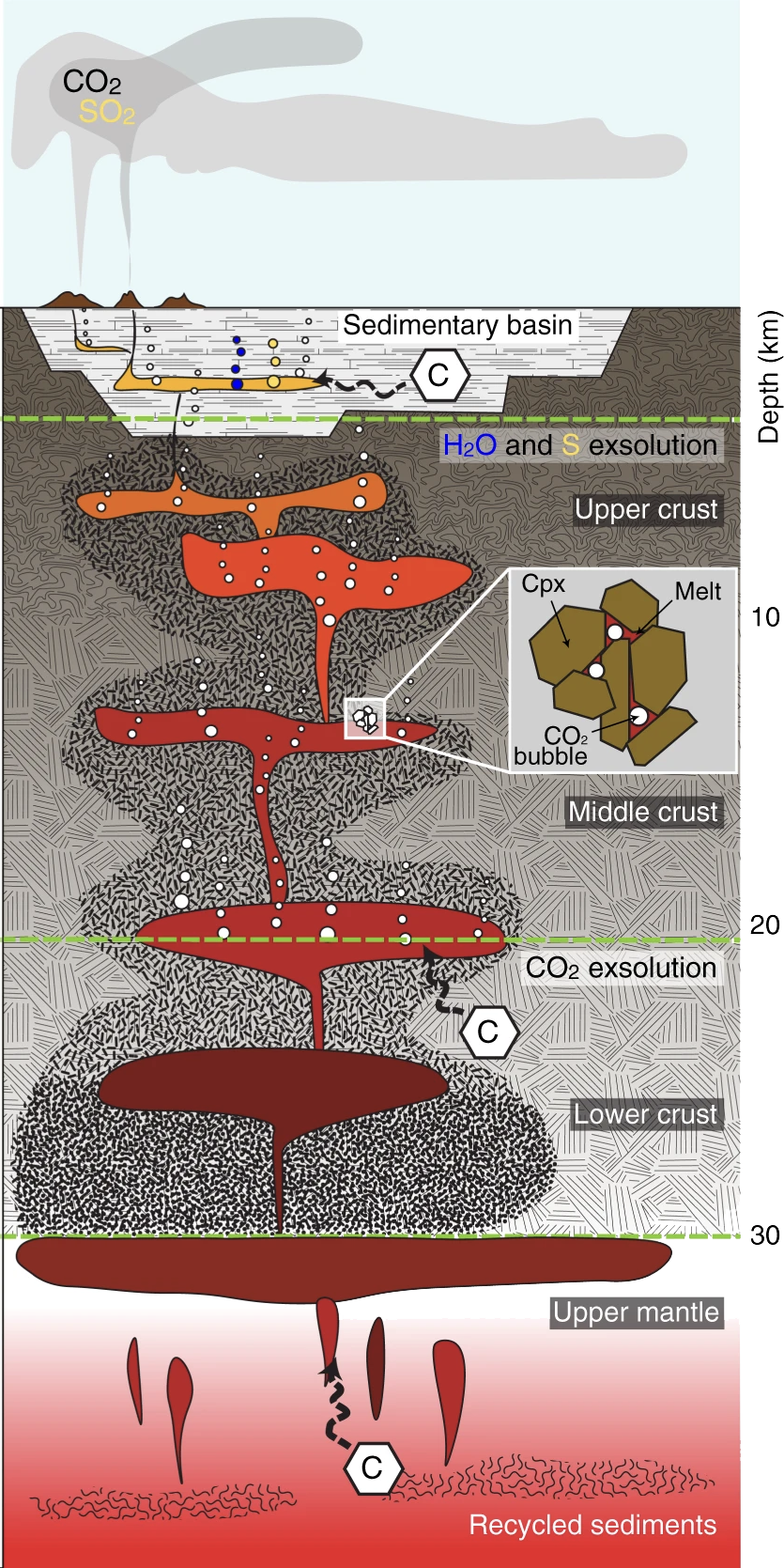
Magma reservoir

  • Deep portion of the volcano which includes
    • Crystal- and melt-dominated region(s)
    • Pockets of exsolved magmatic fluids
  • Can range from Moho to surface → transcrustal magma reservoir
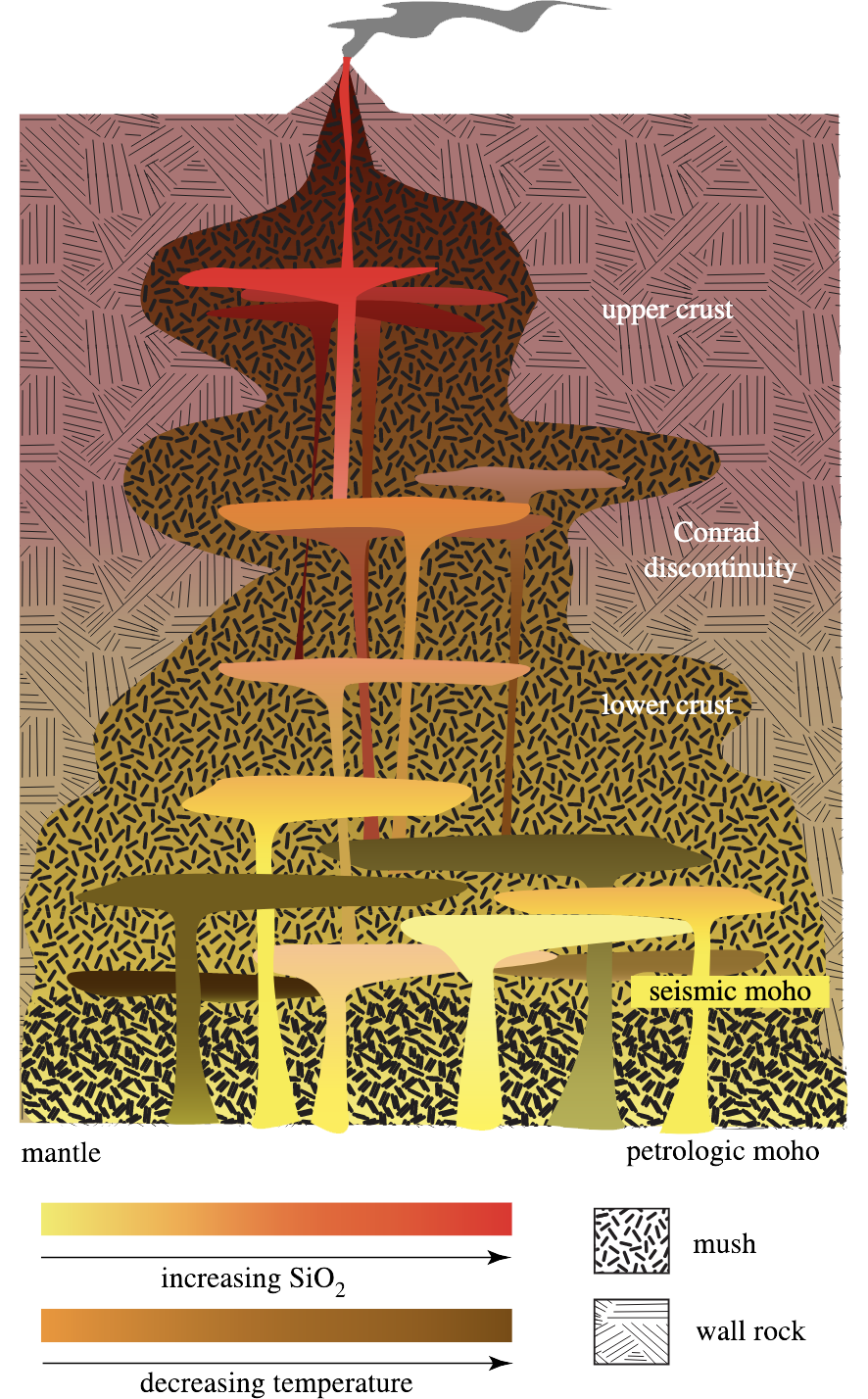
Sparks et al. (2019)

Sparks et al. (2019)

Mush

  • Dominant in space and time
  • Crystal-dominated → non-eruptible
    • 40-65% crystals framework
    • Stops convection, allows melt segregation from crystals
  • Melt remobilised through compaction and percolation
  • Heated in short bursts → magma injection from deeper

Sparks et al. (2019)

Sparks et al. (2019)

Magma chambers

  • Short lived
  • Melt-dominated → eruptible
  • Lower/middle crust → differentiation
  • Upper crust → storage → eruptions

Sparks et al. (2019)

Sparks et al. (2019)

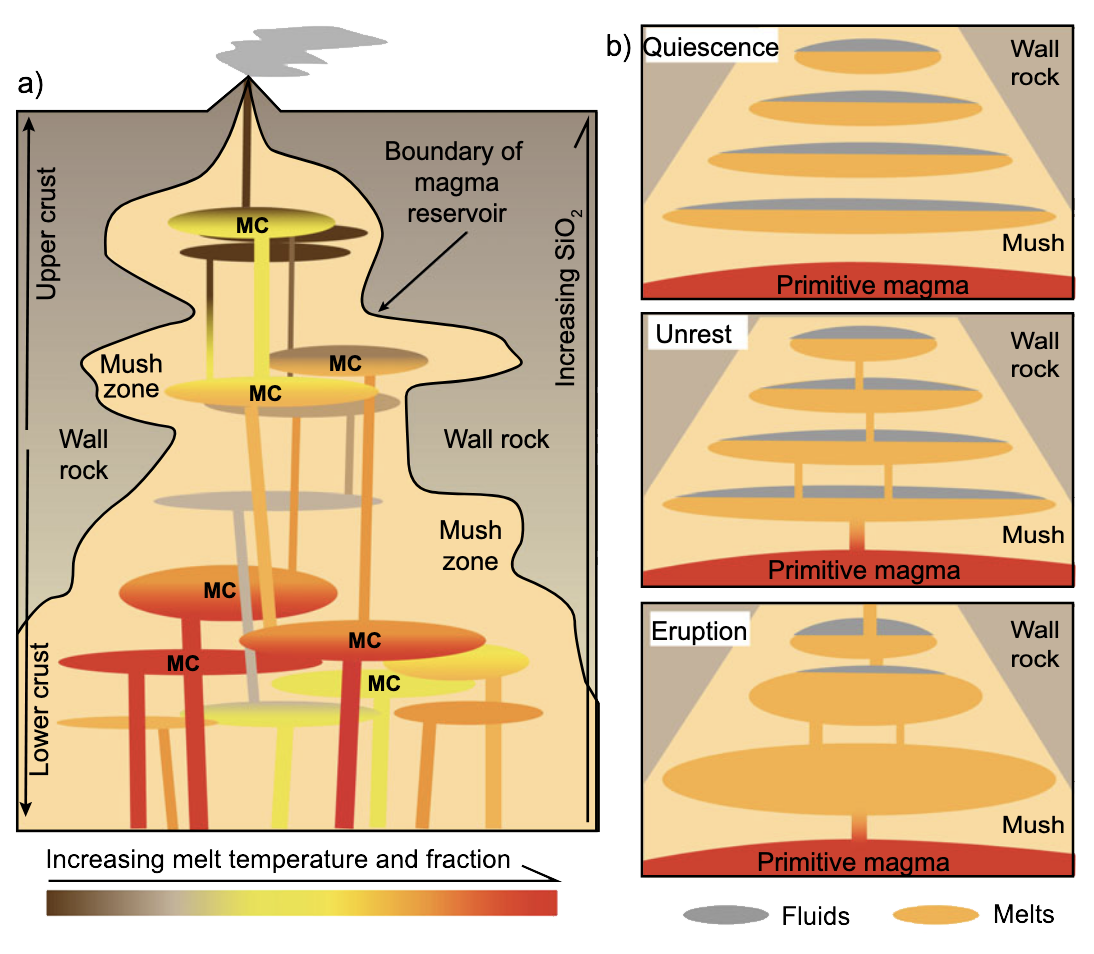
Transcrustal magma reservoir

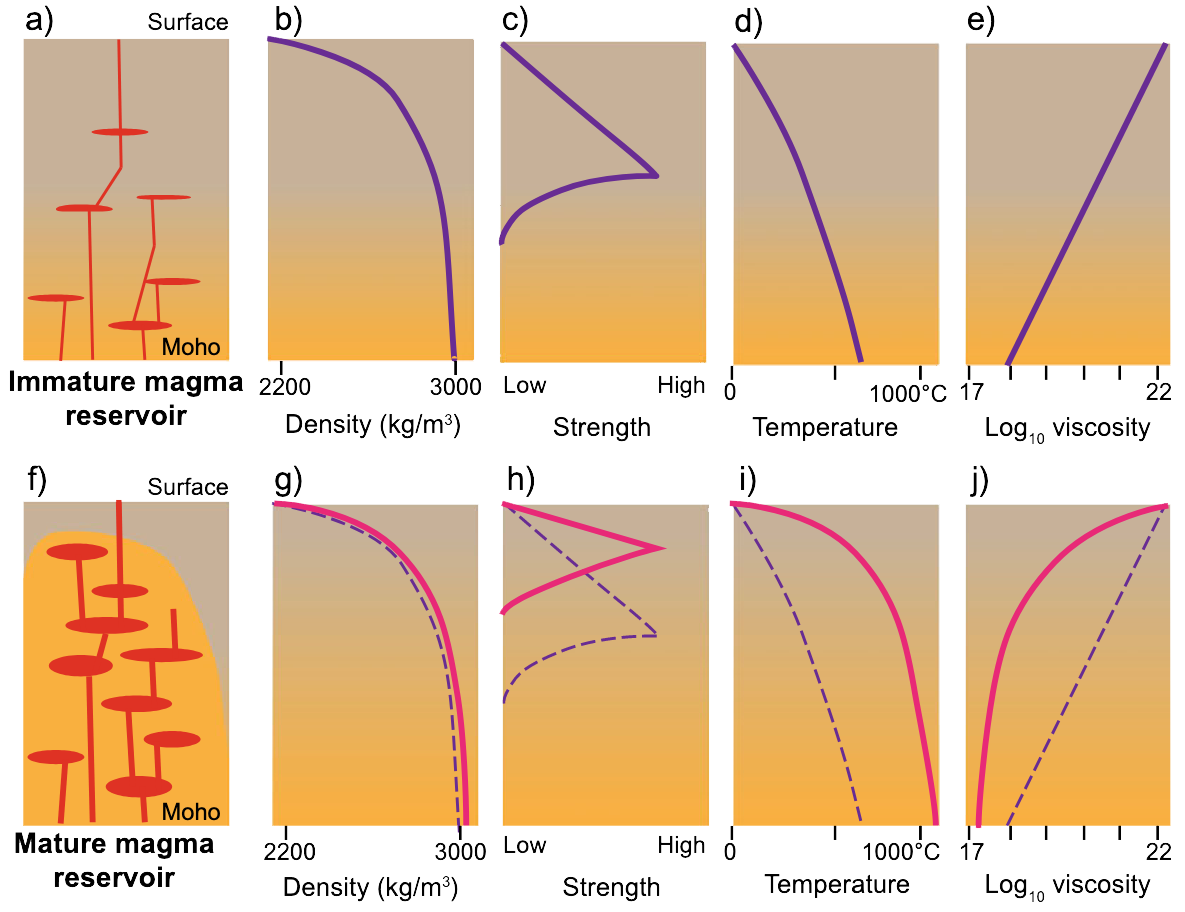
Acocella (2021)

Acocella (2021)

Acocella (2021)

Acocella (2021)

Conceptual framework for stability

Injection time-scale → time to replenish the chamber mass

\[ \tau_{\text{in}} = \frac{\rho_0 V_0}{\dot{M}_{\text{in}}} = \frac{4\pi}{3} \frac{\rho_0 R_0^{3}}{\dot{M}_{\text{in}}} \]

Cooling time scale → time for heat to diffuse across the chamber

\[ \tau_{\text{cool}} = \frac{R_0^{2}}{\kappa} \]

Relaxation time scale → time for crust to relax stress by viscous deformation

\[ \tau_{\text{relax}} = \frac{\eta r_0}{(\Delta P)_c} \]
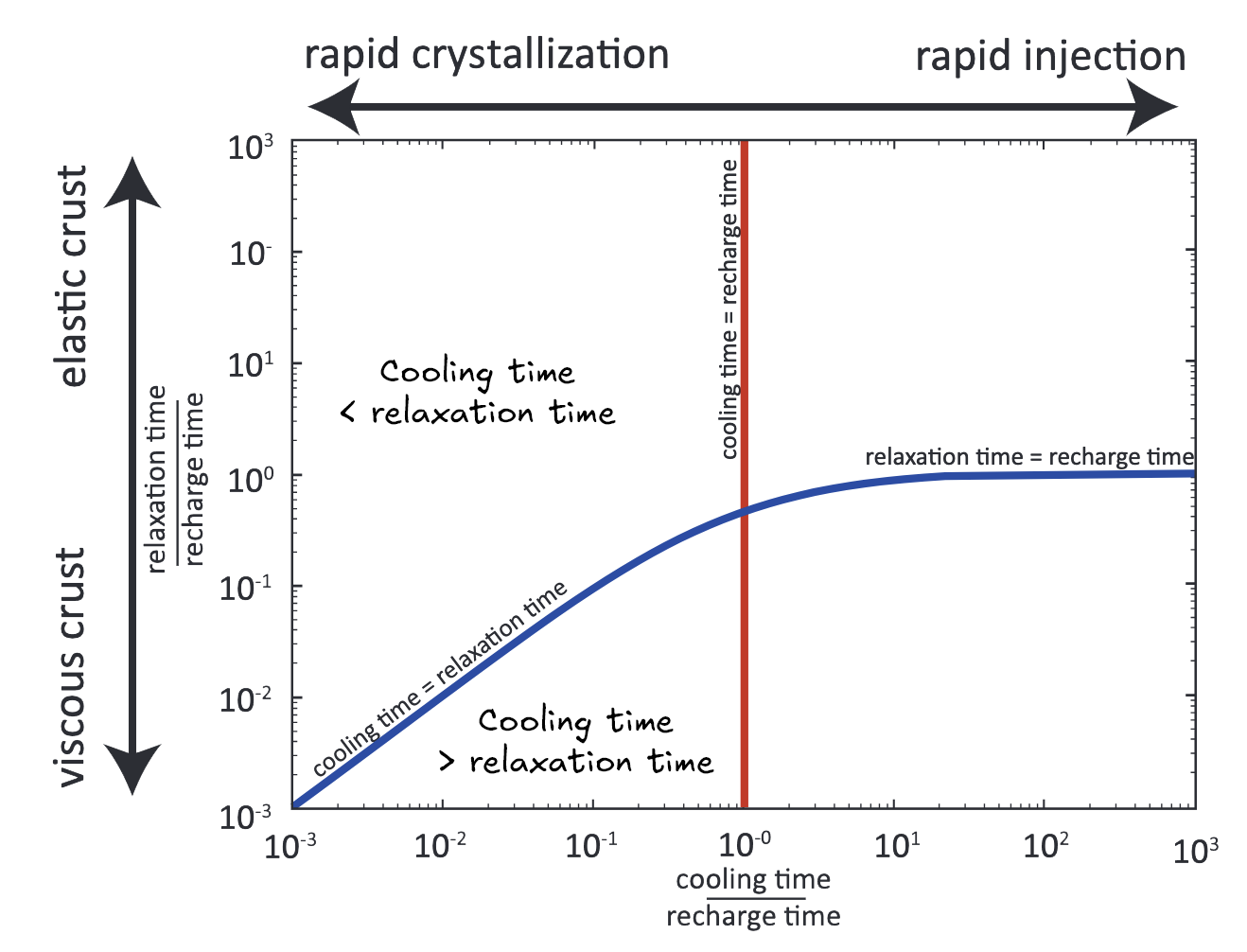
Degruyter and Huber (2014)

Degruyter and Huber (2014)
  • x: supply of heat by injection / heat loss by conduction out to the crust
  • y: viscous relaxation timescale / injection timescale

Crystallisation & volatiles

Crystallisation

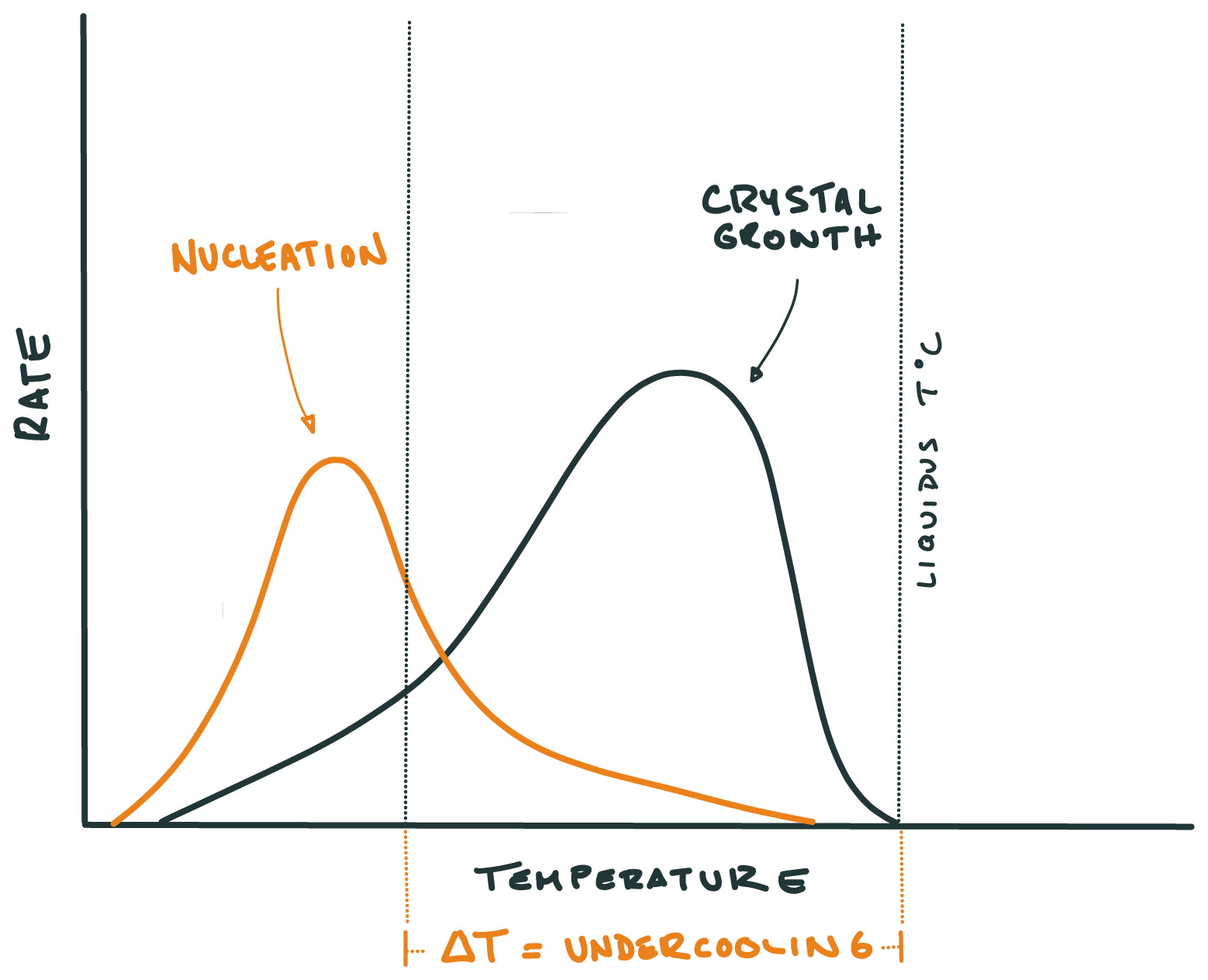
Undercooling controls crystal formation

Low \(\Delta\ T\):

  • Low nucleation, fast growth
  • Few crystals, large phenocrysts
  • Slow cooling → large, deep reservoirs

Moderate \(\Delta\ T\):

  • Simultaneous nucleation and growth
  • Many crystals, microlites
  • Shallow reservoirs, thick lava flows

Large \(\Delta\ T\):

  • Slow diffusion inhibits growth
  • Slow nucleation → glass

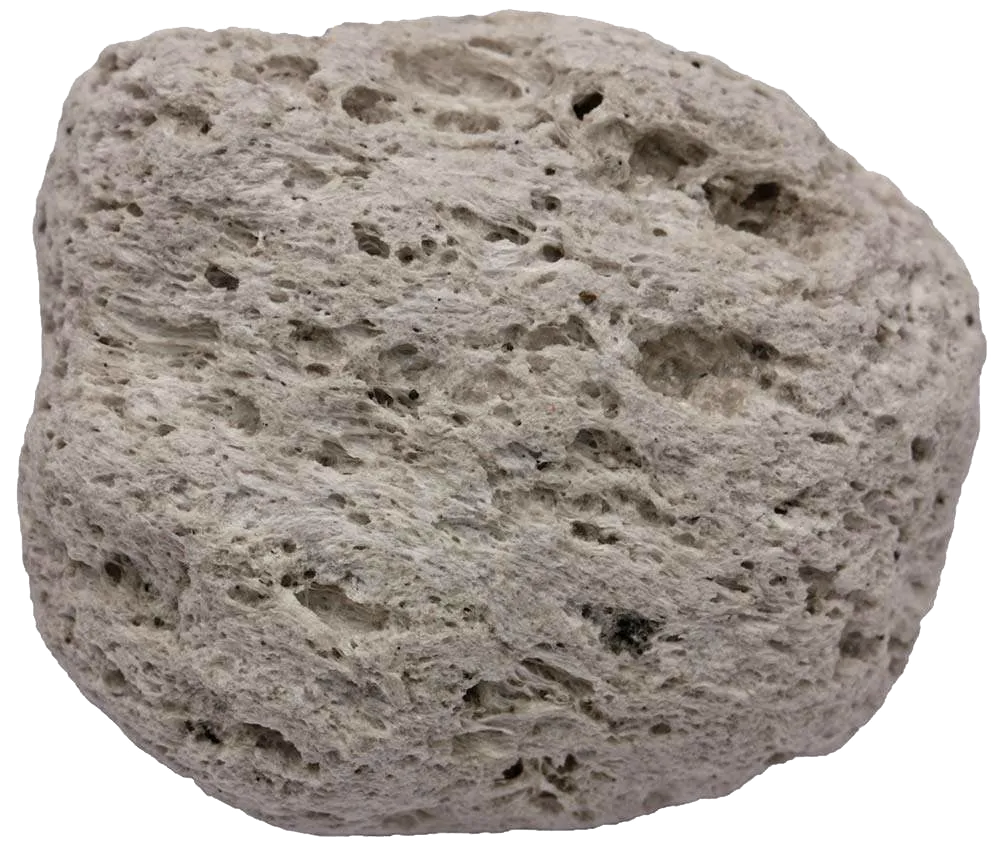
How does a porphyritic texture form?
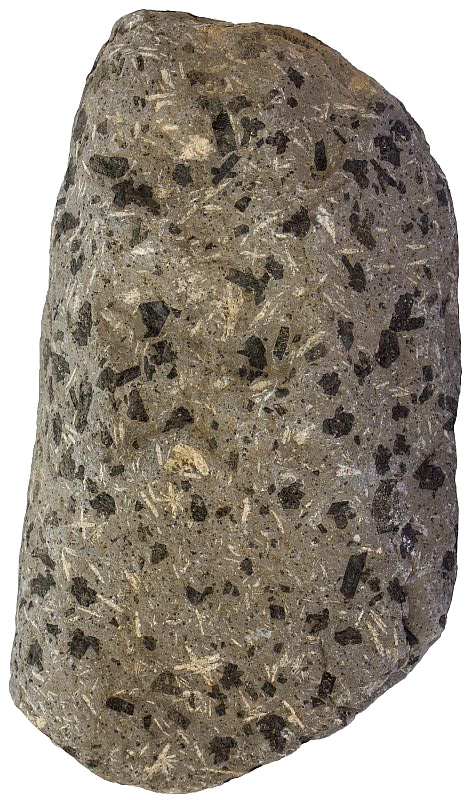
Source: Wikipedia

Source: Wikipedia

Importance of rate of magma transfer and staging

Volatiles

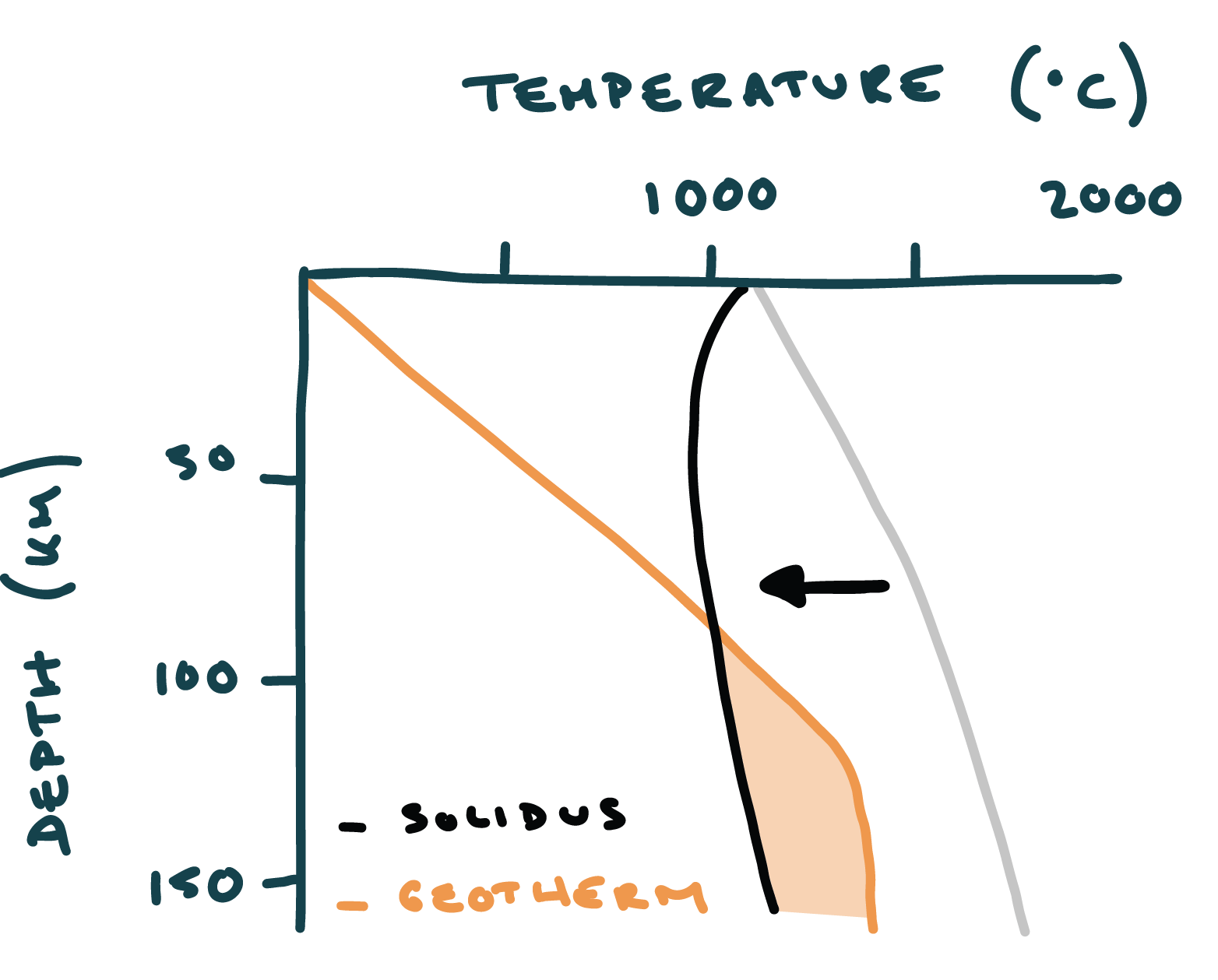
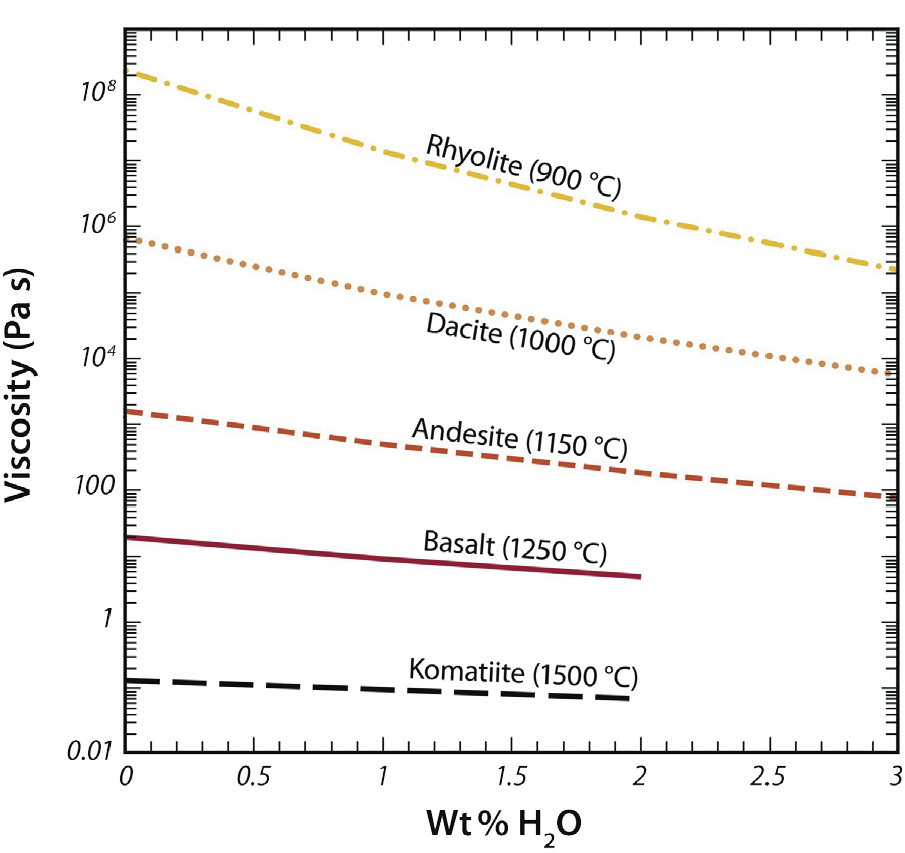
Why are volatiles important?

  • Change the solidus/liquidus
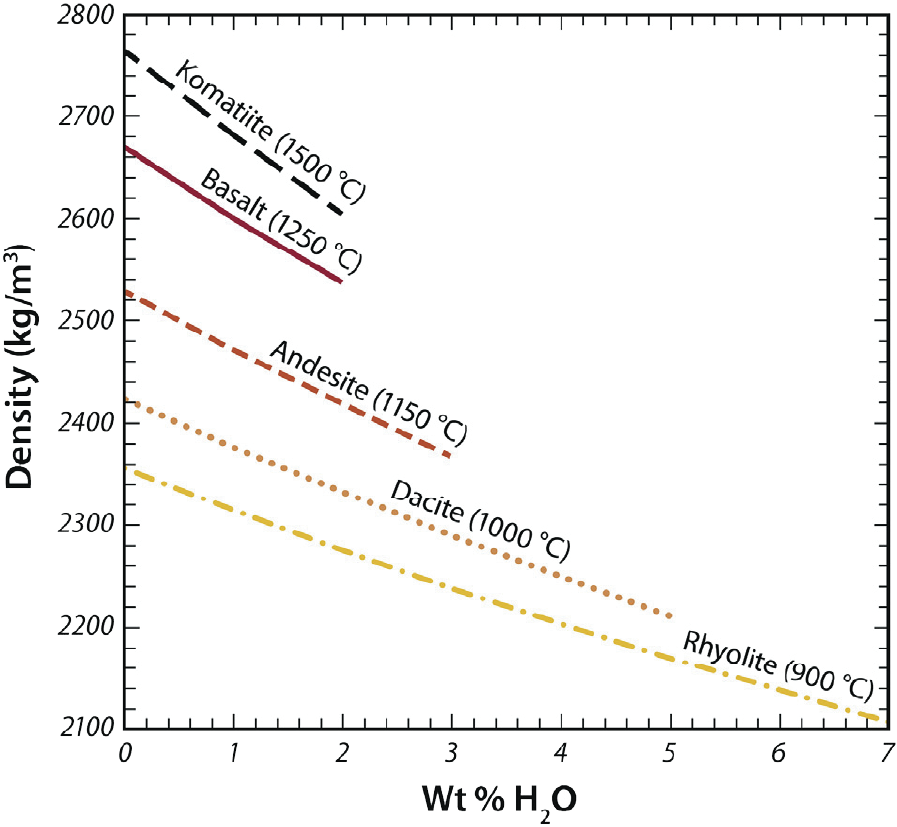
  • Modify viscosity/density

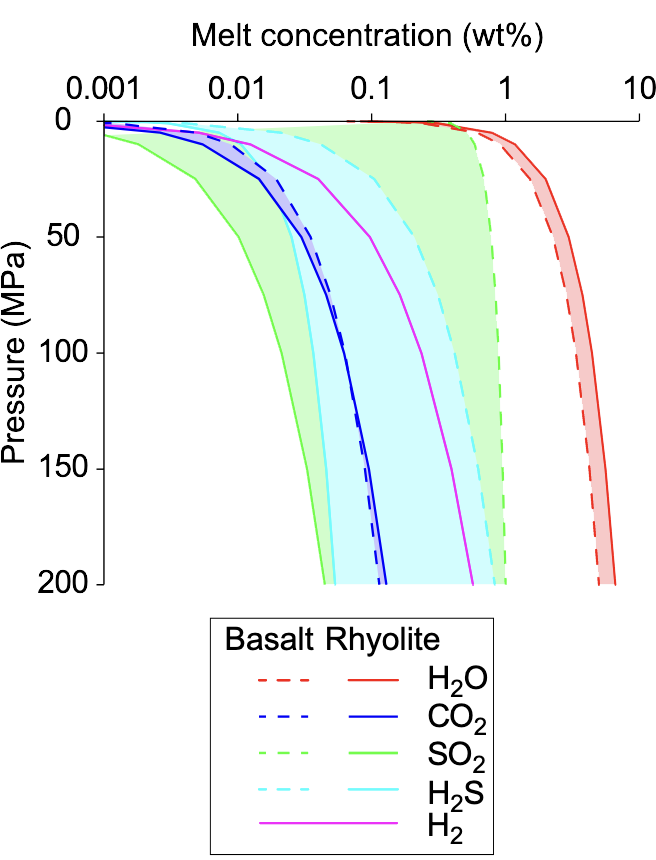
Volatiles: solubility

Volatile phases:

  • H₂O: Most abundant → \(\eta\), \(\rho\), crystals
  • CO₂: Exsolves at greater depth
  • SO₂, H₂S, …

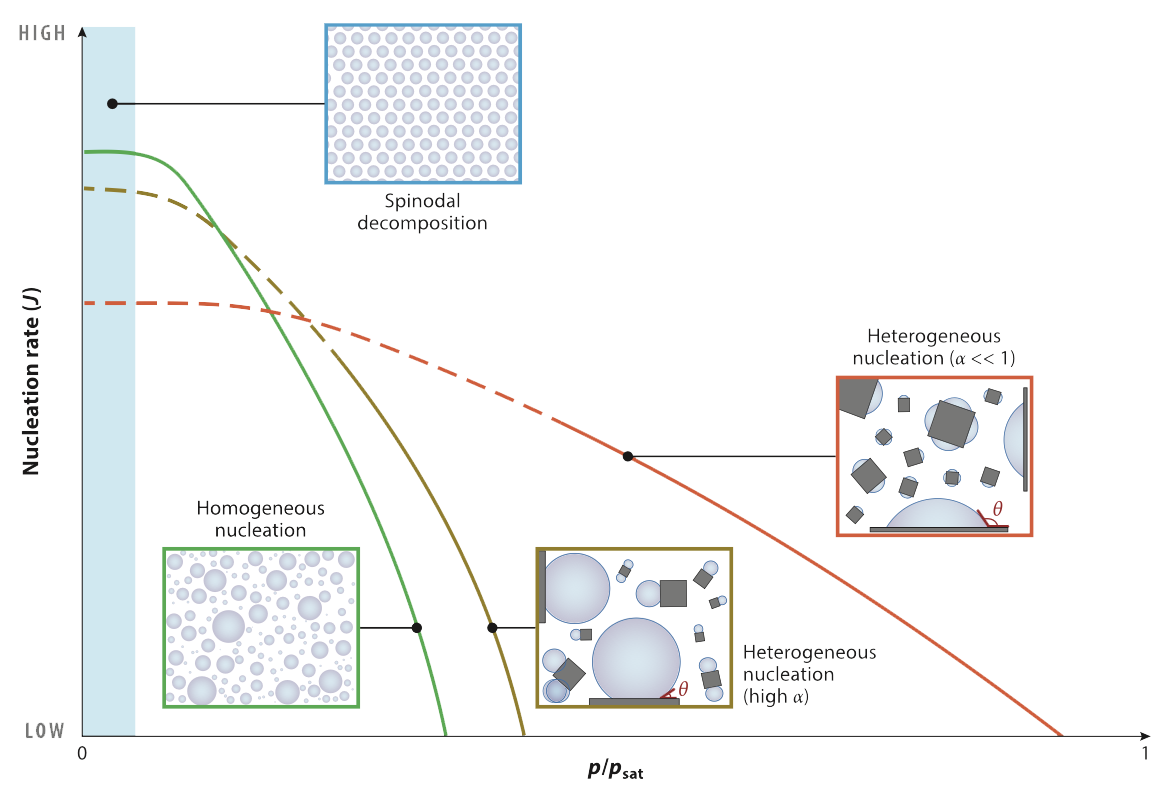
Solubility: → volatiles not always present as bubbles

  • Formation of bubbles by diffusion once saturation
  • Pure diffusion is difficult, especially in silica-rich melts
  • Require large supersaturation
  • Alternative: nucleii

Burgisser and Degruyter (2015)

Burgisser and Degruyter (2015)

Gardner et al. (2023)

Gardner et al. (2023)

Volatiles: viscosity

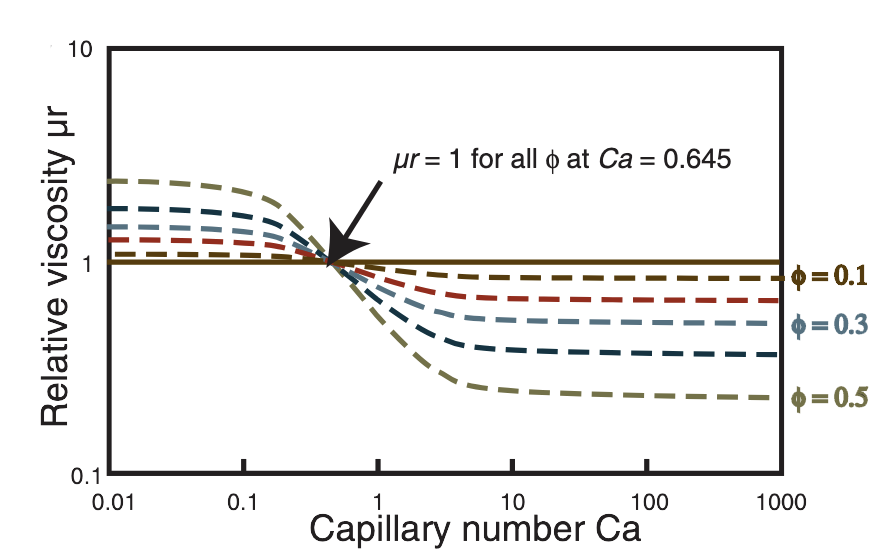
Do bubbles increase or decrease viscosity?

Capillary number: competition between

  • Viscous forces deforming bubbles
  • Surface tension to keep bubbles spherical

\(Ca = \frac{\eta \dot{\gamma} R}{\sigma}\)

  • \(\eta\) = melt viscosity
  • \(\dot{\gamma}\) = shear (strain) rate
  • \(R\) = bubble radius
  • \(\sigma\) = surface tension

Cashman and Sparks (2013)

Cashman and Sparks (2013)
  • \(Ca<0.645\): Surface tension dominates
    • Spherical bubbles behave as rigid inclusion
  • \(Ca>0.645\): Viscous stress dominates
    • Bubbles deform and align
    • Lubrication

Volatiles: second boiling

Second boiling = volatile exsolution caused by crystallisation

  • Cooling → crystallisation
  • Volatile phases remain in the melt
  • Saturation → exsolution

→ Especially important for evolved, water-rich magmas

Feedback

  • Melt enriched in \(SiO_2\) → increase \(\eta\)
  • Bubbles with high \(Ca\) → decrease \(\eta\)
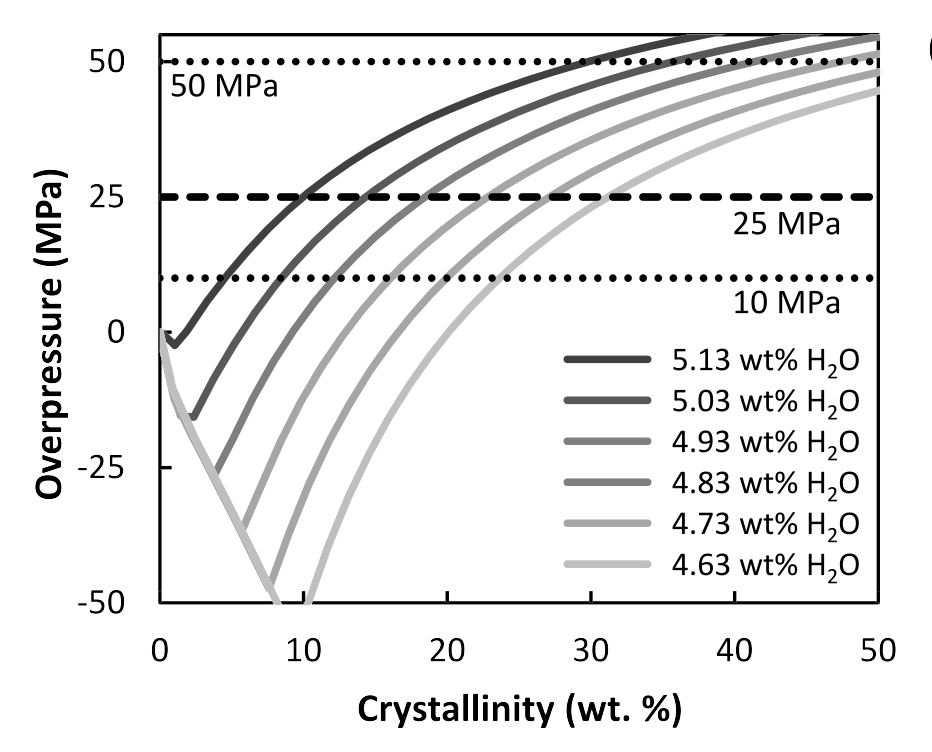
Tramontano et al. (2017)

Tramontano et al. (2017)

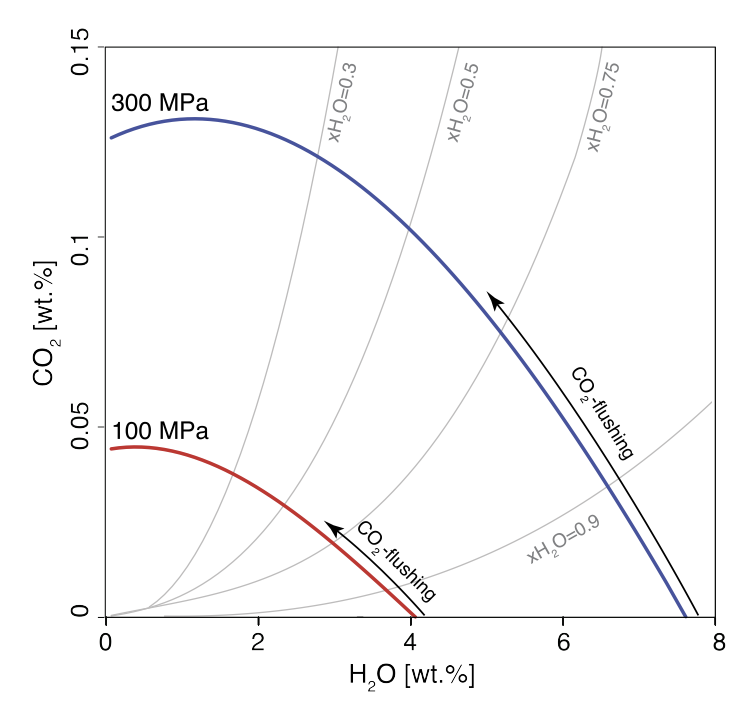
CO₂ flushing

  • CO₂ solubility < H₂O
    • CO₂ exsolves at much greater depths
  • CO₂ rise
    • Pass through H₂O-rich melt
    • Trigger water exsolution

Caricchi et al. (2018)

Caricchi et al. (2018)

Capriolo et al. (2020)

Capriolo et al. (2020)

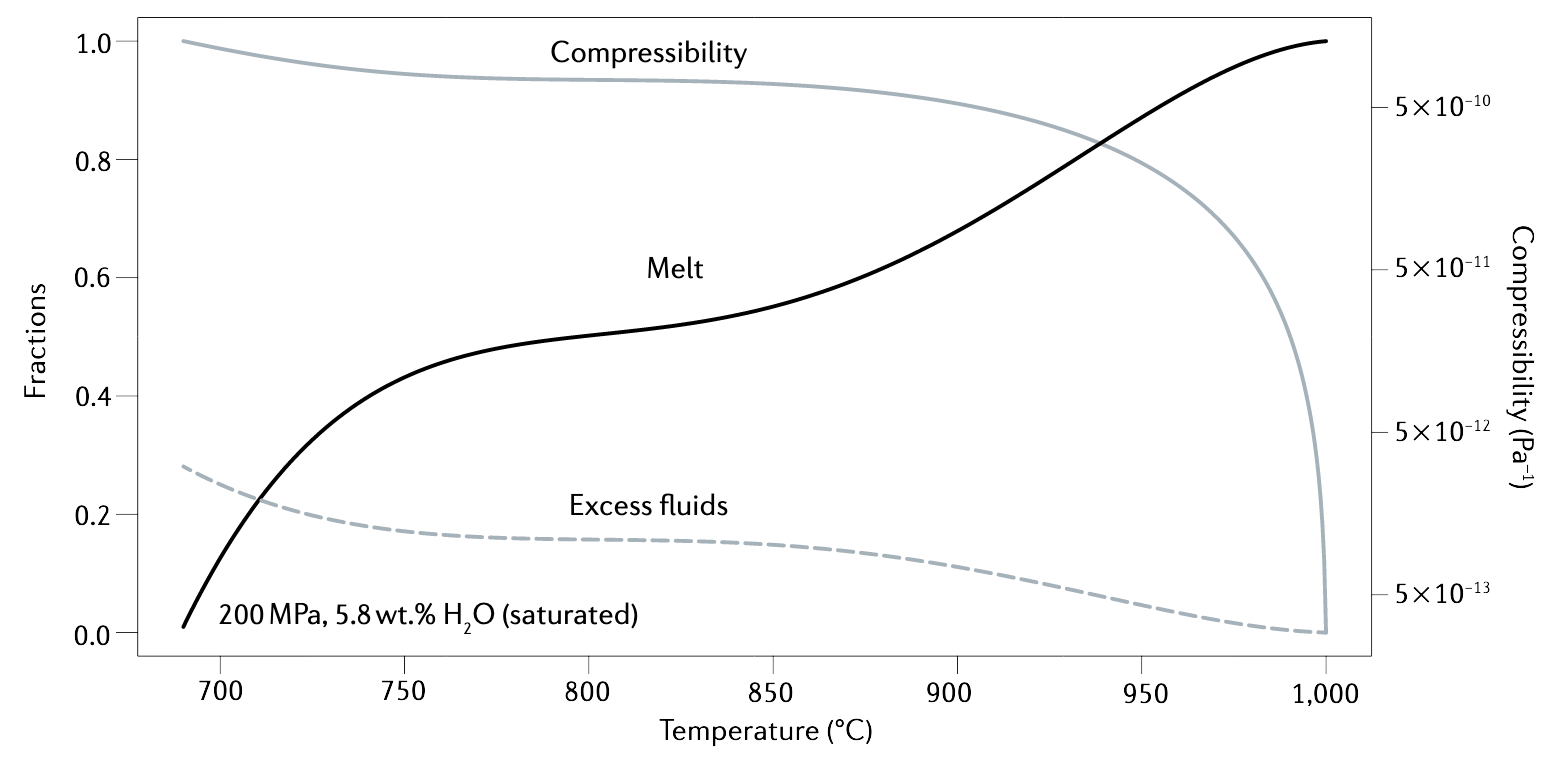
Compressibility

Caricchi et al. (2021)

Caricchi et al. (2021)

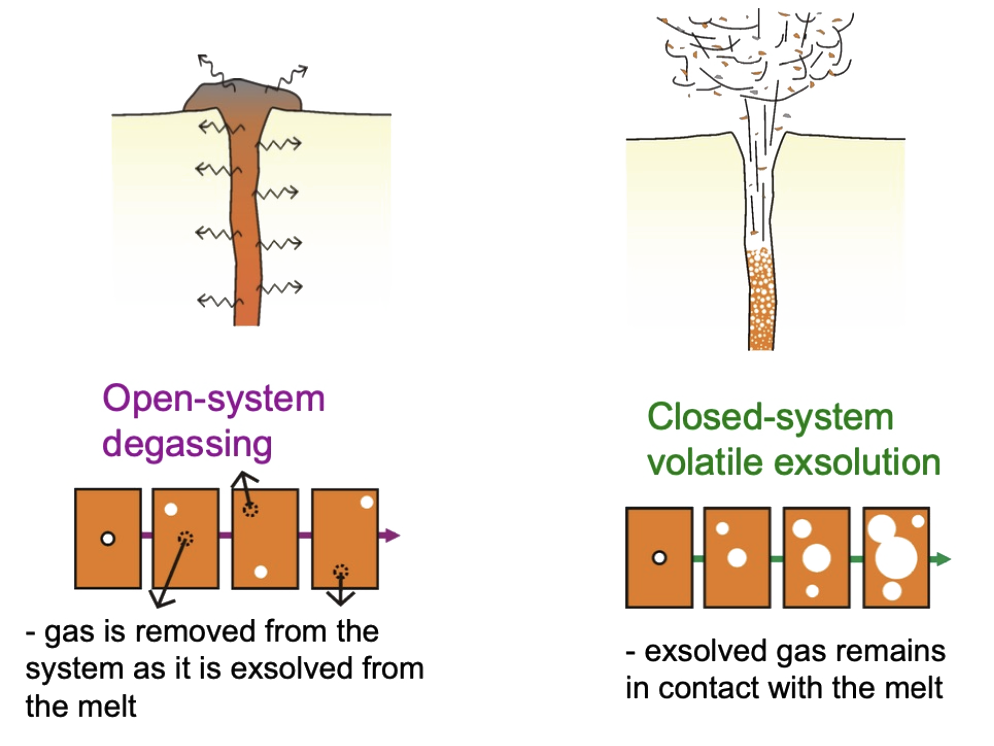
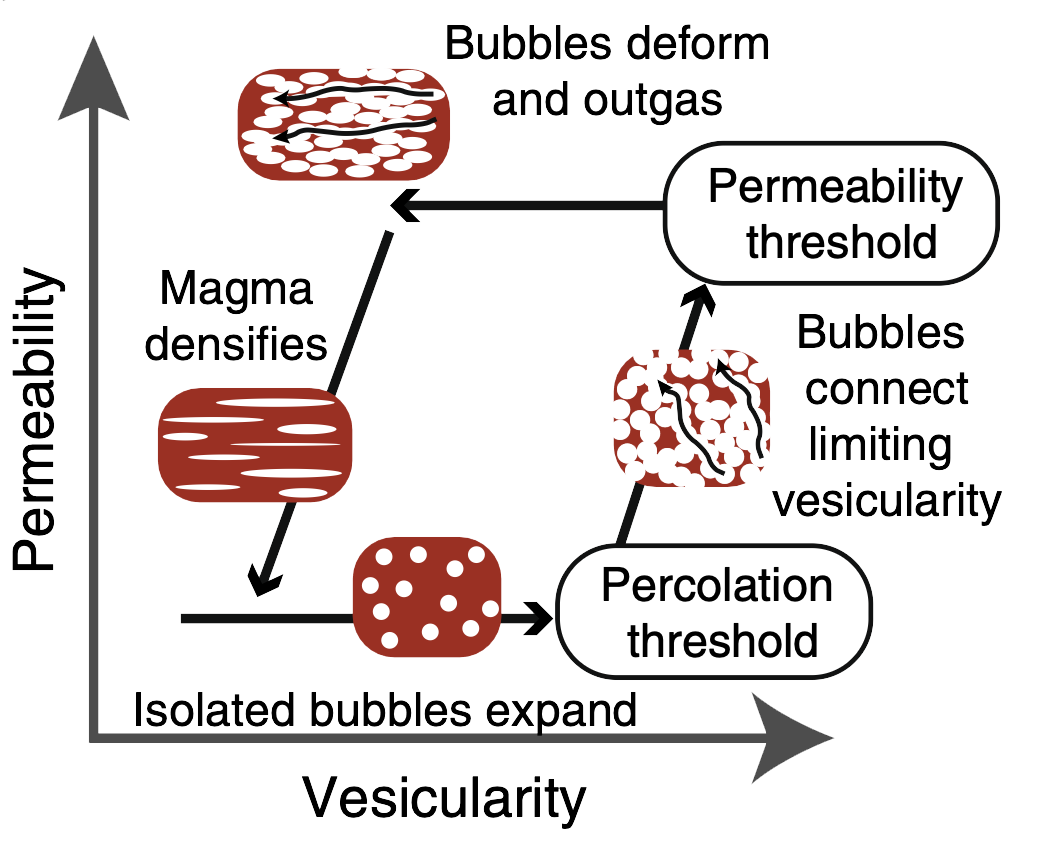
Where does the gas go?

Halemaumau

Cotopaxi

Building overpressure

Rise of magma to a shallower (→ less pressure) and cooler crust

graph LR
    A[Cooling] --> B[Crystallisation]
    B --> C[Second Boiling]
    C --> D[Volatile Exsolution]
    
    E[Decompression] --> F[Saturation]
    F --> D
    style D fill:#eb811b,stroke:#213737,stroke-width:2px,color:#fff

    style A fill:#2F4647,stroke:#213737,stroke-width:2px,color:#fff
    style E fill:#2F4647,stroke:#213737,stroke-width:2px,color:#fff

Can the cas escape the system?

graph LR
    A[Can the gas escape?]
    A --> B[Yes] --> C[Open system] 
    A --> D[No] --> E[Closed system] --> F[Overpressure]

    style A fill:#2F4647,stroke:#213737,stroke-width:2px,color:#fff
    style C fill:#2F4647,stroke:#213737,stroke-width:2px,color:#fff
    style E fill:#2F4647,stroke:#213737,stroke-width:2px,color:#fff
    style F fill:#eb811b,stroke:#213737,stroke-width:2px,color:#fff

Open vs closed degassing

What parameters control open vs closed?

Conceptual framework for stability

Injection time-scale → time to replenish the chamber mass

\[ \tau_{\text{in}} = \frac{\rho_0 V_0}{\dot{M}_{\text{in}}} = \frac{4\pi}{3} \frac{\rho_0 R_0^{3}}{\dot{M}_{\text{in}}} \]

Cooling time scale → time for heat to diffuse across the chamber

\[ \tau_{\text{cool}} = \frac{R_0^{2}}{\kappa} \]

Relaxation time scale → time for crust to relax stress by viscous deformation

\[ \tau_{\text{relax}} = \frac{\eta r_0}{(\Delta P)_c} \]

Degruyter and Huber (2014)

Degruyter and Huber (2014)
  • x: supply of heat by injection / heat loss by conduction out to the crust
  • y: viscous relaxation timescale / injection timescale

Monitoring

Pre–event monitoring

  • Surface deformation → infers the geometry and volume of intrusion
    • GPS, tiltmeter, InSAR
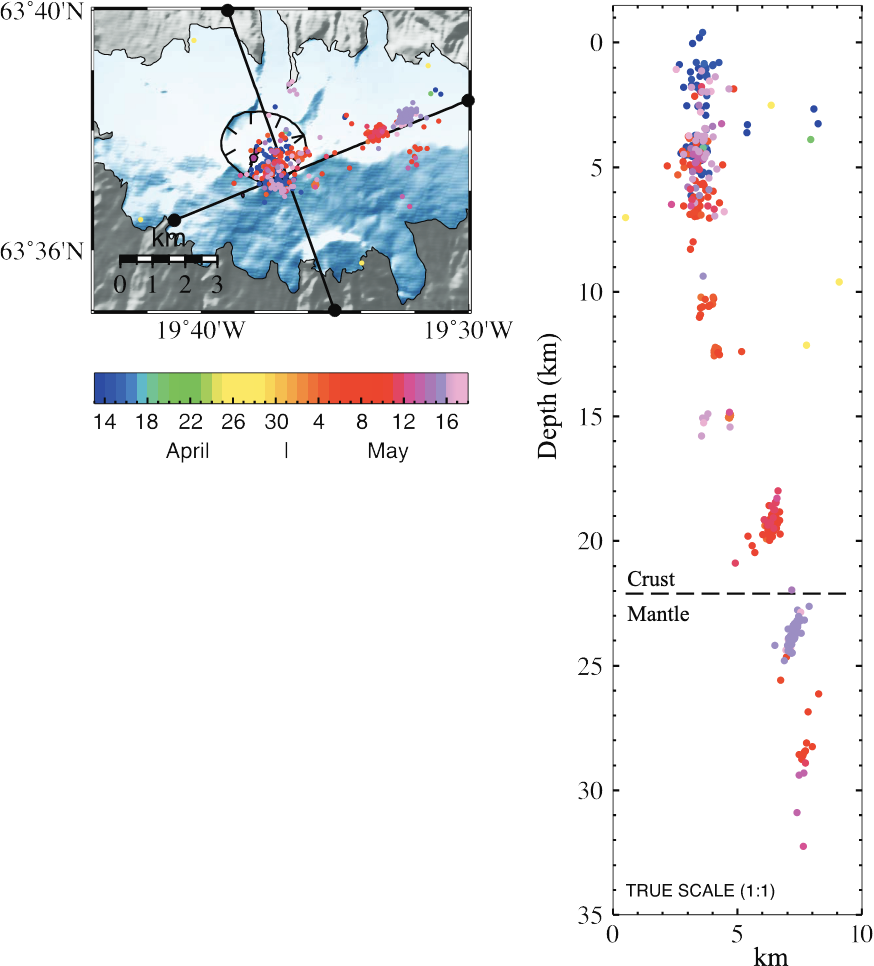
  • Earthquakes → infers whether magma/gas is propagating
    • Seismometers
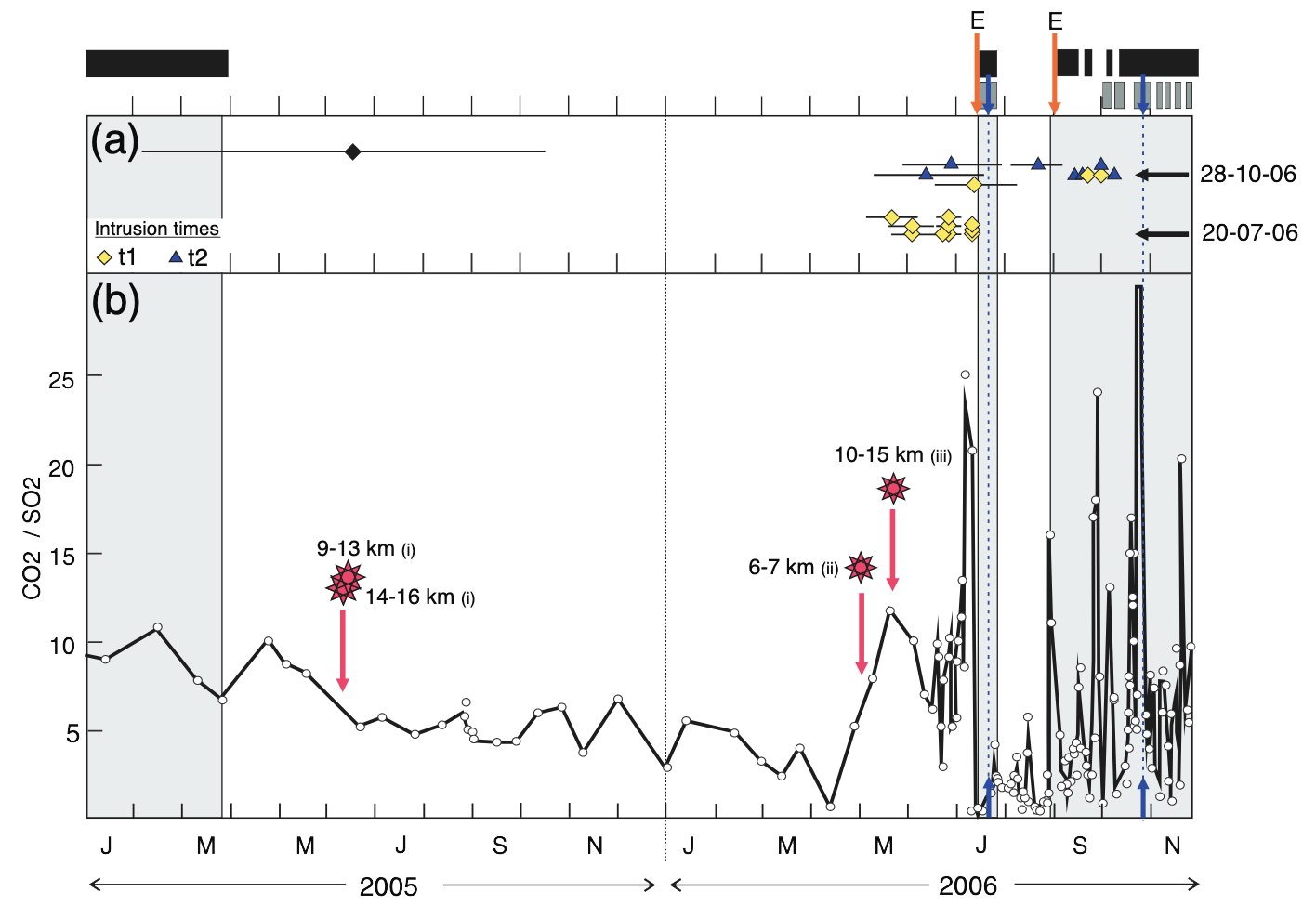
  • Gas monitoring → infers depth of degassing, magma dehydration etc.
    • MultiGAS, DOAS, FTIR, UV cameras, ± satellites

Surface deformation

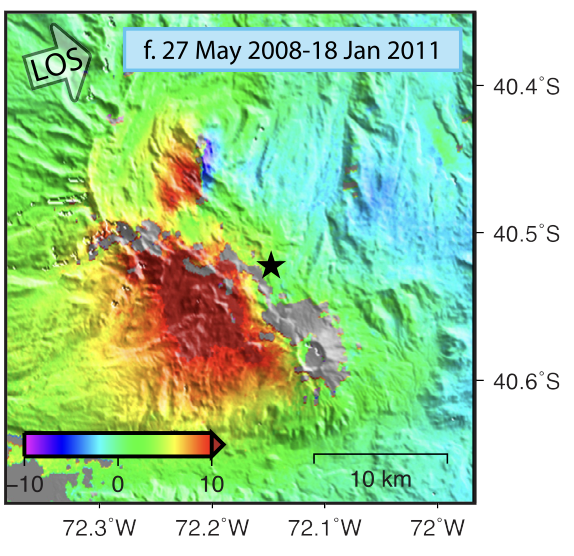
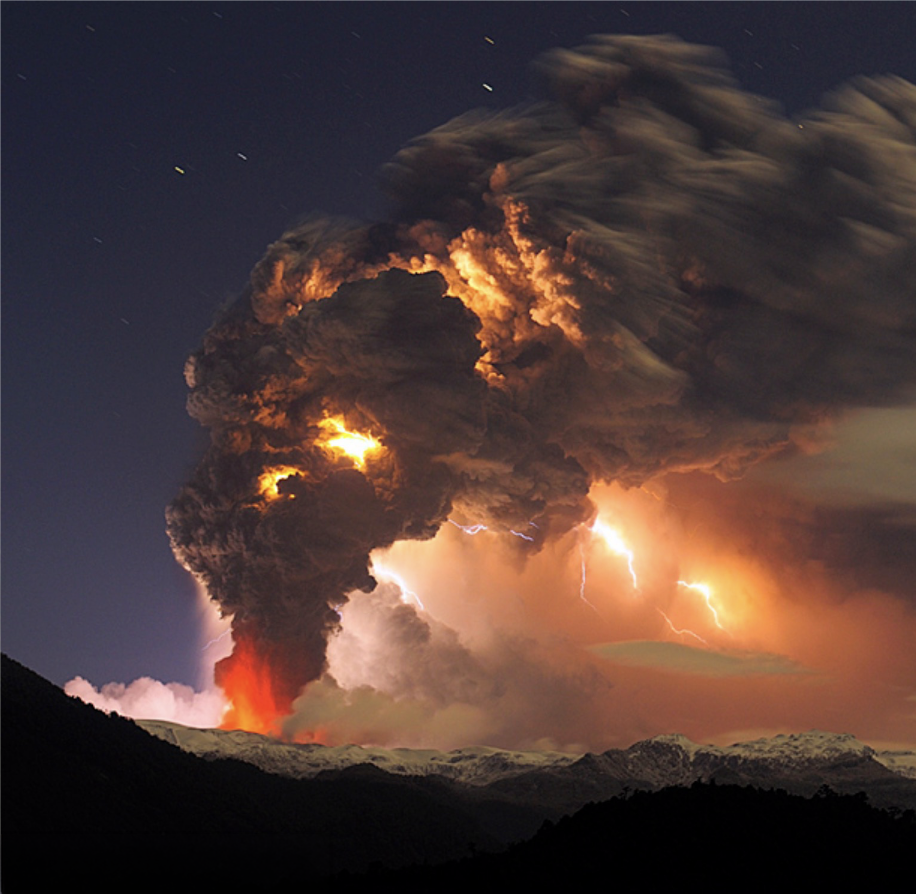
Deformation before 2011 eruption of Cordón Caulle (Chile)

Jay et al. (2014)

Jay et al. (2014)

National Geographics

National Geographics

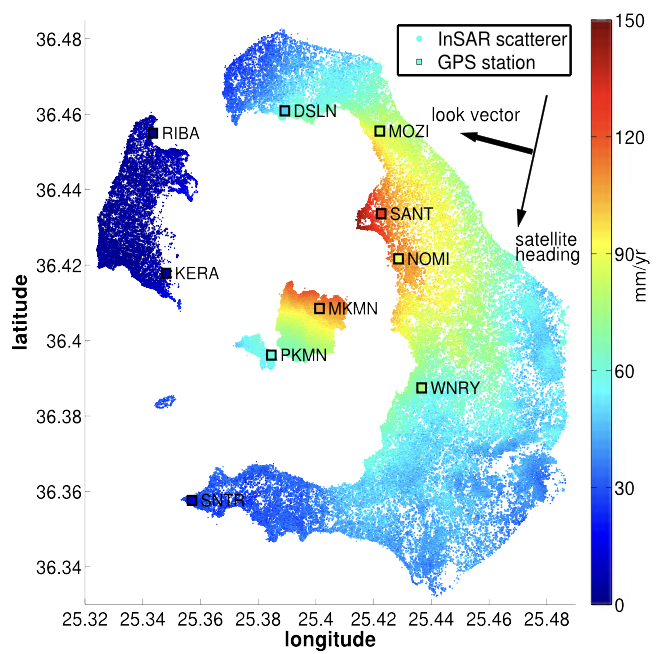
Deformation but no eruption → Santorini unrest in 2011 (Greece)

Papoutsis et al. (2013)

Papoutsis et al. (2013)

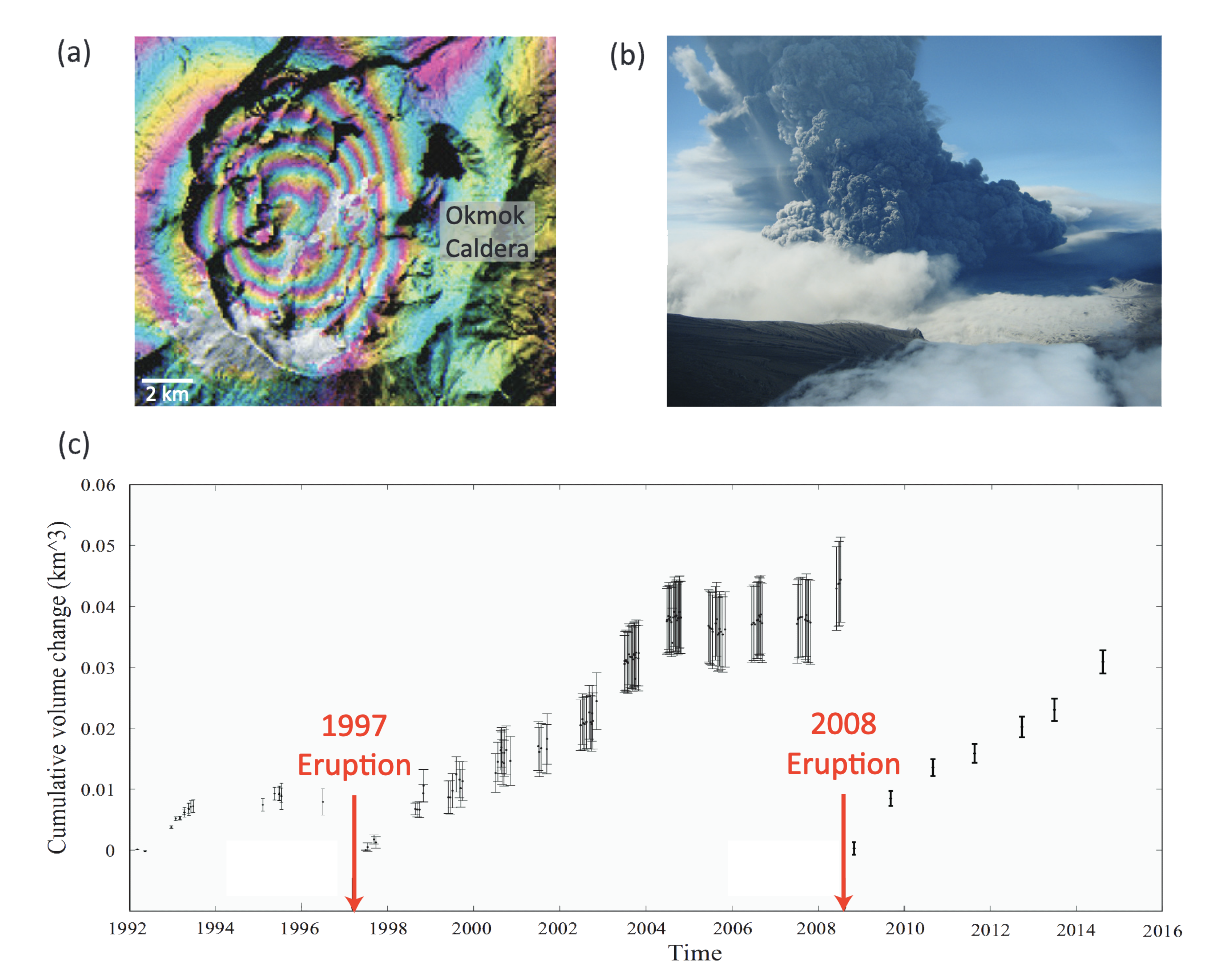
Surface deformation: cyclicity

National Academy of Sciences (2017)

National Academy of Sciences (2017)

Earthquakes

Eyafjallajökull, 2011 (Iceland)

National Academy of Sciences (2017)

National Academy of Sciences (2017)

La Palma, 2021 (Spain)

Gas monitoring

Ratio Interpretation
CO₂ / SO₂ Depth of degassing
SO₂ / H₂S Temperature and oxidation
H₂O / CO₂ Magma dehydration
SO₂ / CO₂ Magma ascent vs deep gas input

National Academy of Sciences (2017)

National Academy of Sciences (2017)

Take home messages

Summary

Magma reservoirs

The concept of a large, liquid magma chamber active for \(10^3\) to \(10^5\) years has been disproved. The injection of hot magma in a cooler crust induces cooling by convection. This in turns leads to crystallisation, which through latent heat loss will accelerate cooling, and will stop convection once the crystal fraction reaches 45%. Maintaining a sufficient heat flux to keep the system molten requires an unrealistic mechanism. In addition, geophysical (e.g., S-wave velocity profiles) and geochronological (e.g., erupted crystal ages much older than eruption) evidences suggest that large, liquid magma chambers are not viable.

Transcrustal magma reservoirs

The modern view of regions of magma storage is a transcrustal magma reservoir resulting from the repeated injection of deeper, hotter magma that stalled in the crust. Magma reservoirs consist of i) a mush region, where a 45-65% crystal content both prevents convection and allows magma migration (→ compaction, percolation) and ii) short-lived, melt-rich magma chambers during periods of magma injection from deeper. Shallow magma chambers might initiate and feed eruptions.

Summary

Magma chamber stability

Conditions for magma chamber development require an equilibrium between injection time (\(\tau_{\text{in}}\)), cooling time (\(\tau_{\text{cool}}\)) and relaxation time (\(\tau_{\text{relax}}\)), which represents the time-scale of the surround crust to adapt to deformation.

Volatiles

Volatiles (H₂O, CO₂, SO₂, …) change the solidus/liquidus and affect magma rheology. At depth, volatiles are dissolved in the magma, and evolve towards a gas phase with decreasing pressure, solubility is at saturation. Pure diffusion from supersaturation requires a lot of energy: bubble nucleation is enhanced if nucleii (e.g., microlites) are present.

CO₂ flushing

Each volatile specie has its own solubility: typically, CO₂ exsolves deeper than H₂O or SO₂. The rise of deep, exsolved CO₂ into shallower melt regions can trigger H₂O exsolution. This process, known as CO₂ flushing, is an important trigger at open-systems volcanoes.

Summary

Crystal growth

The nucleation of crystals depends on the degree of undercooling, which represents the contrast of temperature between the magma and the solidus. In turns, this controls the balance between crystal growth and nucleation rates. Low \(\Delta T\) promote the growth of few, large crystals, moderate \(\Delta T\) promote numerous small crystals (microlites) and large \(\Delta T\) inhibit both growth and nucleation. Crystal growth releases volatiles to the melt.

Second boiling

Crystal growth releases volatiles to the melt. If the melt is evolved, H₂O-rich and and saturated, the extra volatile pressure released by the crystallisation process will add to the pressure of the storage region, and can contribute to triggering eruptions

Overpressure

Overpressure in the magma chamber is required to initiate an eruption, and volatile exsolution is the main driver. However, once a volatile phase is exsolved, the magma becomes compressible, which will contribute to accommodating overpressure.

References

Bibliography

Acocella V (2021) Volcano-tectonic processes. Springer International Publishing, Cham, Switzerland
Burgisser A, Degruyter W (2015) Magma Ascent and Degassing at Shallow Levels. In: The Encyclopedia of Volcanoes. pp 225–236
Capriolo M, Marzoli A, Aradi LE, et al (2020) Deep CO2 in the end-Triassic Central Atlantic Magmatic Province. Nature Communications 11:1670. https://doi.org/10.1038/s41467-020-15325-6
Caricchi L, Sheldrake TE, Blundy J (2018) Modulation of magmatic processes by CO2 flushing. Earth and Planetary Science Letters 491:160–171. https://doi.org/10.1016/j.epsl.2018.03.042
Caricchi L, Townsend M, Rivalta E, Namiki A (2021) The build-up and triggers of volcanic eruptions. Nature Reviews Earth & Environment 2:458–476. https://doi.org/10.1038/s43017-021-00174-8
Cashman K, Sparks R (2013) How volcanoes work: A 25 year perspective. Geological Society of America Bulletin
Chen W-P, Hung S-H, Tseng T-L, et al (2012) Rheology of the continental lithosphere: Progress and new perspectives. Gondwana Research 21:4–18. https://doi.org/10.1016/j.gr.2011.07.013
Degruyter W, Huber C (2014) A model for eruption frequency of upper crustal silicic magma chambers. Earth and Planetary Science Letters 403:117–130. https://doi.org/10.1016/j.epsl.2014.06.047
Frontoni A, Costa A, Vona A, Romano C (2022) A comprehensive database of crystal-bearing magmas for the calibration of a rheological model. Scientific Data 9:247. https://doi.org/10.1038/s41597-022-01363-w
Gardner JE, Wadsworth FB, Carley TL, et al (2023) Bubble Formation in Magma. Annual Review of Earth and Planetary Sciences 51:131–154. https://doi.org/10.1146/annurev-earth-031621-080308
He L, Guo Z, Chen YJ, et al (2021) Seismic Imaging of a Magma Chamber and Melt Recharge of the Dormant Datong Volcanoes. Earth and Space Science 8:e2021EA001931. https://doi.org/10.1029/2021EA001931
Jay J, Costa F, Pritchard M, et al (2014) Locating magma reservoirs using InSAR and petrology before and during the 2011–2012 Cordón Caulle silicic eruption. Earth and Planetary Science Letters 395:254–266. https://doi.org/10.1016/j.epsl.2014.03.046
Laumonier M, Scaillet B, Pichavant M, et al (2014) On the conditions of magma mixing and its bearing on andesite production in the crust. Nature Communications 5:5607. https://doi.org/10.1038/ncomms6607
National Academy of Sciences (2017) Volcanic Eruptions and Their Repose, Unrest, Precursors, and Timing
Papoutsis I, Papanikolaou X, Floyd M, et al (2013) Mapping inflation at Santorini volcano, Greece, using GPS and InSAR. Geophysical Research Letters 40:267–272. https://doi.org/10.1029/2012GL054137
Rubin A, Cooper KM, Leever M, et al (2016) Changes in magma storage conditions following caldera collapse at Okataina Volcanic Center, New Zealand. Contributions to Mineralogy and Petrology 171:4. https://doi.org/10.1007/s00410-015-1216-6
Sparks RSJ, Annen C, Blundy JD, et al (2019) Formation and dynamics of magma reservoirs. Philosophical Transactions of the Royal Society A: Mathematical, Physical and Engineering Sciences 377:20180019. https://doi.org/10.1098/rsta.2018.0019
Tramontano S, Gualda GAR, Ghiorso MS (2017) Internal triggering of volcanic eruptions: Tracking overpressure regimes for giant magma bodies. Earth and Planetary Science Letters 472:142–151. https://doi.org/10.1016/j.epsl.2017.05.014

Backup slides

Bubble regimes is not static


Capillary number Bubble behaviour Rheological effect
\(Ca \ll 1\) bubbles remain spherical viscosity increases (rigid inclusions)
\(Ca \sim 1\) bubbles deform viscosity decreases
\(Ca \gg 1\) strongly deformed / foam-like flow strong shear thinning

→ Everything is dynamic!

Cooling

If we inject a 5–10 km wide fully molten body into colder crust, what must happen?

Observation

  • Magma temperature ≈ 1100–1200 °C
  • Crustal host rock ≈ 300–600 °C

Consequence:

  • Crystallisation
  • Volatile exsolution

Characteristic cooling timescale due to conduction: \(\frac{R_0^{2}}{\kappa}\)
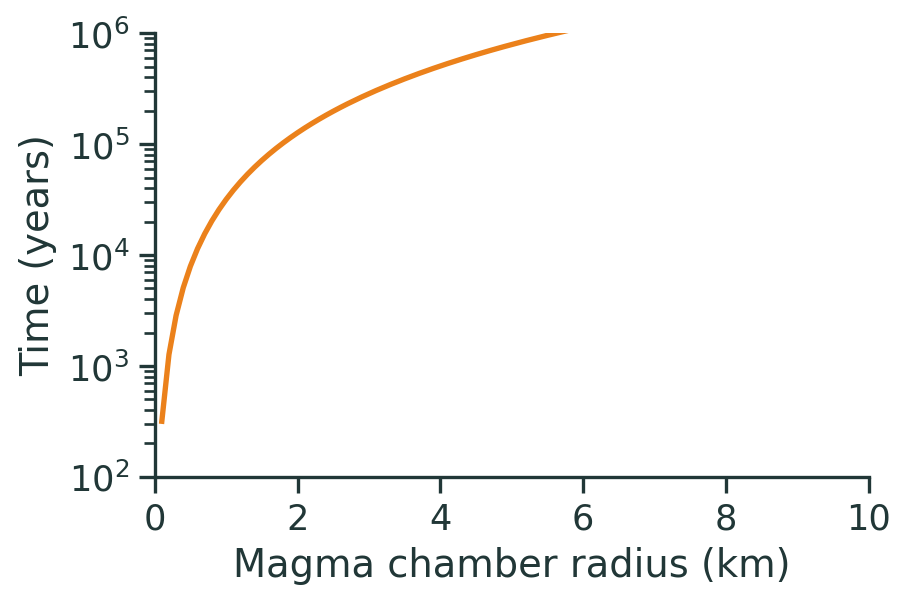
Thermal diffusivity

\(\kappa\) → thermal diffusivity → \(10^{-6}\ m^2\ s^{-1}\)