Fragmentation & explosive eruptions
Class 7 - Blowin’ in the wind

Group of physical volcanology and geological risk - 1st floor, office 103
March 30, 2026
Ascent rates
Gaz mobility
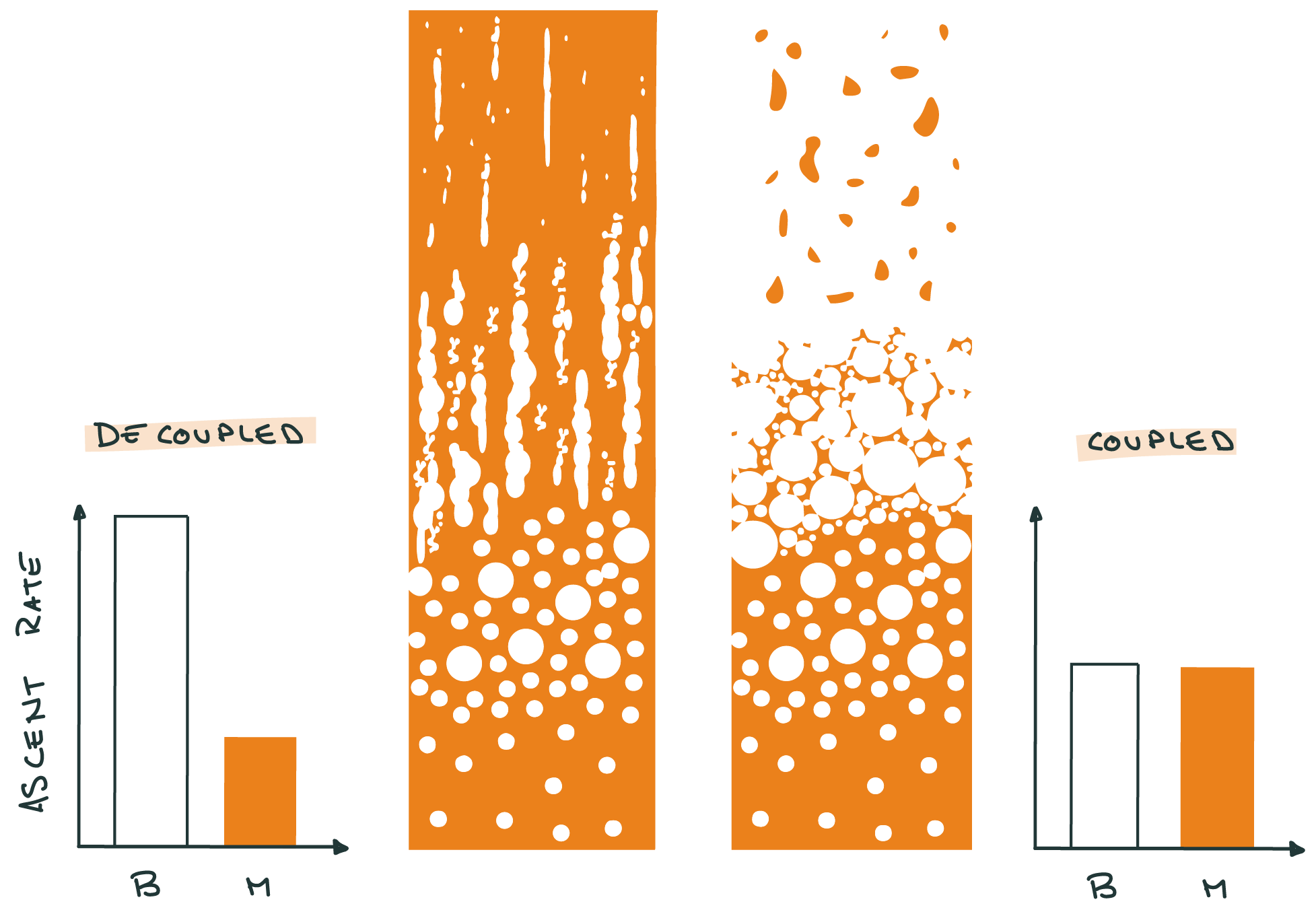
Conduit properties
Decompression rate
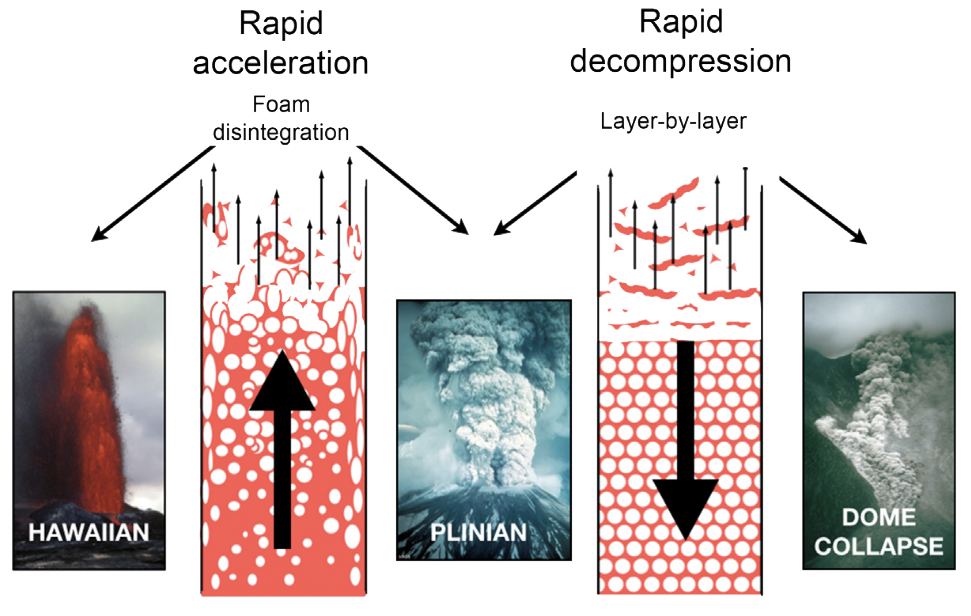
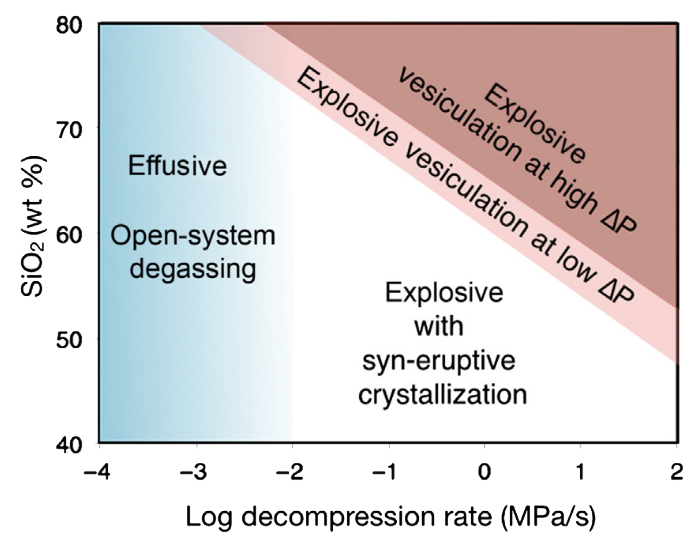
Fragmentation
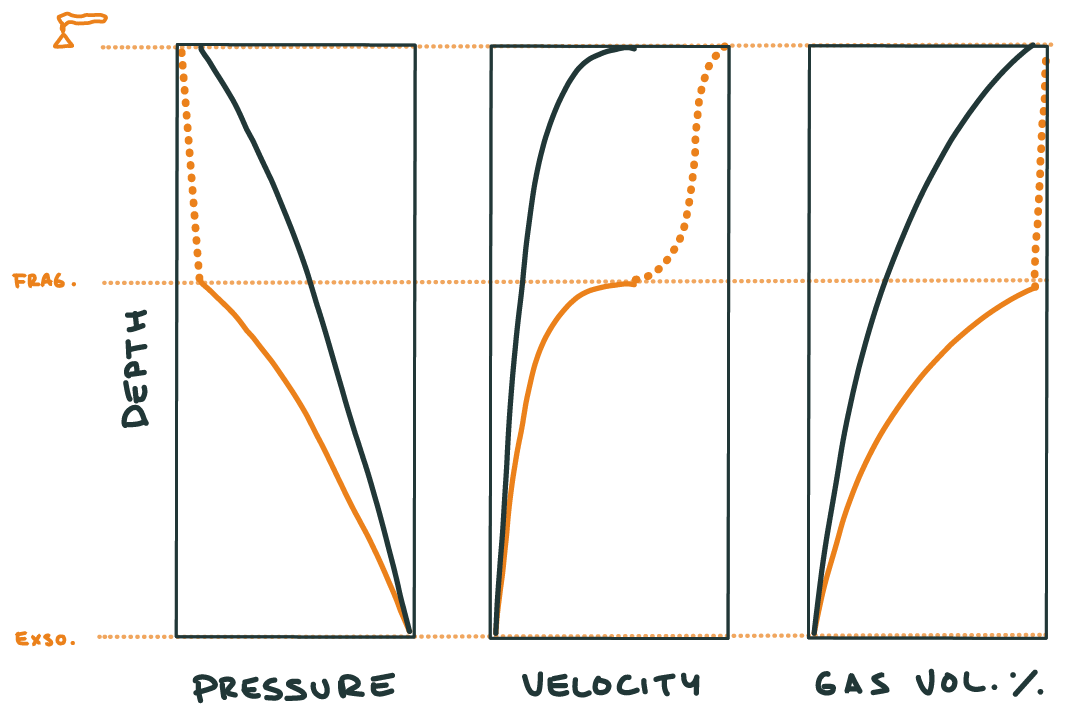
Conduit:
- Decompression
- Bubble expansion
- No permeable network (high \(\eta\))
- Acceleration
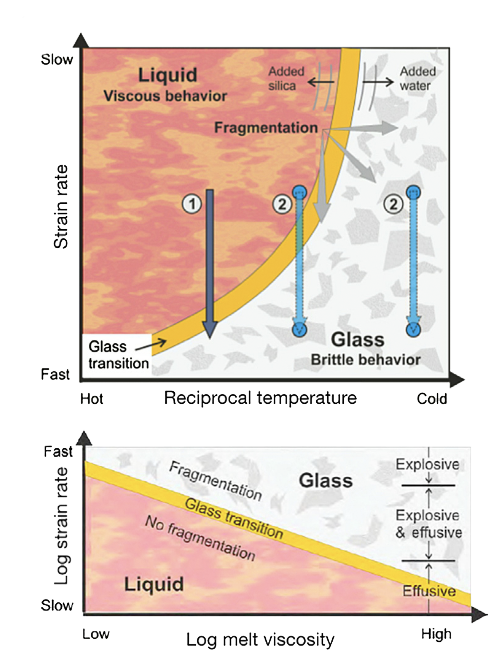
Fragmentation when:
- Deformation (strain rate) becomes faster than structural relaxation time of the melt
- Elastic response
- Brittle failure
Fragmentation end members
Ductile fragmentation
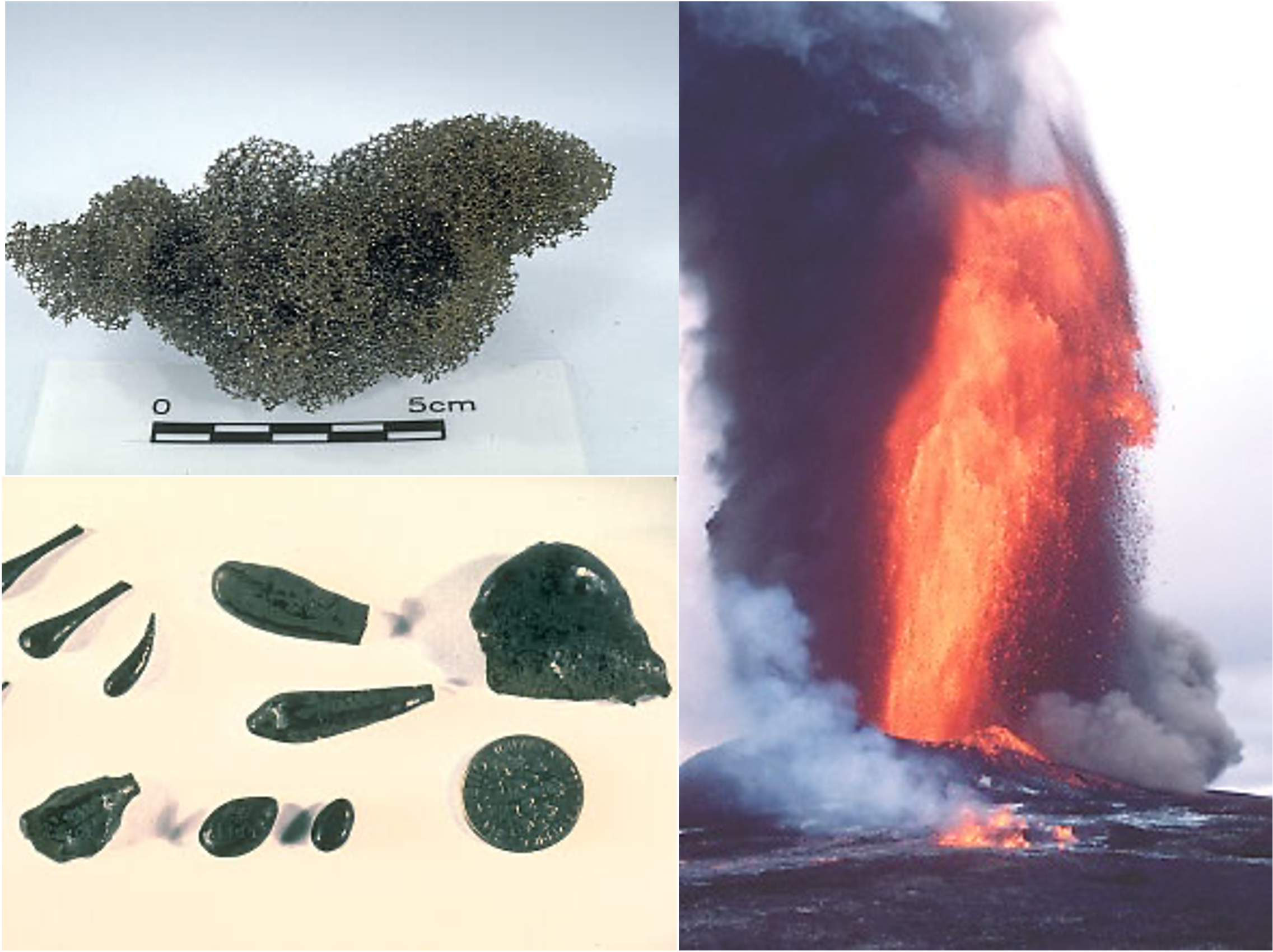
→ Magma stretches, thins and tears apart
Brittle fragmentation
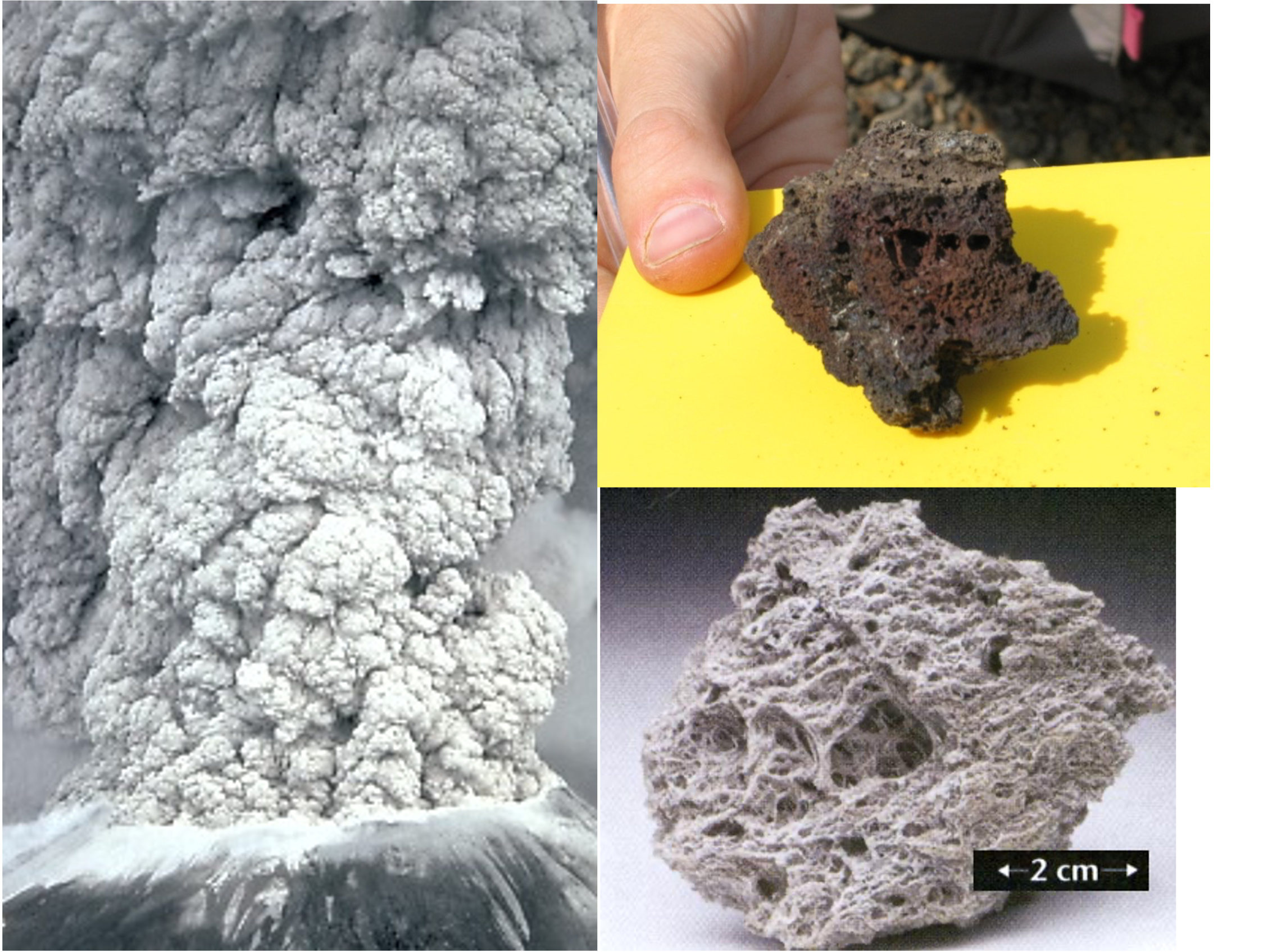
→ Brittle fracture when strain rate becomes too large
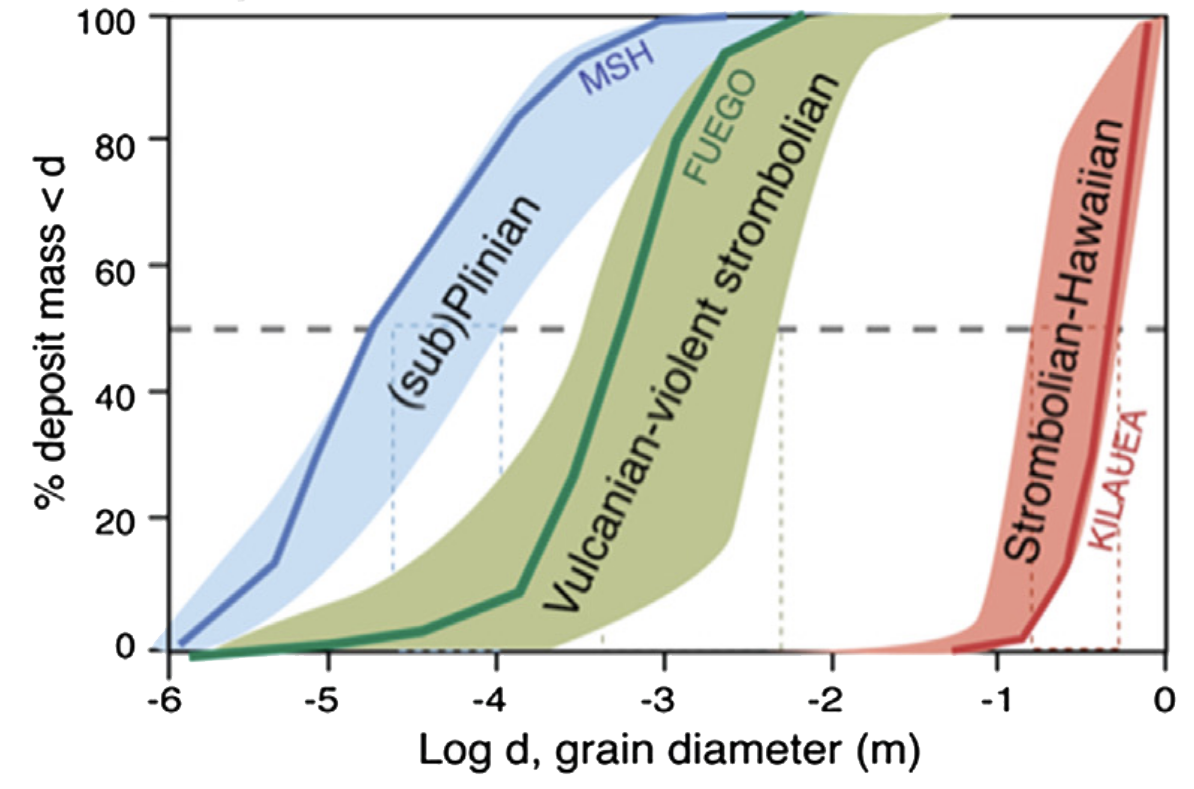
Total grain-size distribution
- Proportion of mass of the deposit contained within a size fraction
- More intense fragmentation (→ Plinian) produce fine particles
| bombs / blocks | lapilli | coarse ash | fine ash | |
|---|---|---|---|---|
| Diameter | > 64 mm | 64 mm – 2 mm | 2 mm – 63 µm | < 63 µm |
| Residence time | ≈ sec | ≈ min | ≈ hours to few days | several days |
| Travel distance | proximal <10 km | medial <50 km | distal <100 km | very distal <1000 km |
Component
Juvenile fragments
- Fragmented magma
- Generally hot
Lithic fragments
- Wall rock fragments
- Usually cold
Gas
- Hot
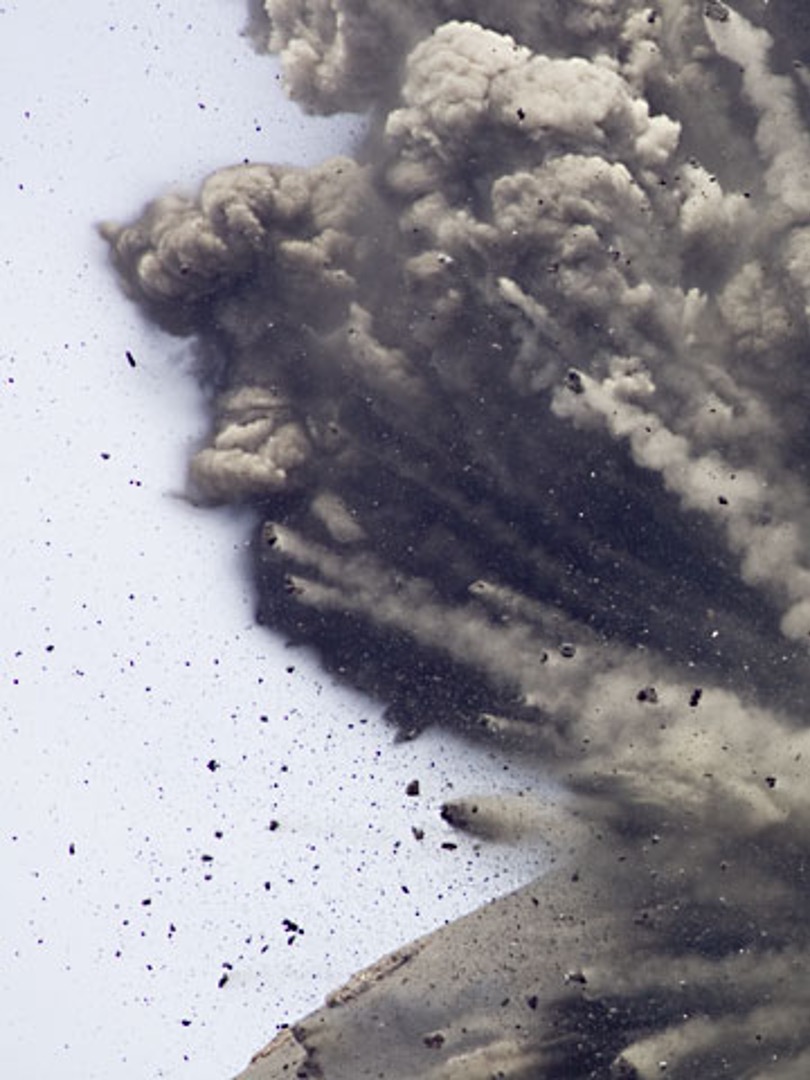
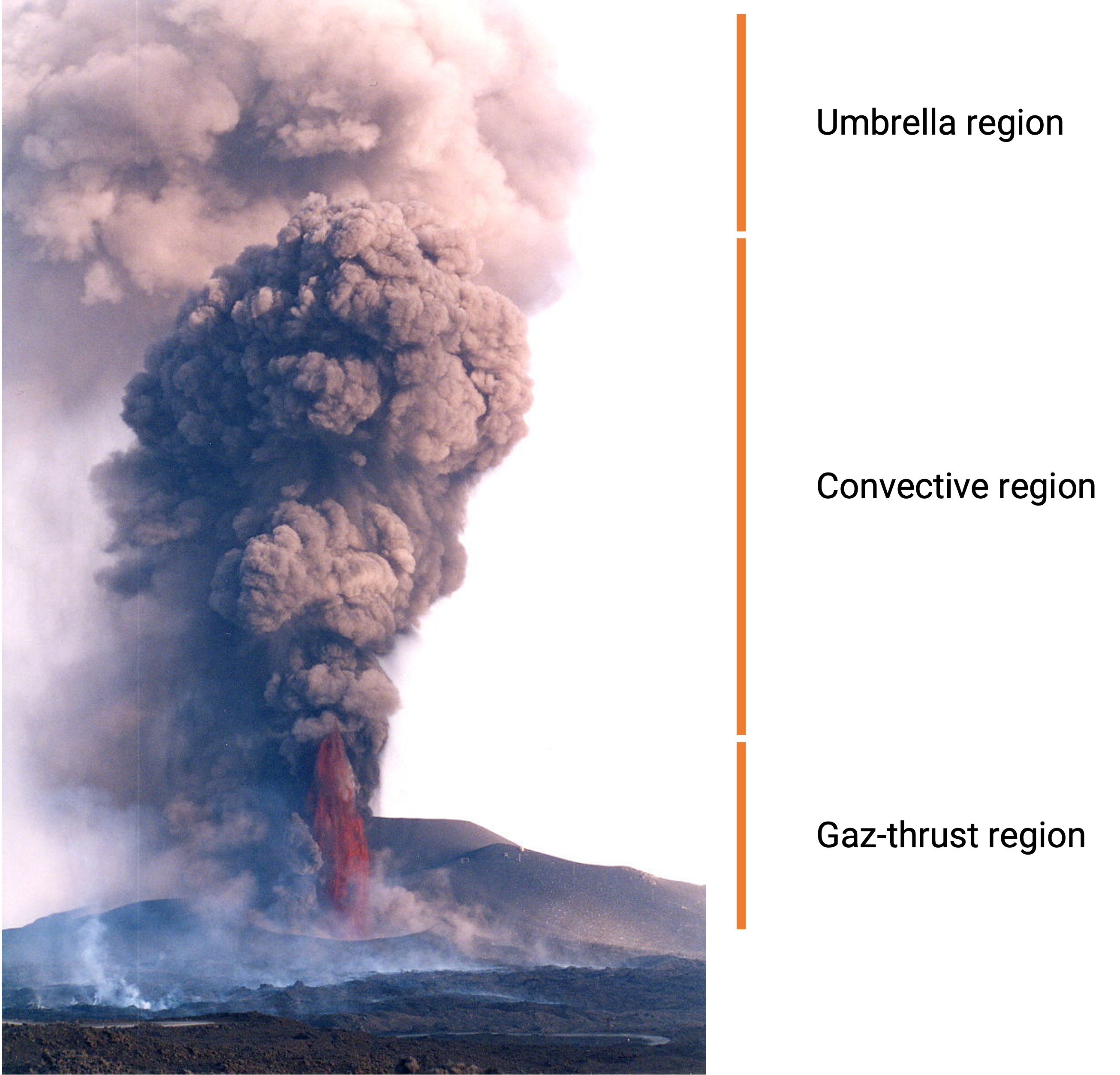
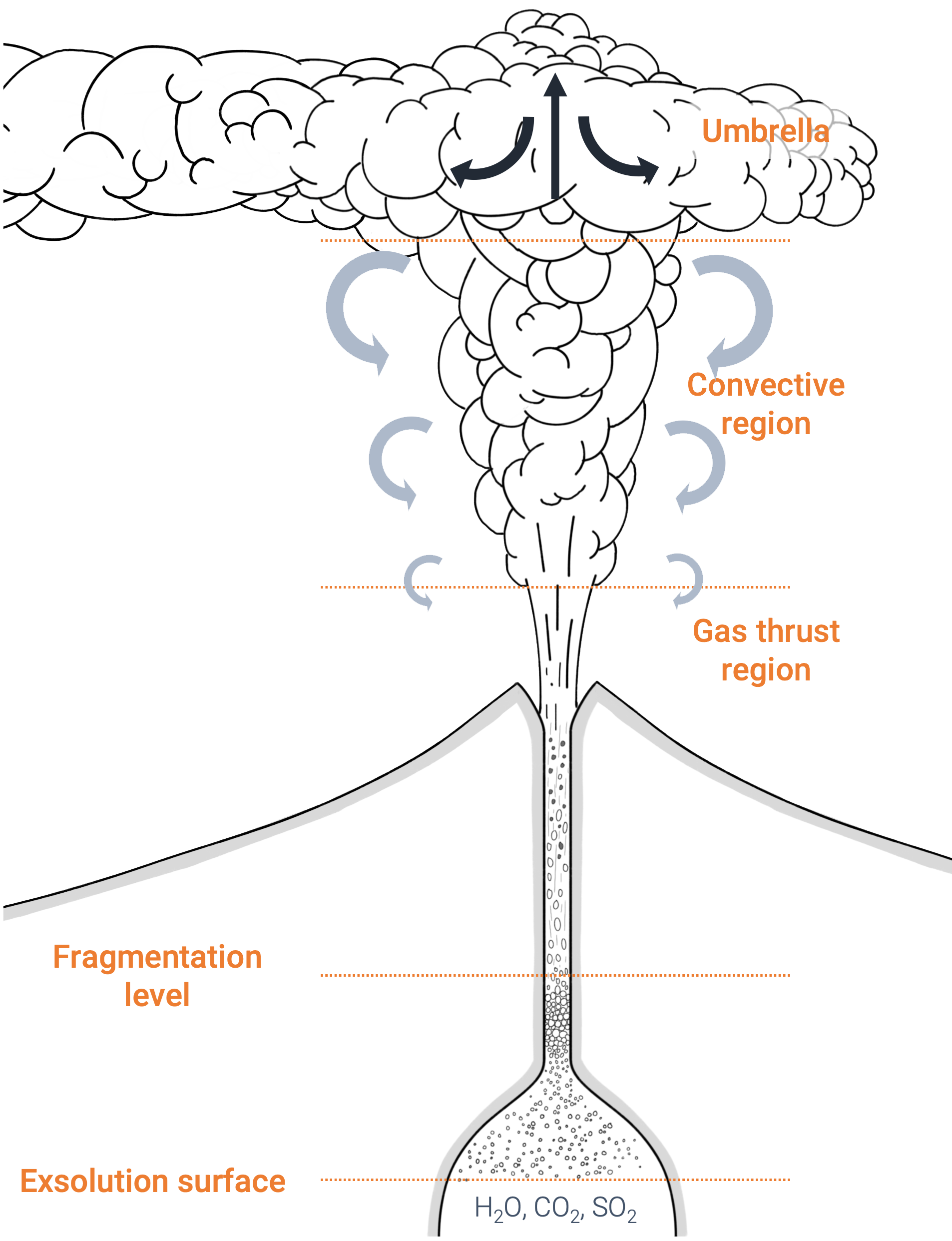
Plume regions
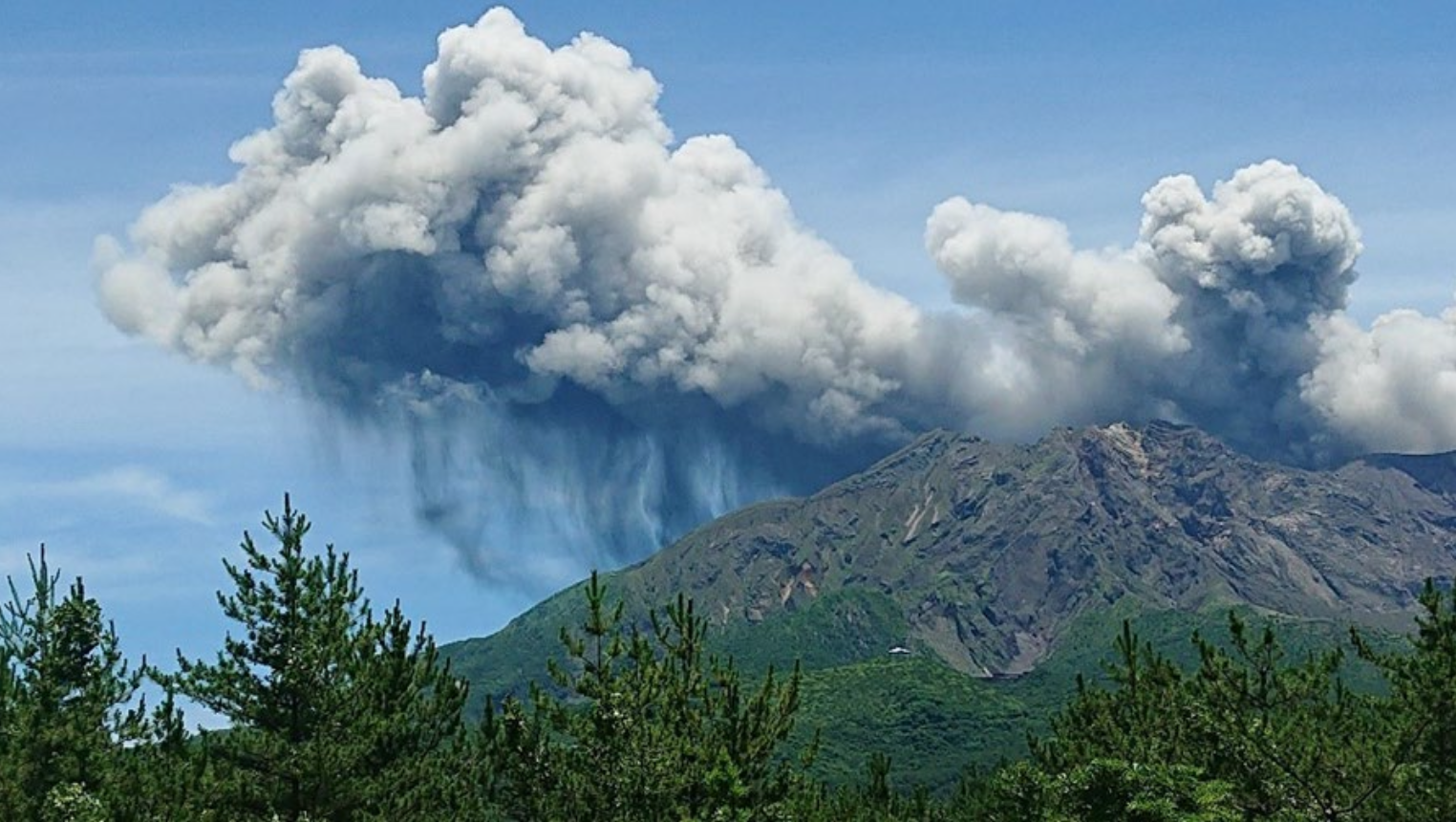
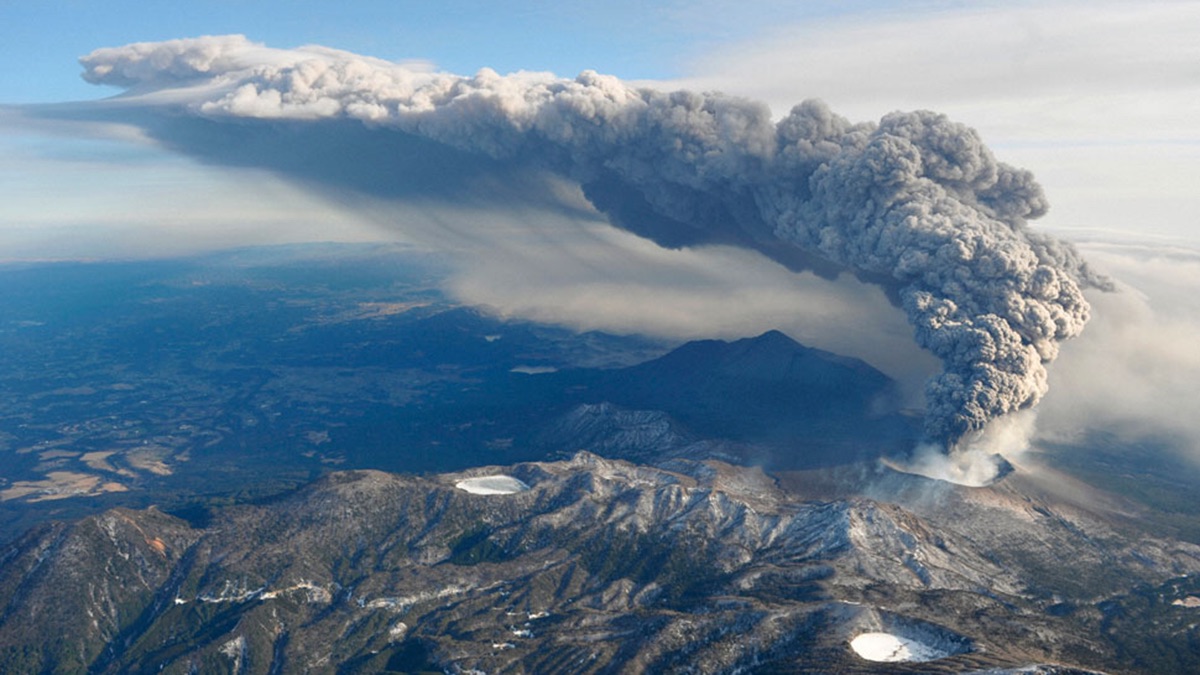
Umbrella region
- Neutral buoyancy
- Wind advection
Convective region
- Buoyancy-driven
Gas-thrust region
- Momentum-driven
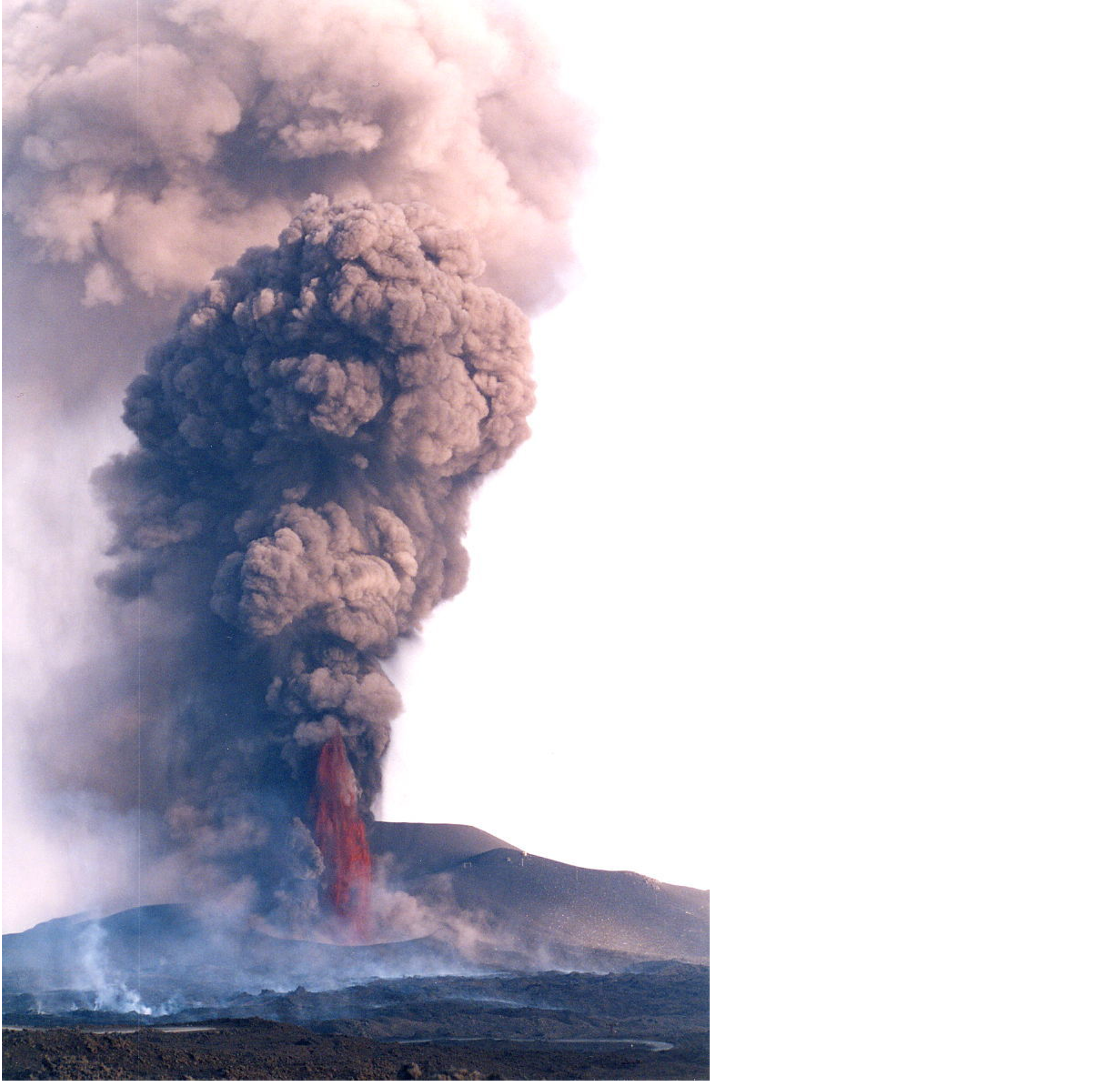
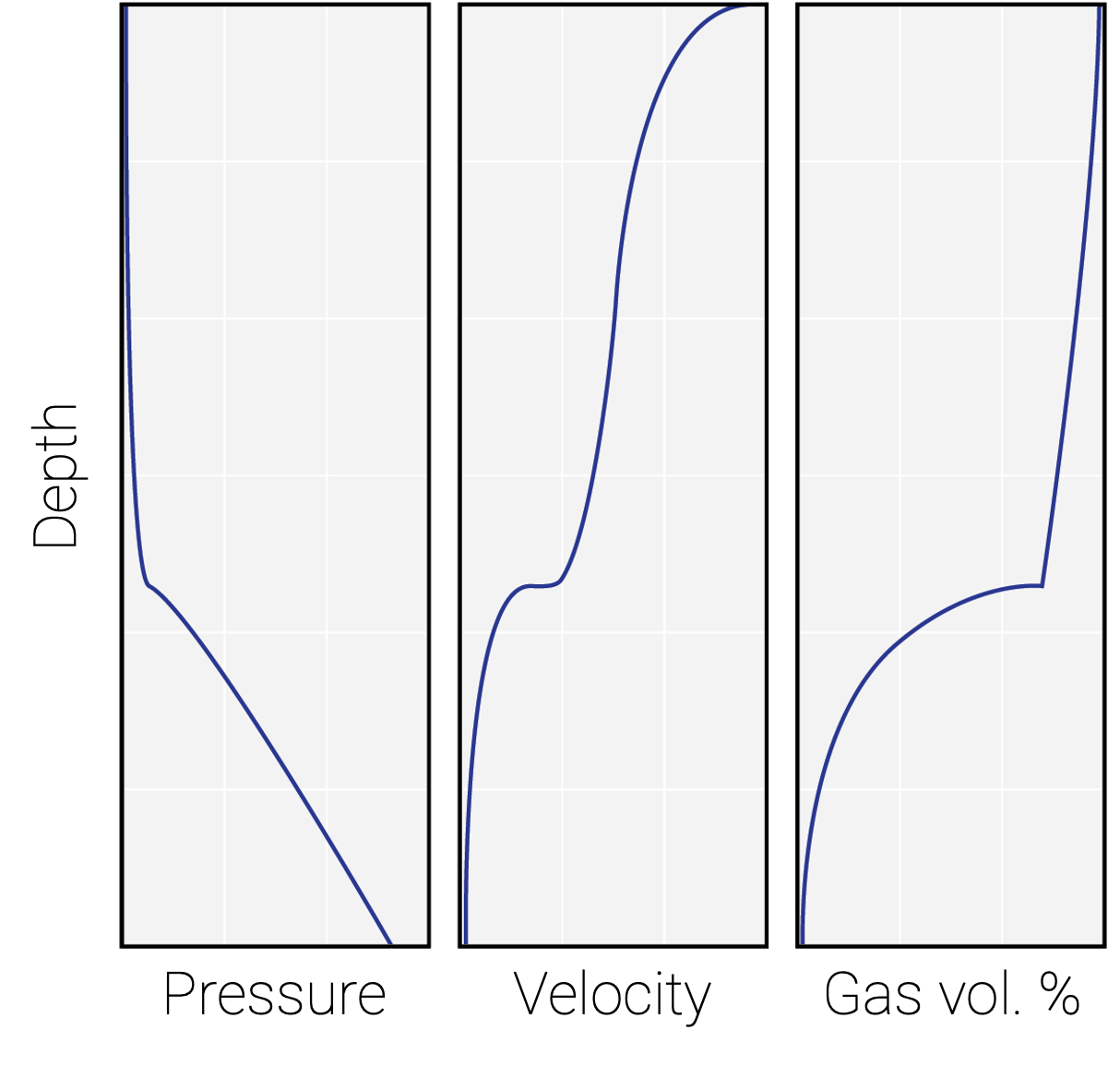
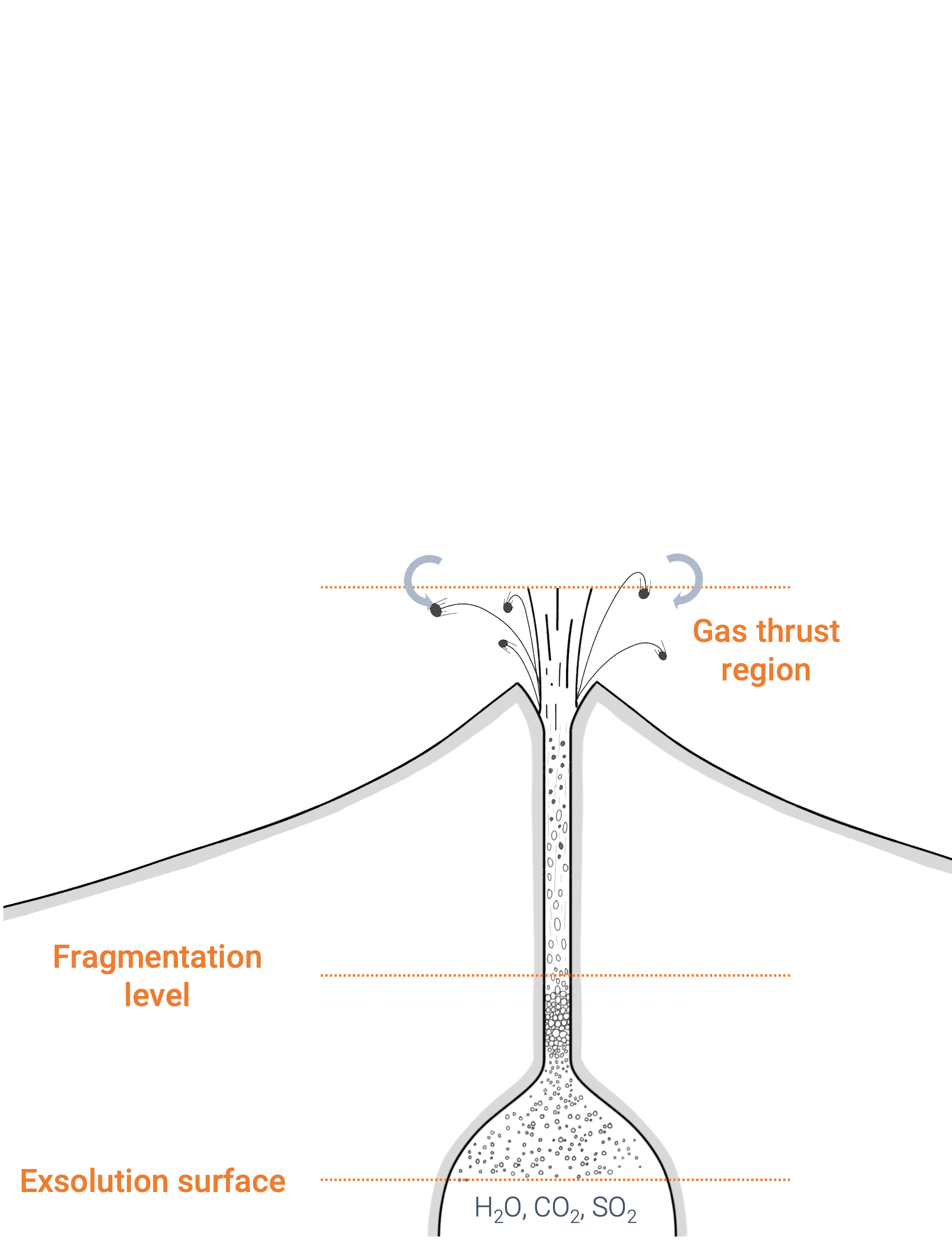
Conduit fragmentation
Fragmentation → upward acceleration
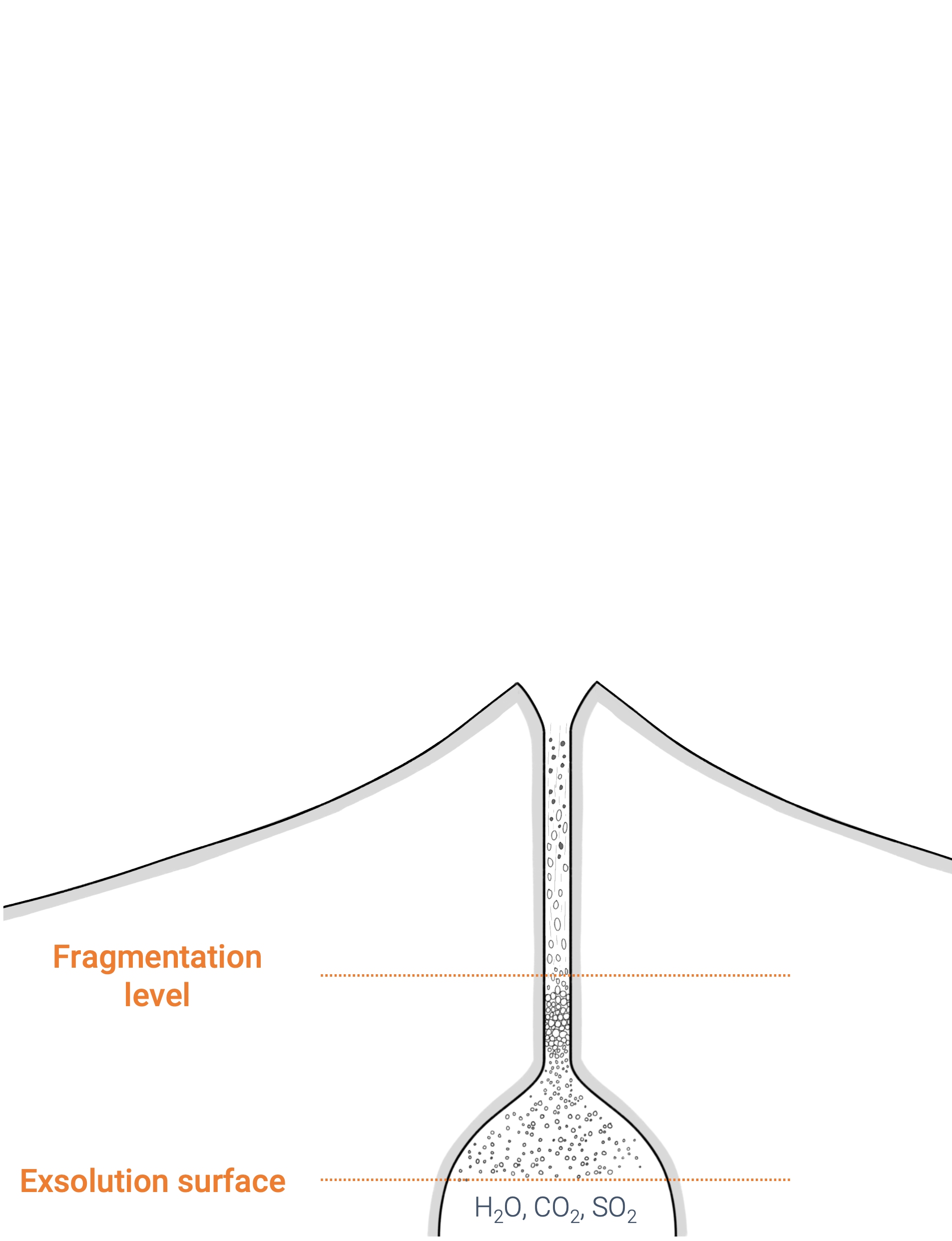
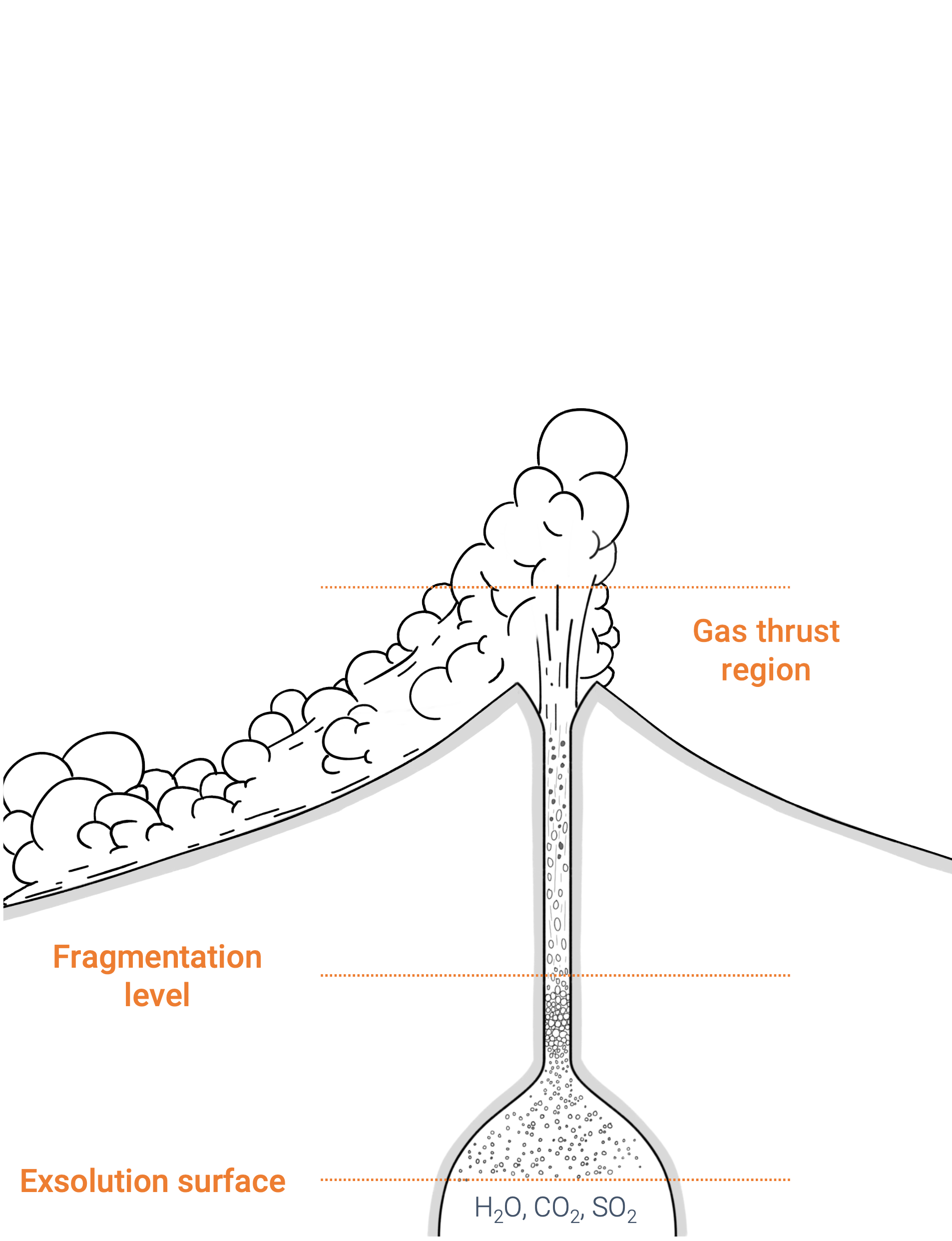
Gas-thrust region
- Momentum-driven
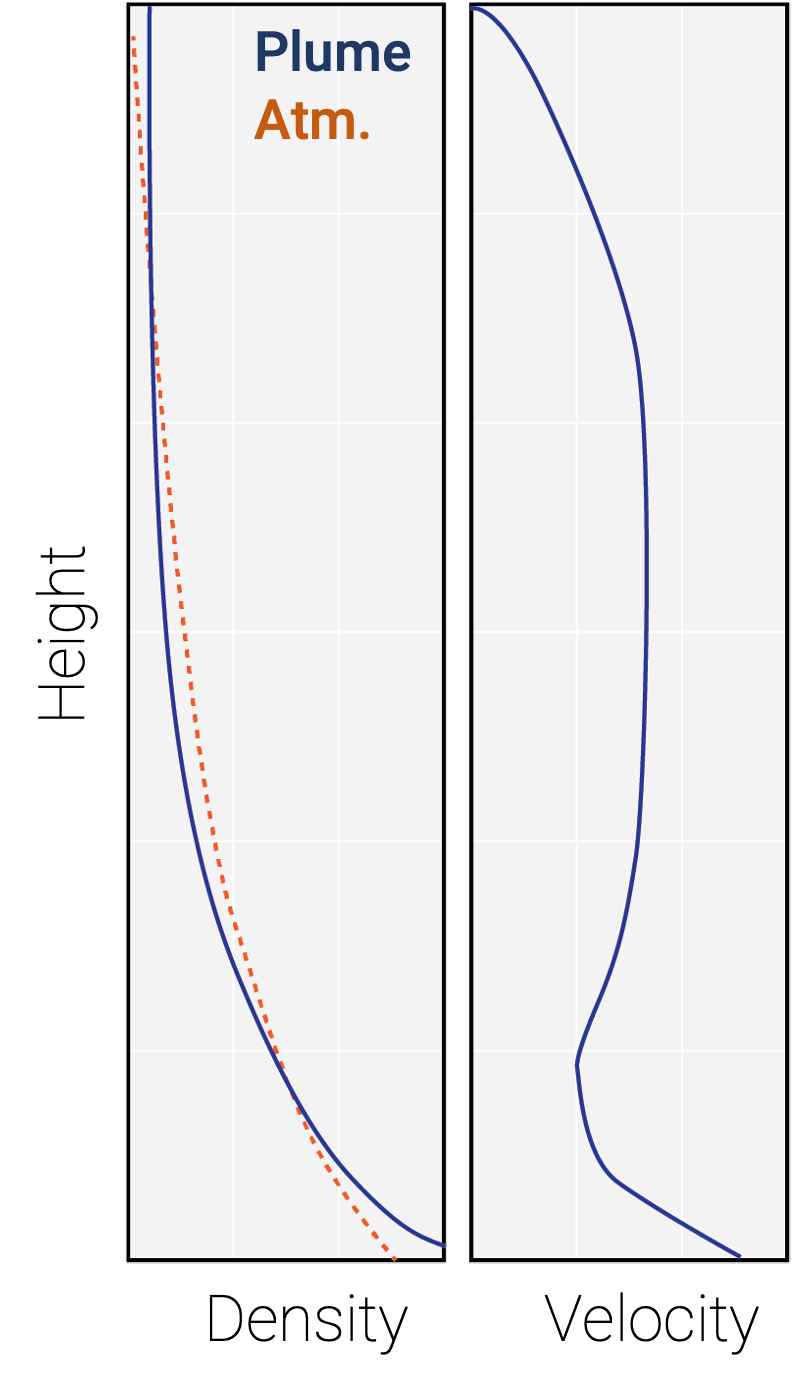
- \(\rho_{plume} > \rho_{atm}\)
- Deceleration
- Drag, gravity
- Expansion
- Rapid expansion to reach pressure equilibrium
- Mixing → turbulences
- Density equilibrium
- Thermal equilibrium
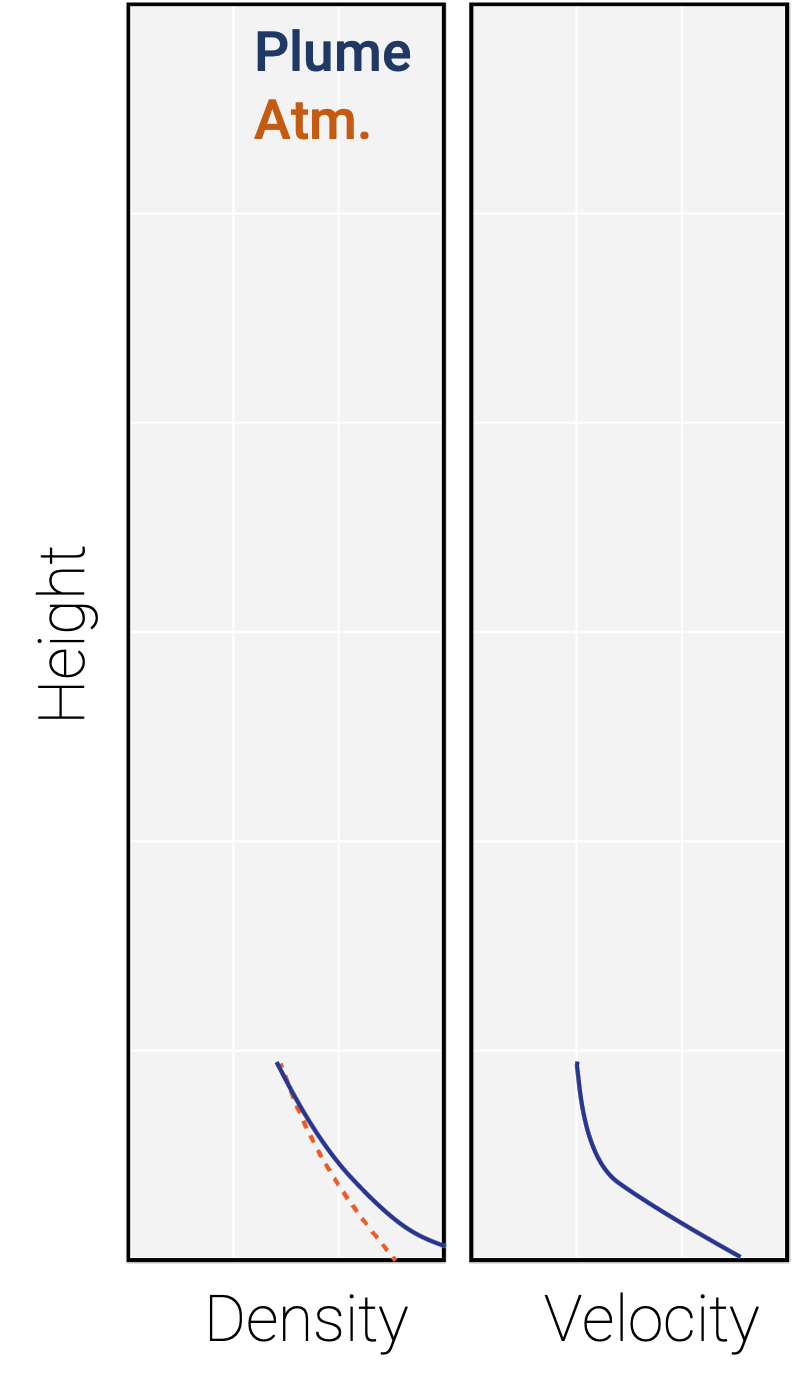
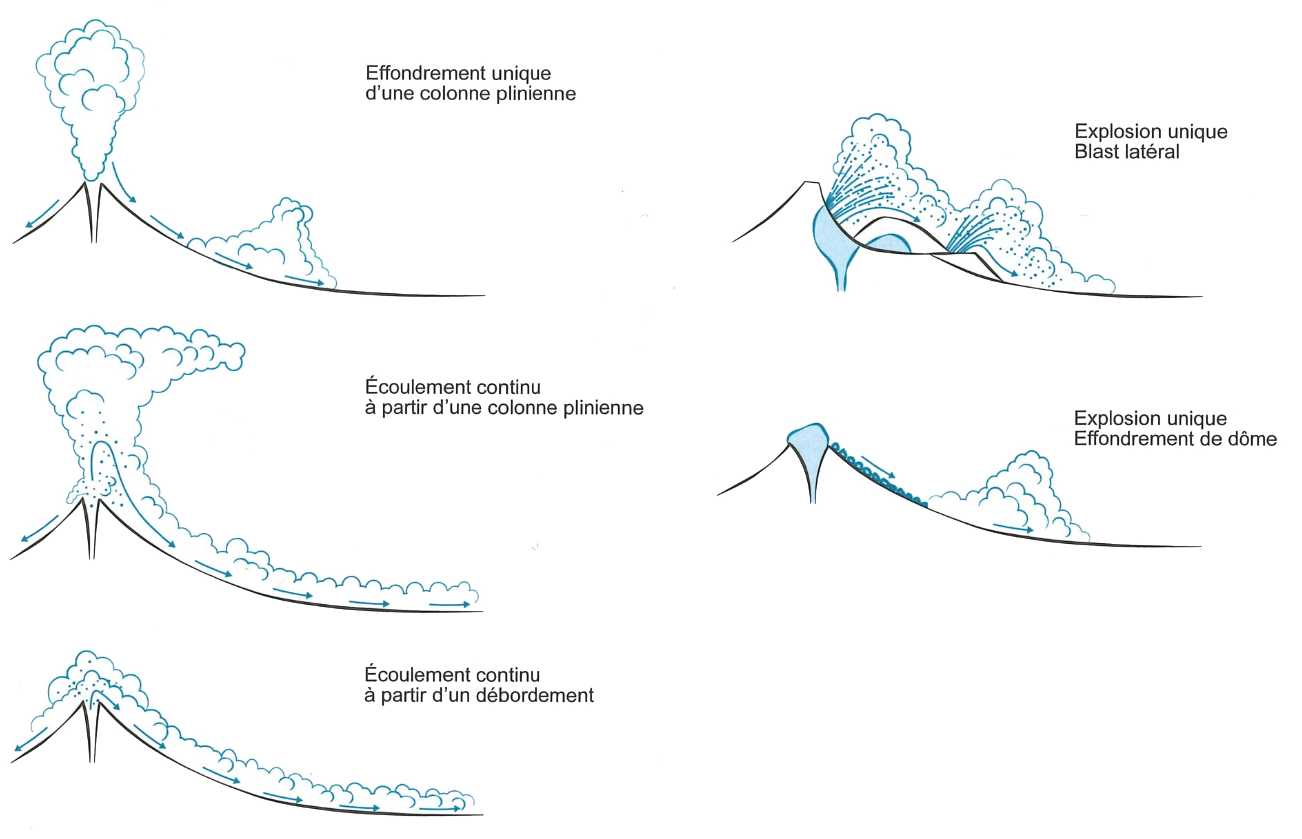
Column collapse
- Generates pyroclastic density currents (PDC)
- Lateral deposition system
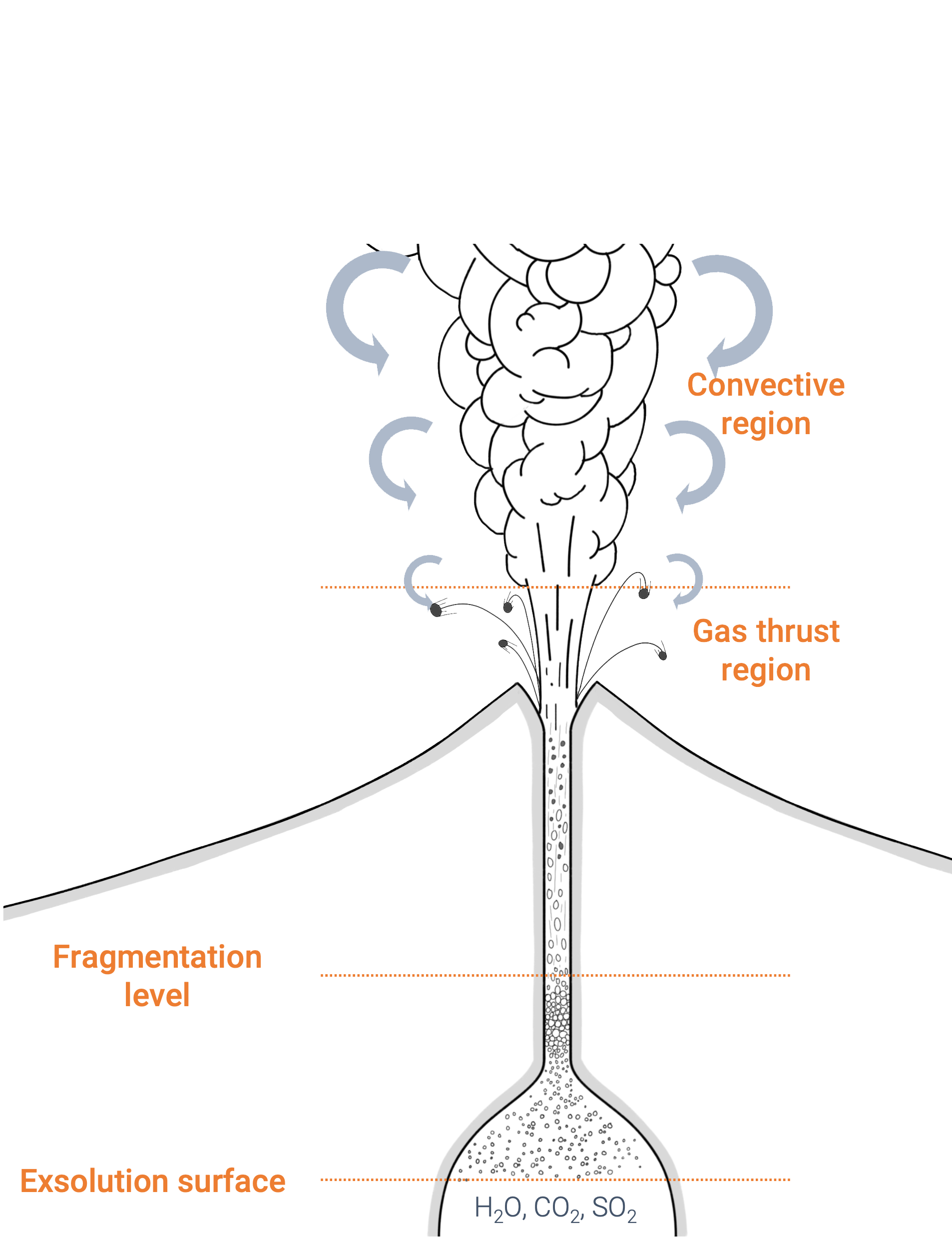
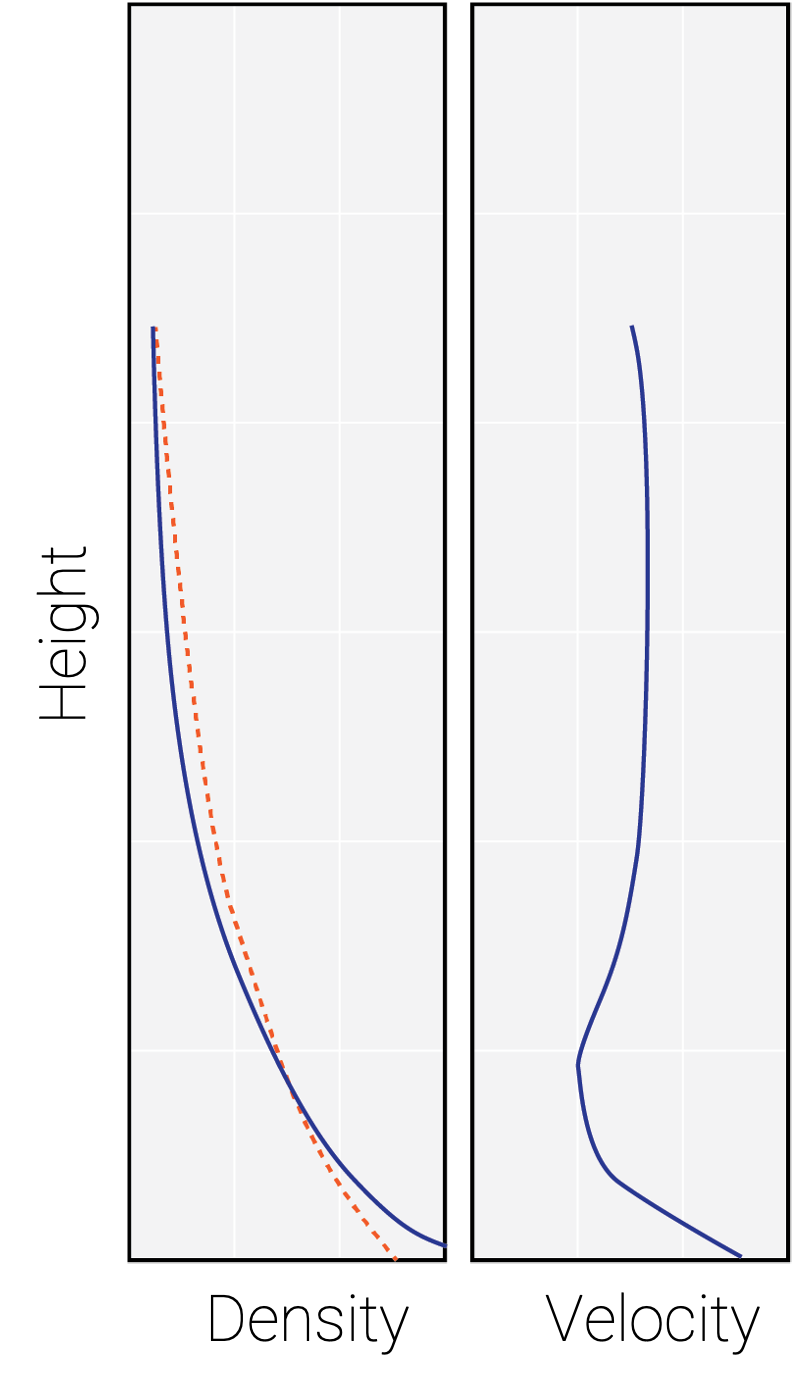
Convective region
- Buoyancy-driven
- \(\rho_{plume} < \rho_{atm}\)
- Decrease of the plume’s bulk density
- Entrainment and heating of air
- If mixture becomes lighter than ambient air
- Superbuoyancy
- Secondary acceleration
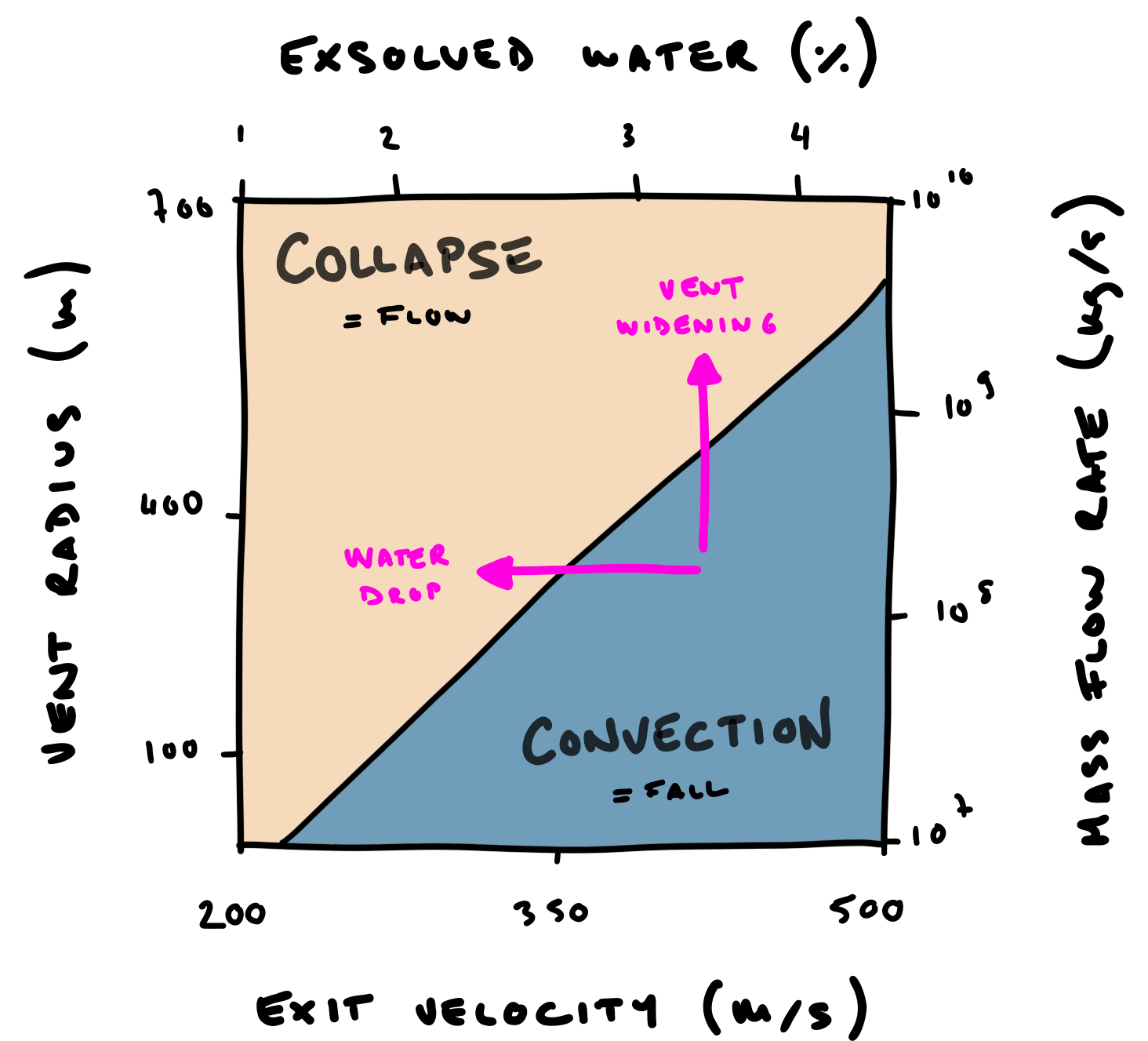
- Otherwise: Gravitational collapse
Morpho
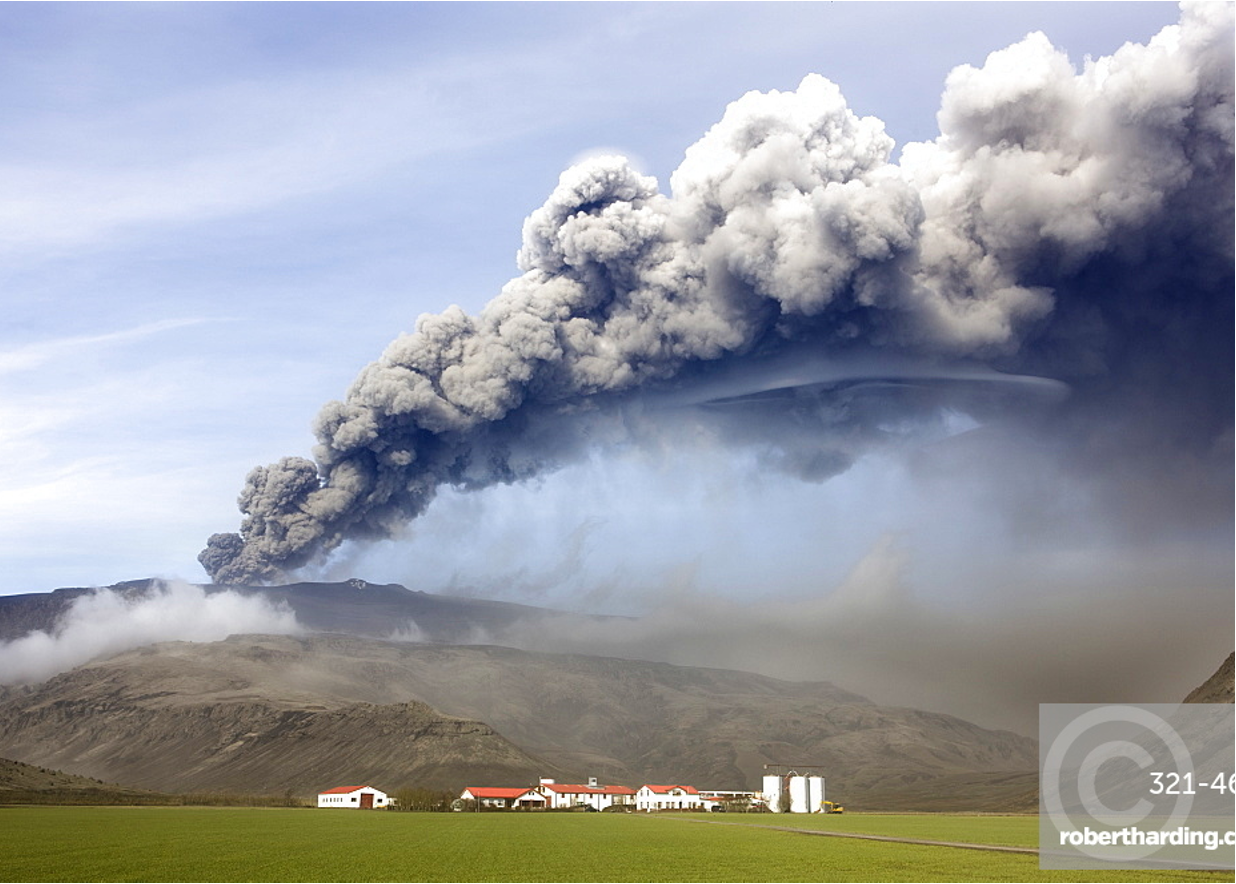
Eyjafjallajökull 2011
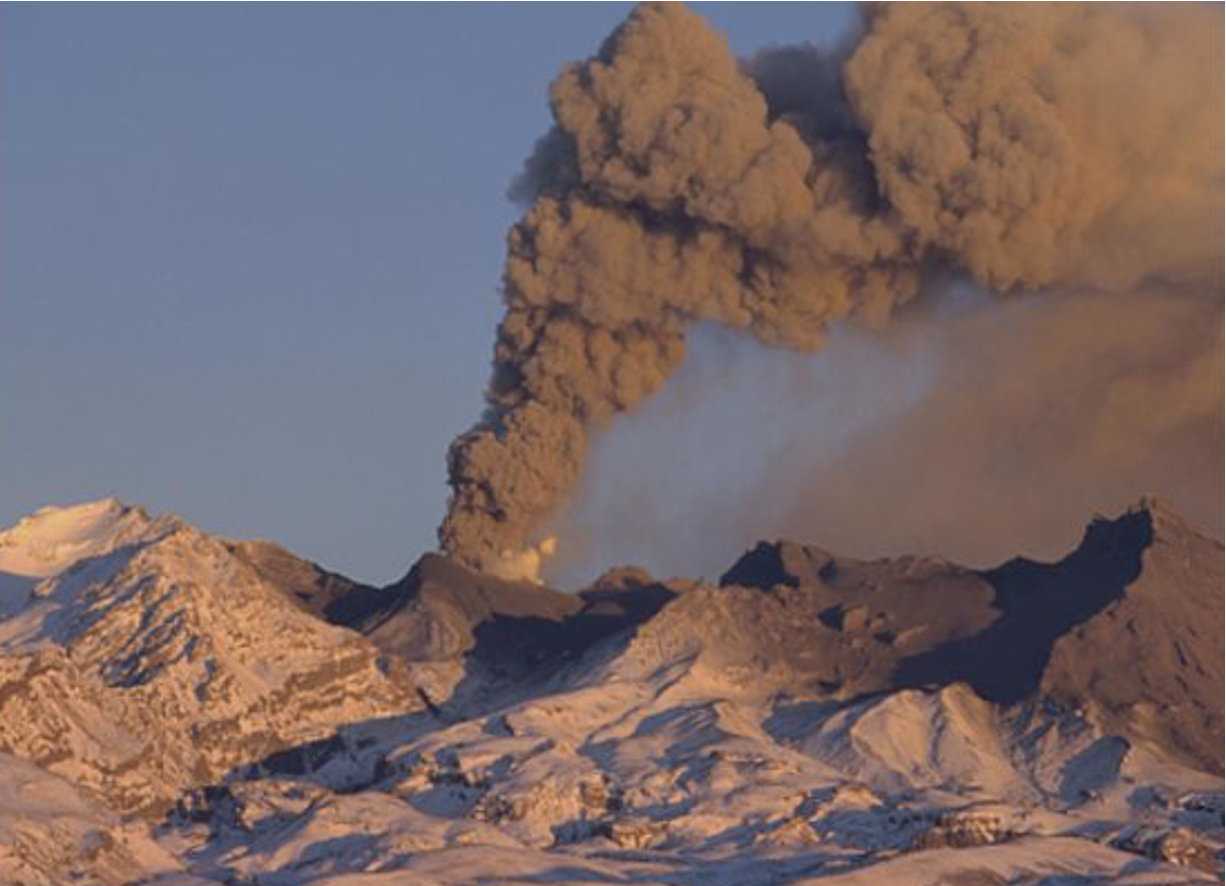
Ruapehu 1996
Cordon Caulle 2011
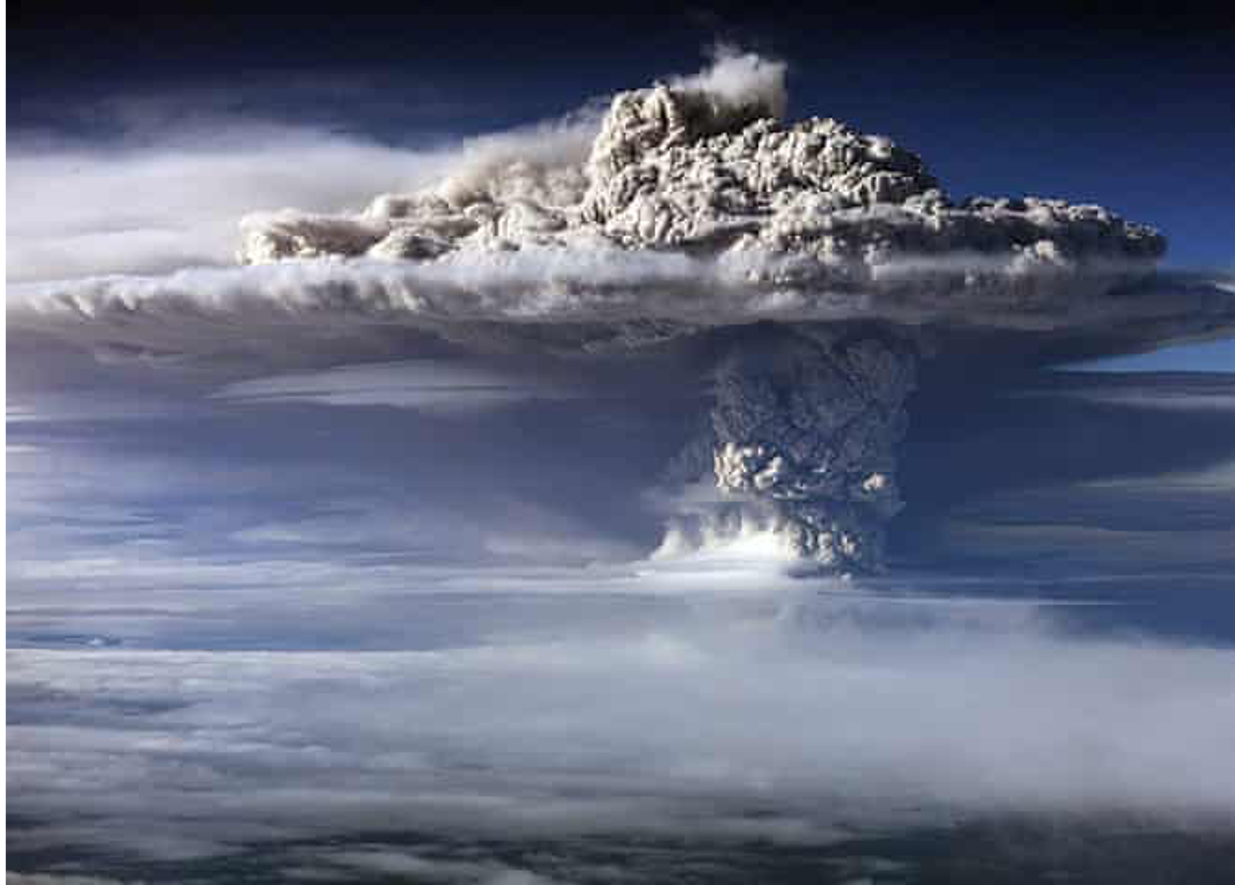
→ What controls plume morphology?
→ Eruptive vs atmospheric parameters?
Plume morphology
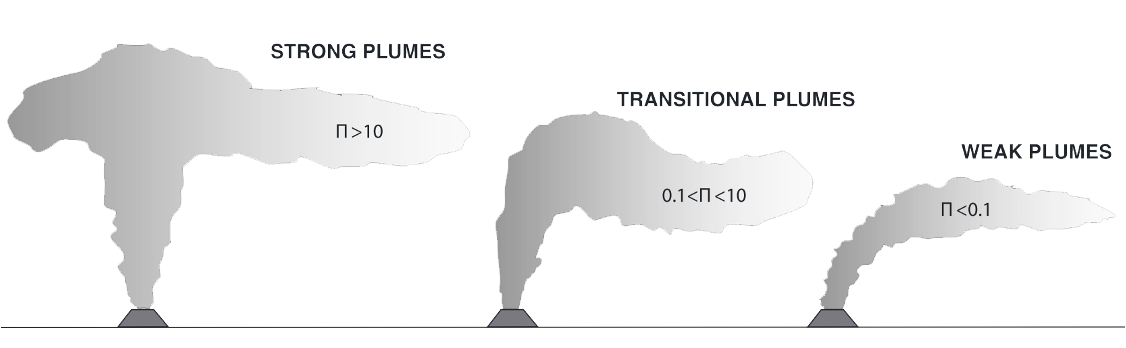
- Radial (\(\alpha\)) vs wind (\(\beta\)) entrainment
- Mass eruption rate [kg s-1]
- Function of plume height [km] H4
- Wind velocity
\[\Pi = \frac{\overline{N}H}{1.8\overline{v}} \left(\frac{\alpha}{\beta}\right)^2\]
- N: Buoyancy frequency
Umbrella region
- Lateral wind advection
- \(\rho_{plume} = \rho_{atm}\)
- Momentum overshoot
- Gravity current
- Spreading at level of neutral buyancy
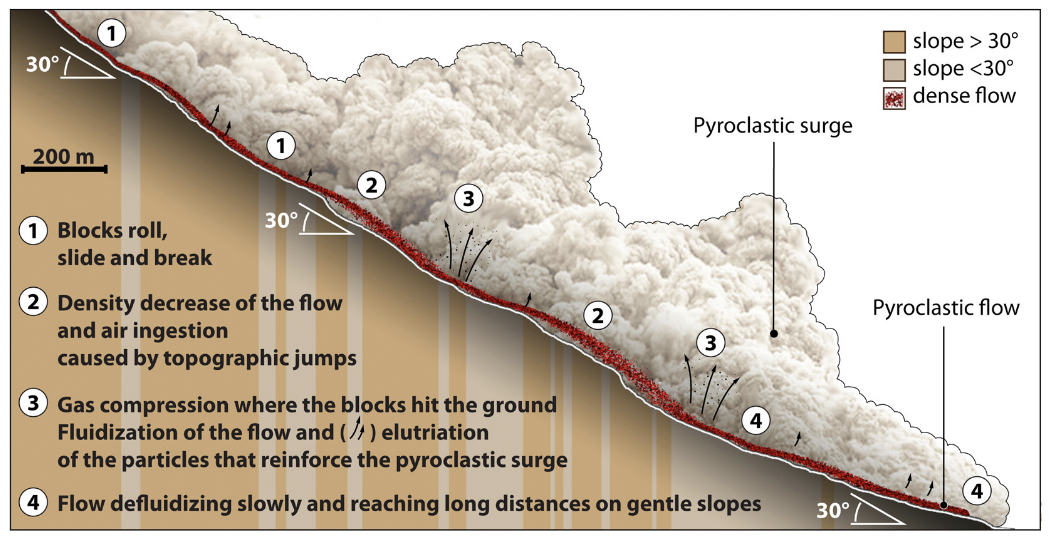
PDC Generation
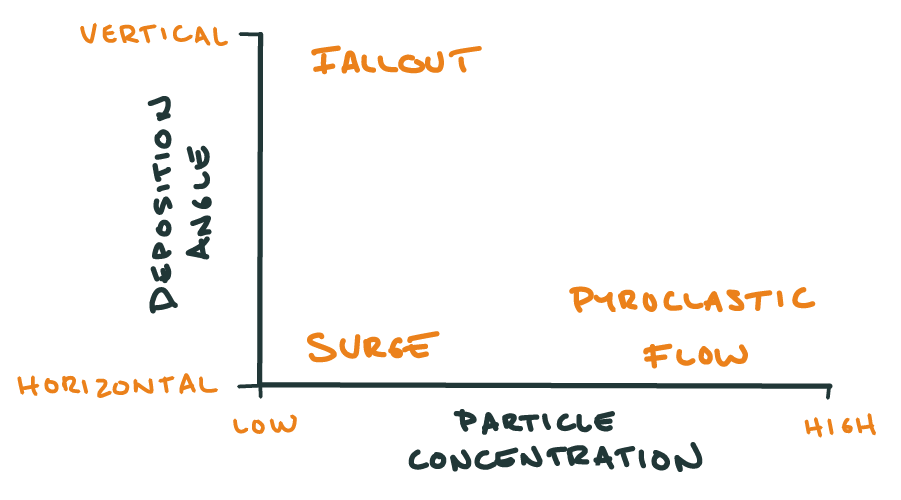
Lack of buoyancy → pyroclastic density currents (PDC)
Emplacement mechanisms
- Complex mixtures of gases and solids
- 200°C to 700°C
- 50 to 700 km/h
- Runout: 10’s to 100’s km
- Affected by topography
- 2 end-members:
- pyroclastic surges
- pyroclastic flows
- pyroclastic surges
“It is . . . unrealistic to hope that all flowage deposits can be conveniently classed into either category and that a single set of transport and depositional processes would apply to each case.”
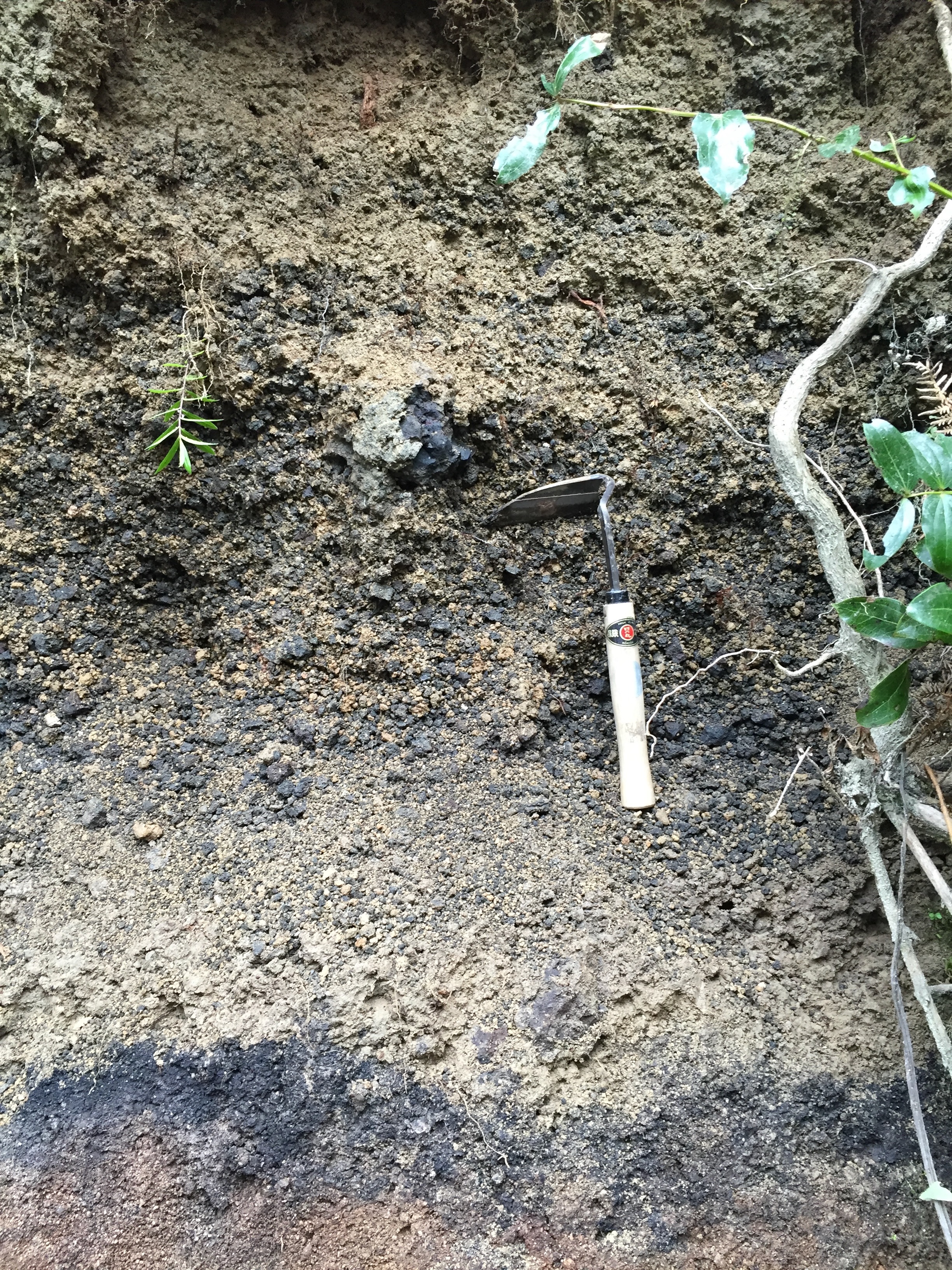
Pyroclastic deposits: Size
Size
- Size class(es)
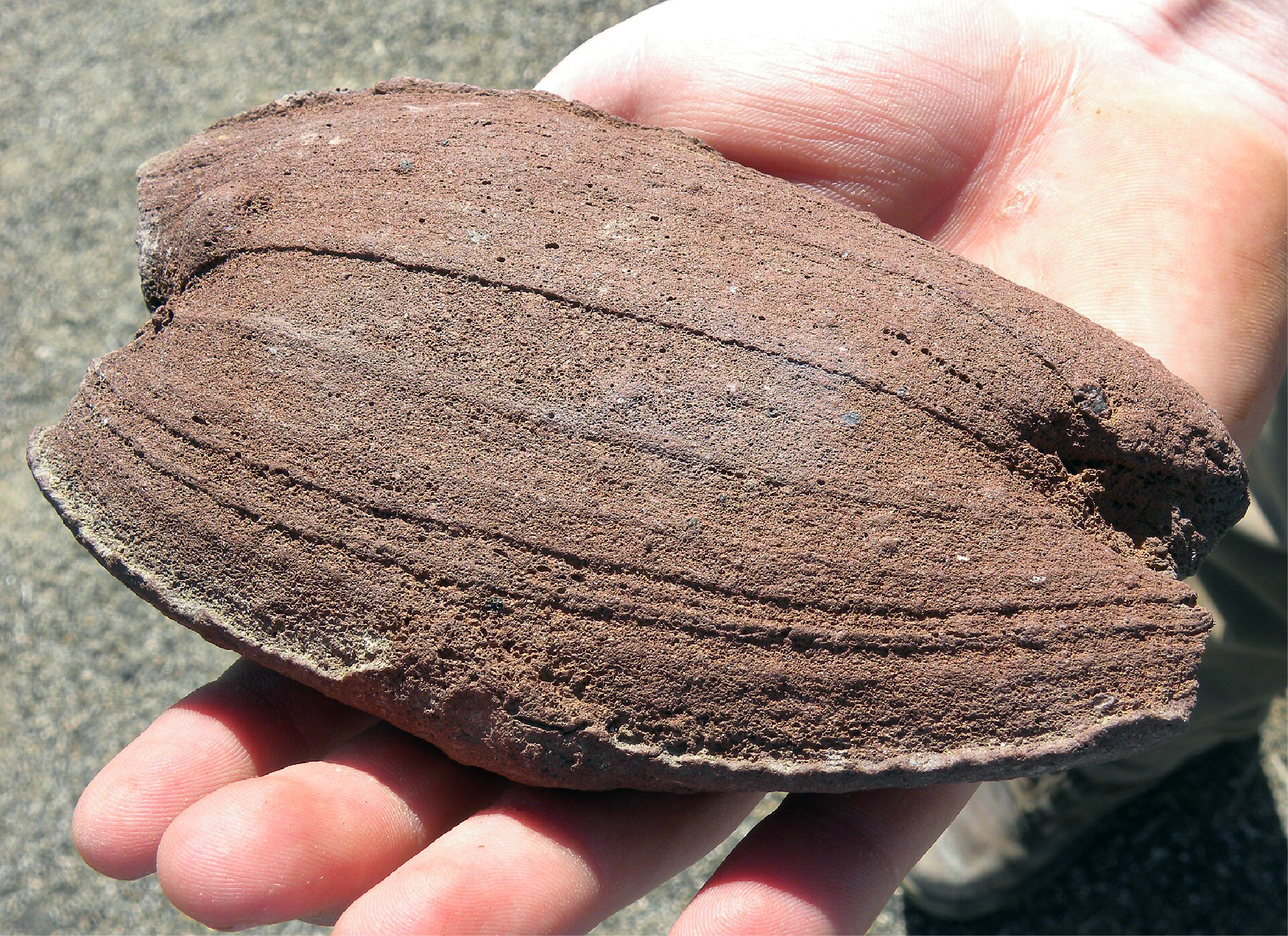
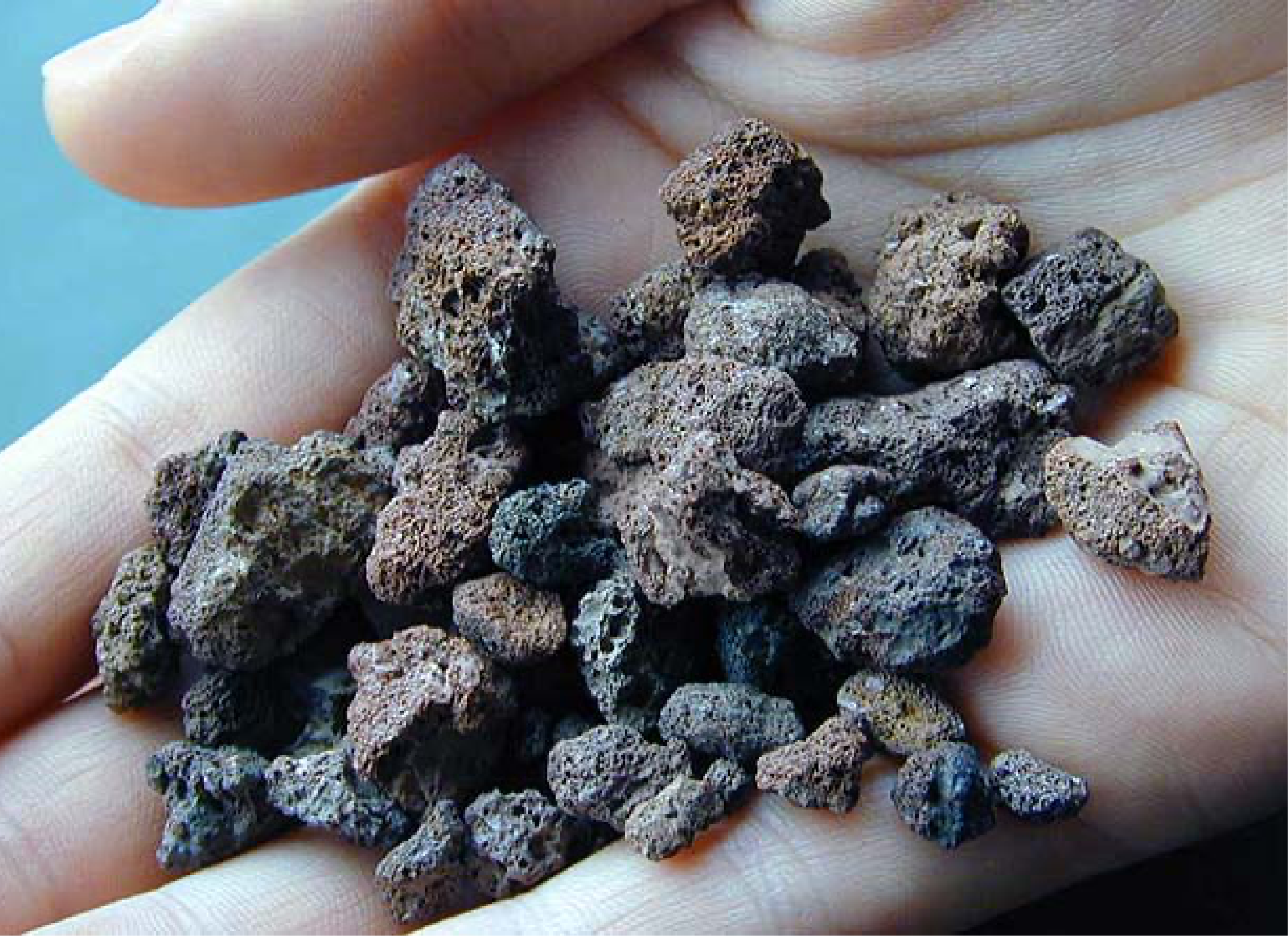
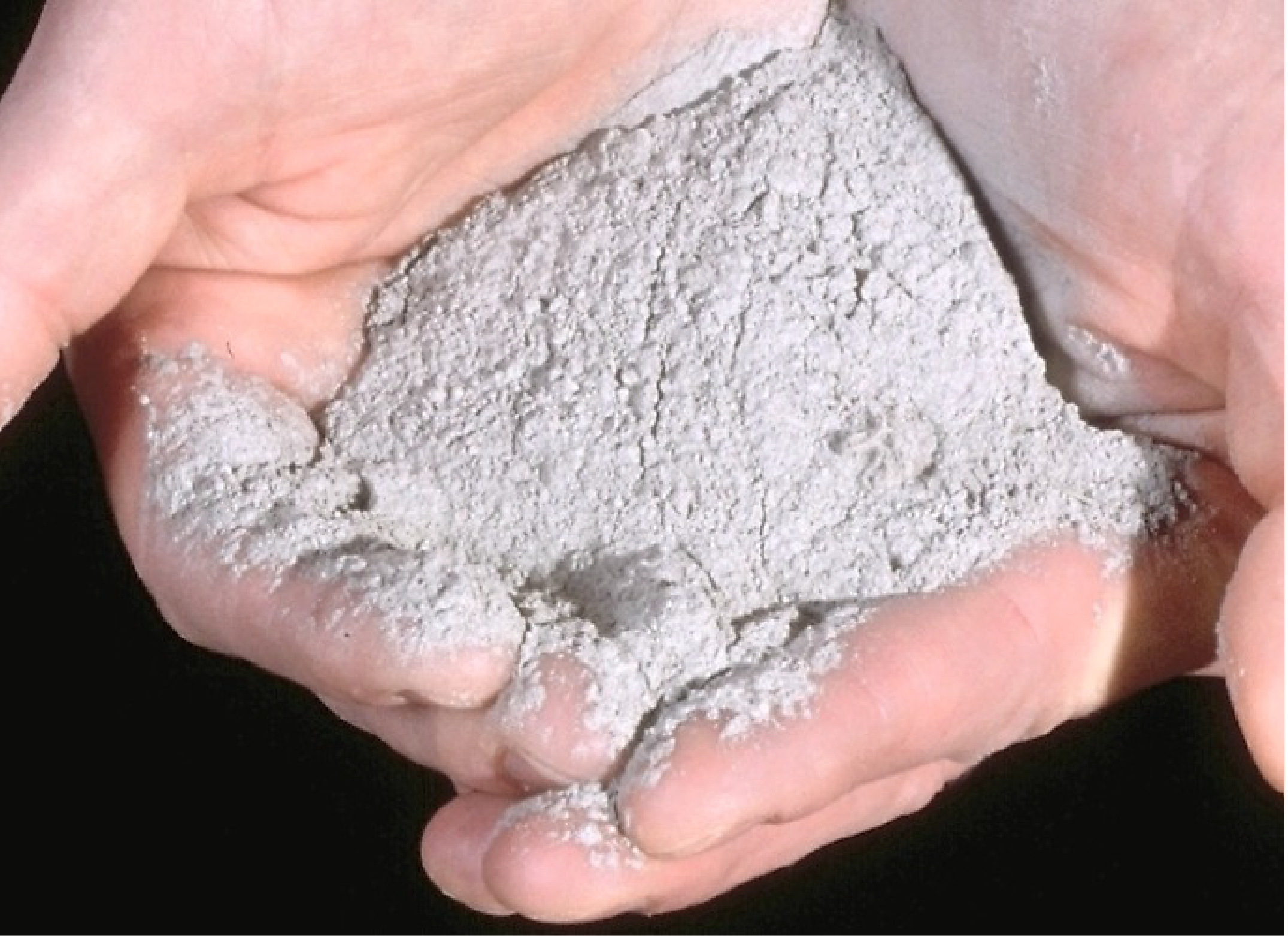

| Category | Diameter |
|---|---|
| Fine ash | < 0.063 mm |
| Coarse ash | 0.063 – 2 mm |
| Fine lapilli | 2 – 16 mm |
| Coarse lapilli | 16 – 64 mm |
| Blocks/Bombs | > 64 mm |
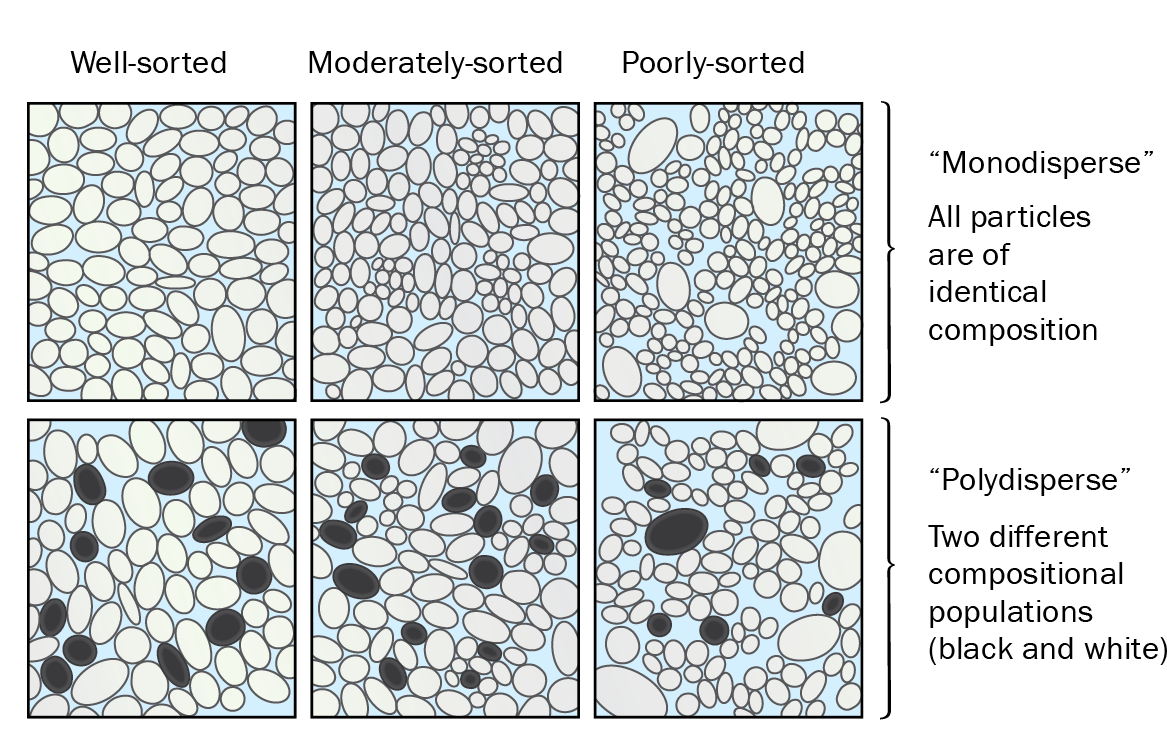
Pyroclastic deposits: Sorting/componentry
Sorting/Componentry
- Variability of size
- Well sorted
- Poorly sorted
- Componentry
- Juvenile, lithic, crystals
- Pristine vs altered
- Fluidal vs angular
- Shiny vs mat
Pyroclastic deposits: Texture
Texture
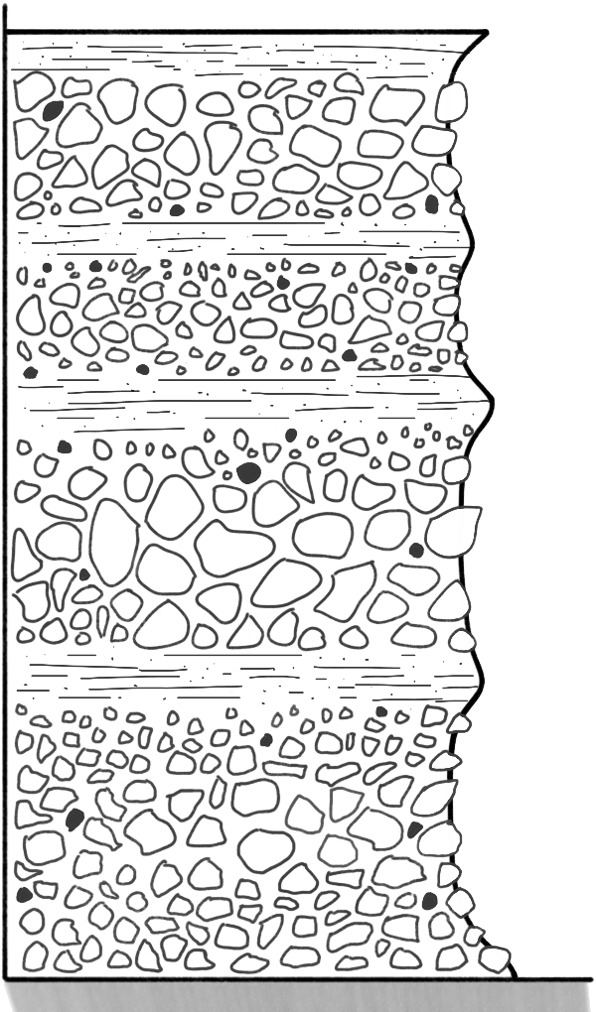
- Massive vs layered
- Class supported vs matrix supported
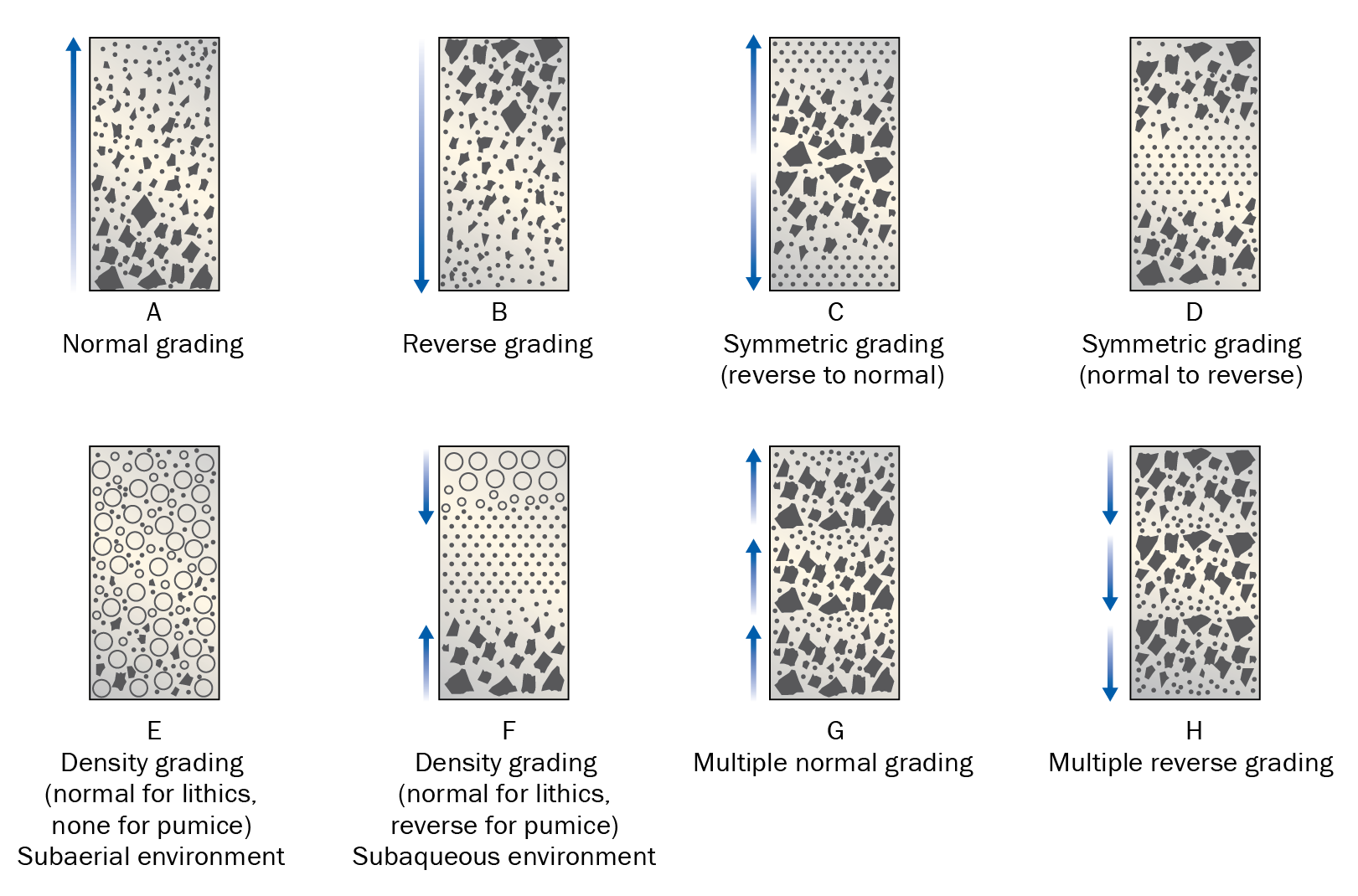
Vertical structures
- Grading
Sedimentary structures
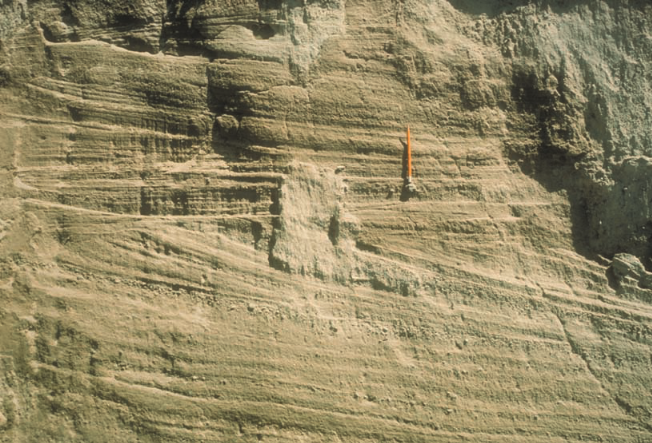
- Plane parallel
- Cross bedding
- Erosional contacts
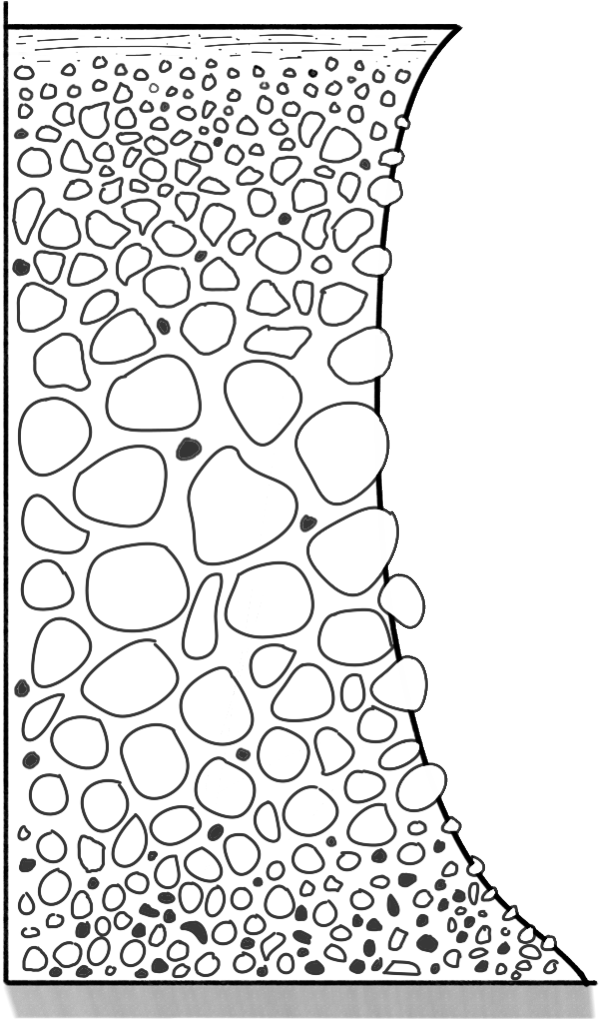
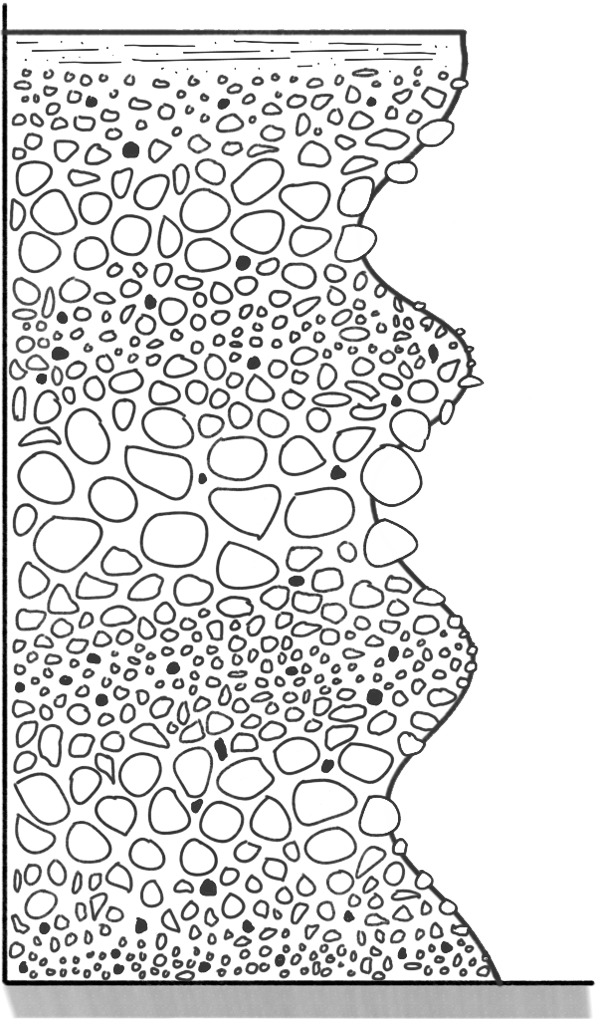
Tephra fallout
Wind advection → ± aerodynamic filter
- Coarse particles
- Fall close to the vent
- Have short atmospheric residence time
- Fine particles
- Are carried away by the wind
- Have long atmospheric residence time
Deposits are
- Well-sorted
- Massive, clast-supported
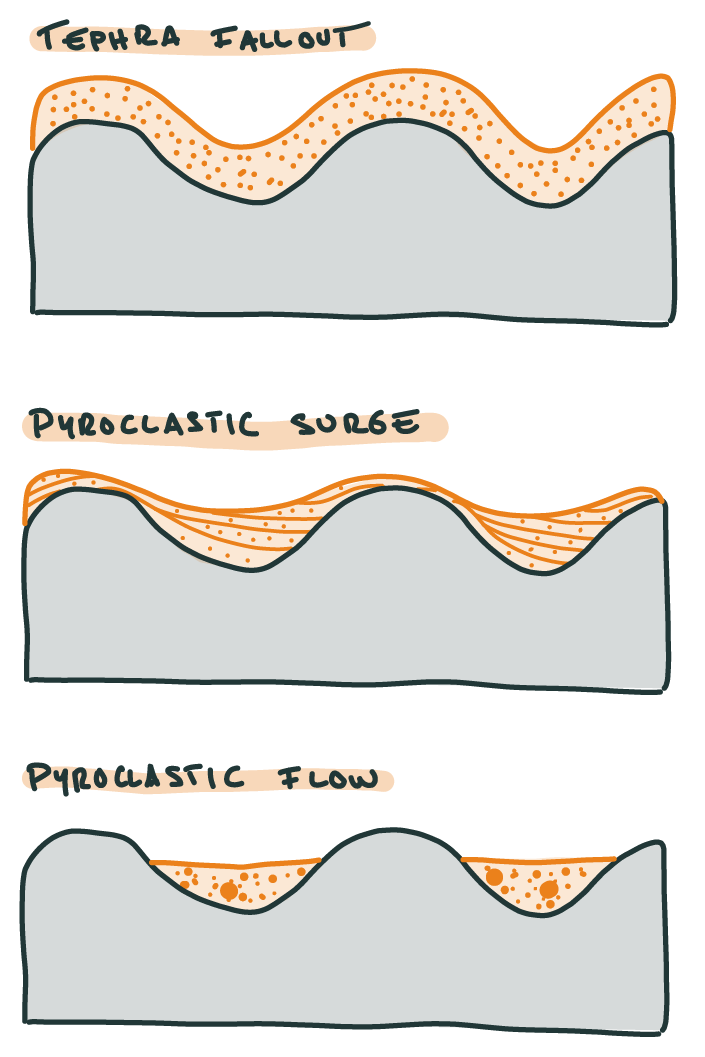
- Plane parallel, draping the topography
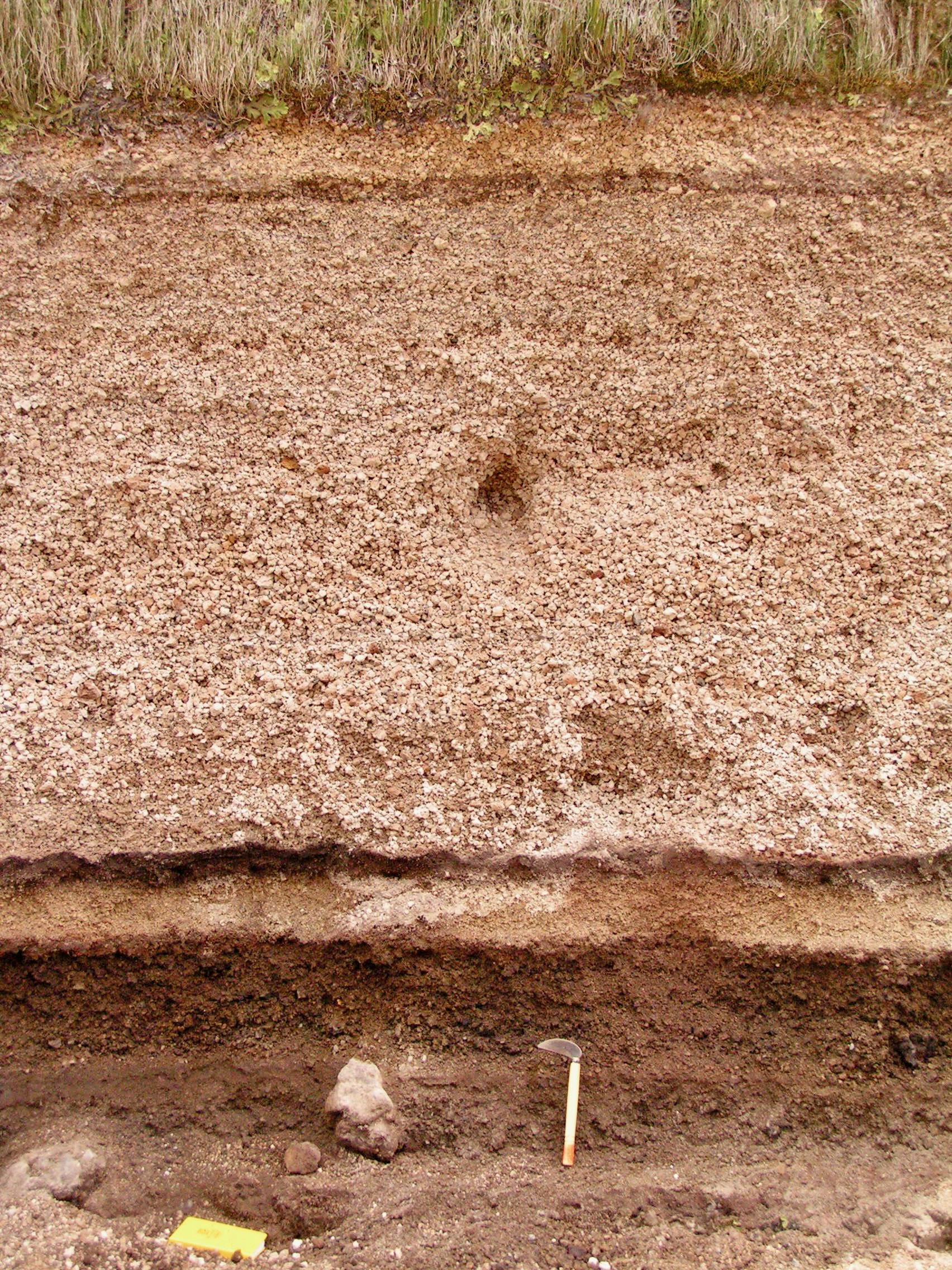
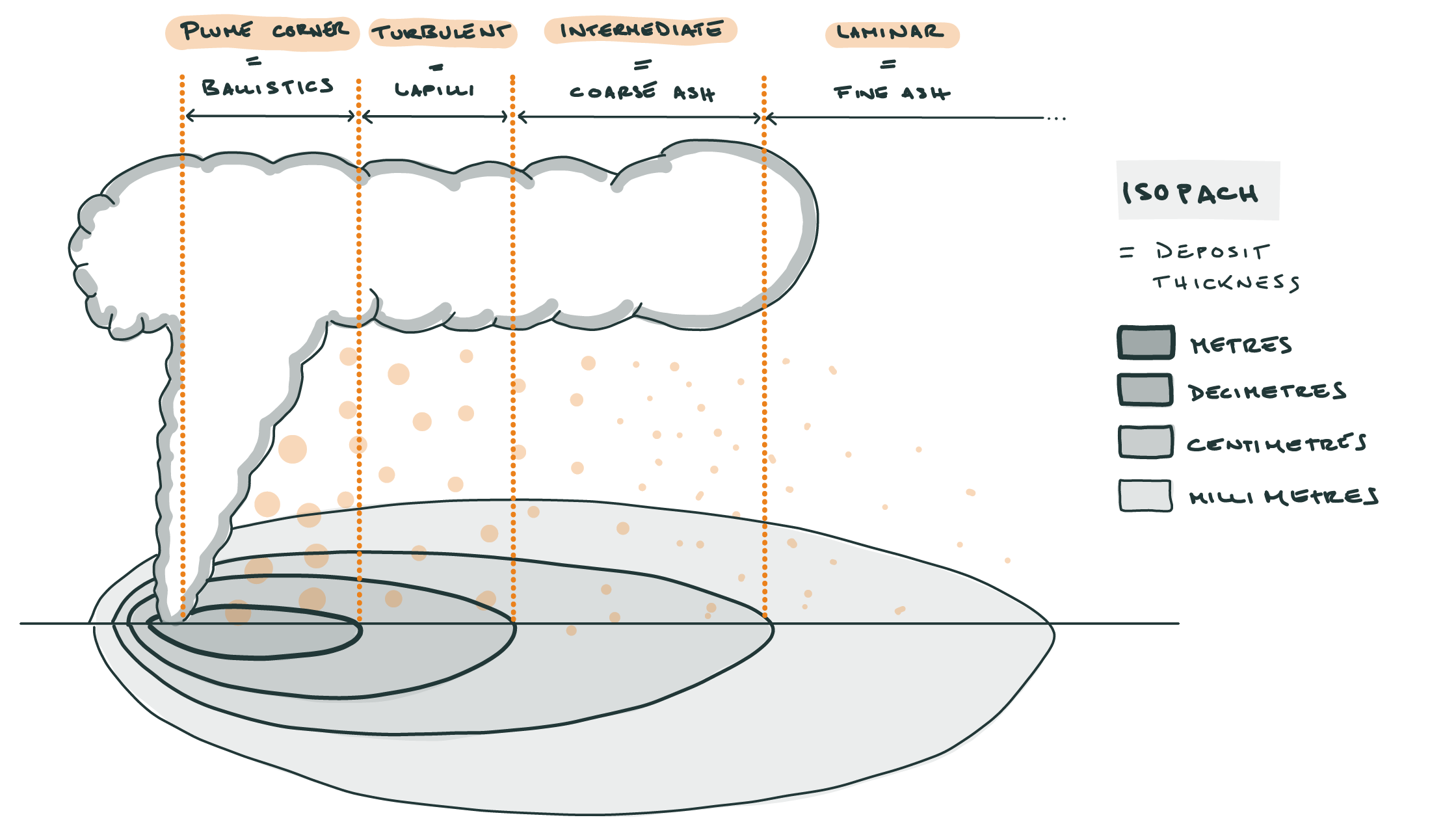
Tephra fallout: Isopach
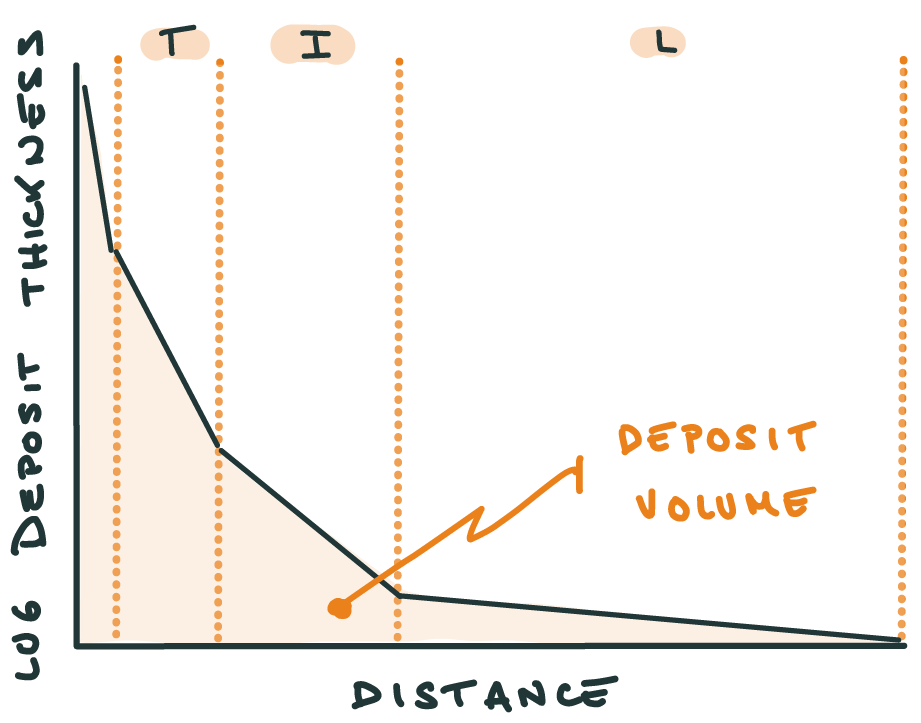
- Isopach = contours of equal thickness
- Sedimentation regime linked to particle size
- Consequence → exponential decrease of deposit thickness
- Deposit volume
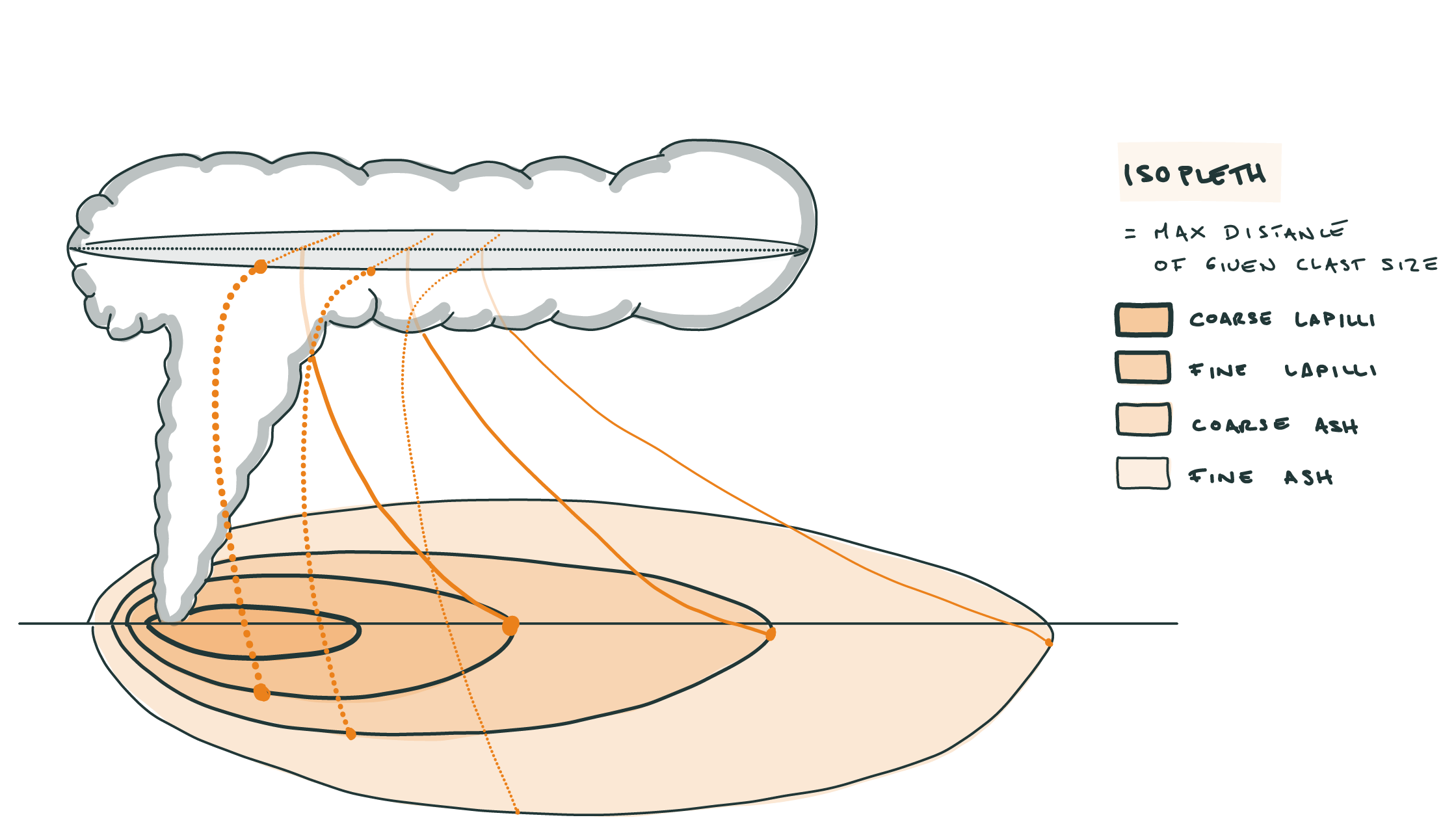
Tephra fallout: Isopleth
- Isopleth = contours the maximum distance reached by a particle of a given size
- Isopleth size/geometry reflect plume height and wind
- Width: Plume height
- Length Wind speed
- Consequence:
- Isopleth geometry → Plume height
Reading tephra fallout deposits
Pyroclastic flow deposits
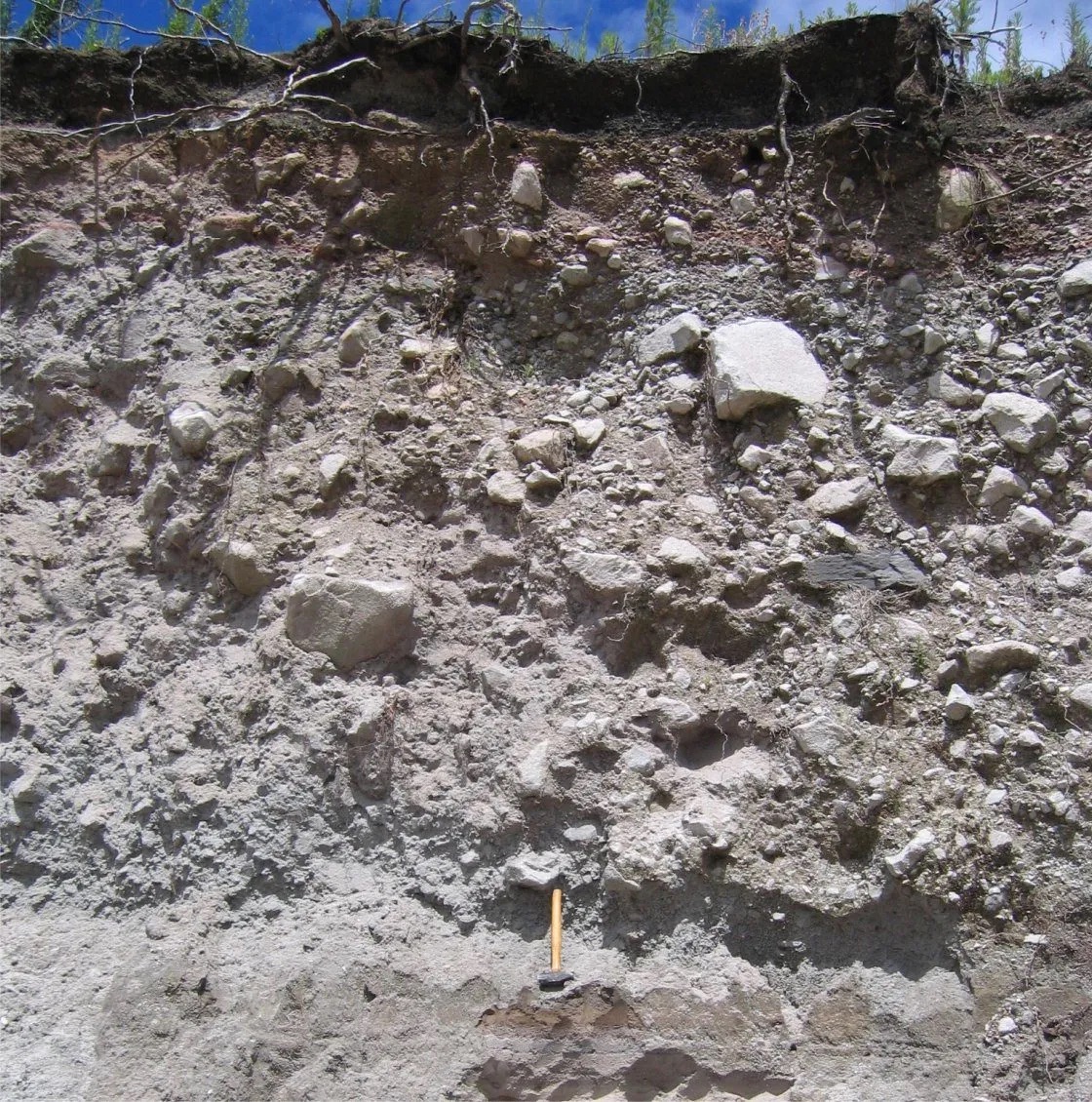
- Deposits
- Massive, poorly-sorted
- Follow topography lows
- Block and ash flows → dome collapse
- Dome fragments, angular
- Short runout
- Pumice flows → instable/collapsing Plinian column
- Pumice rich, usually rounded
- Ignimbrite → welding
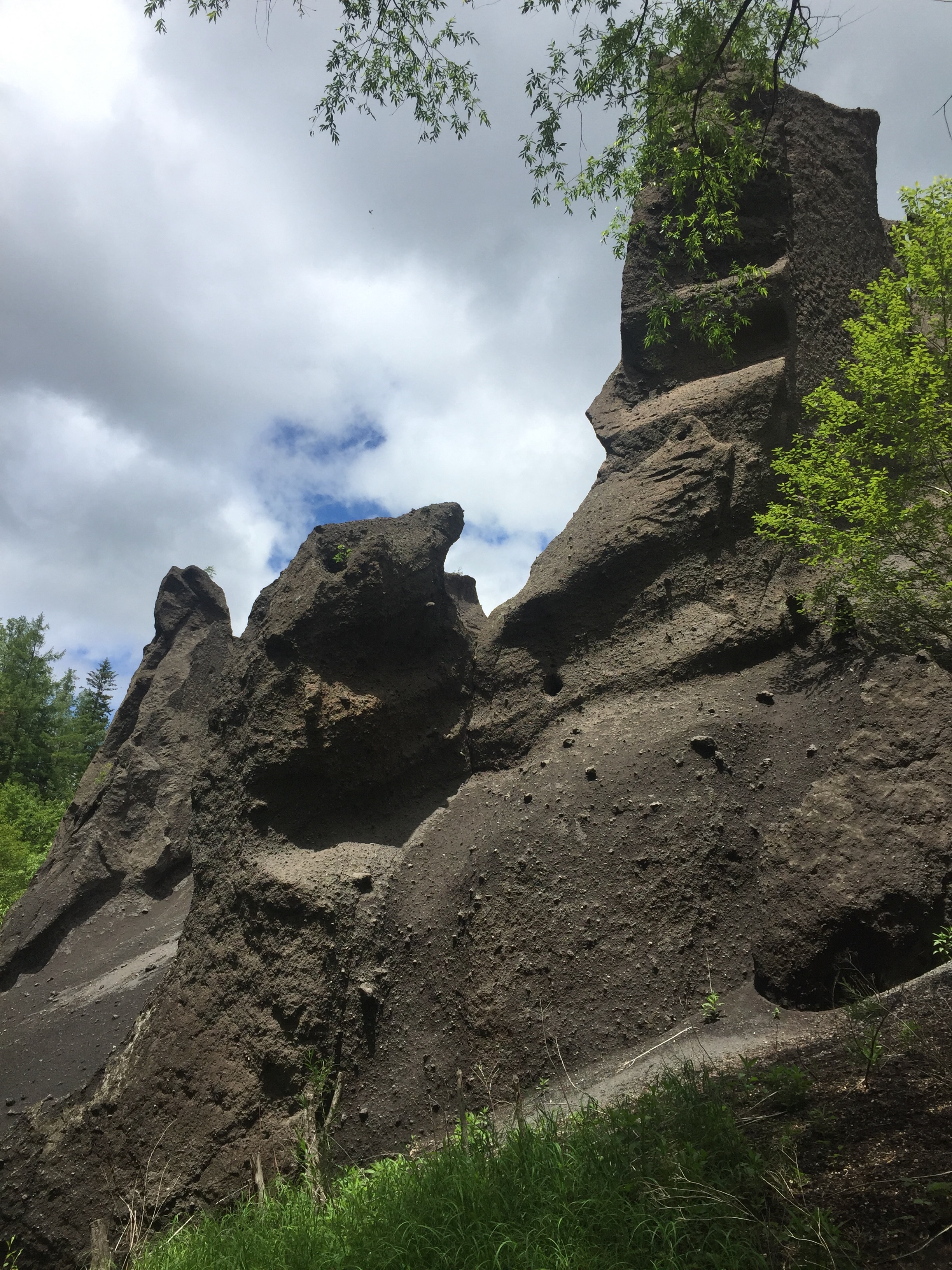
Pyroclastic surge deposits
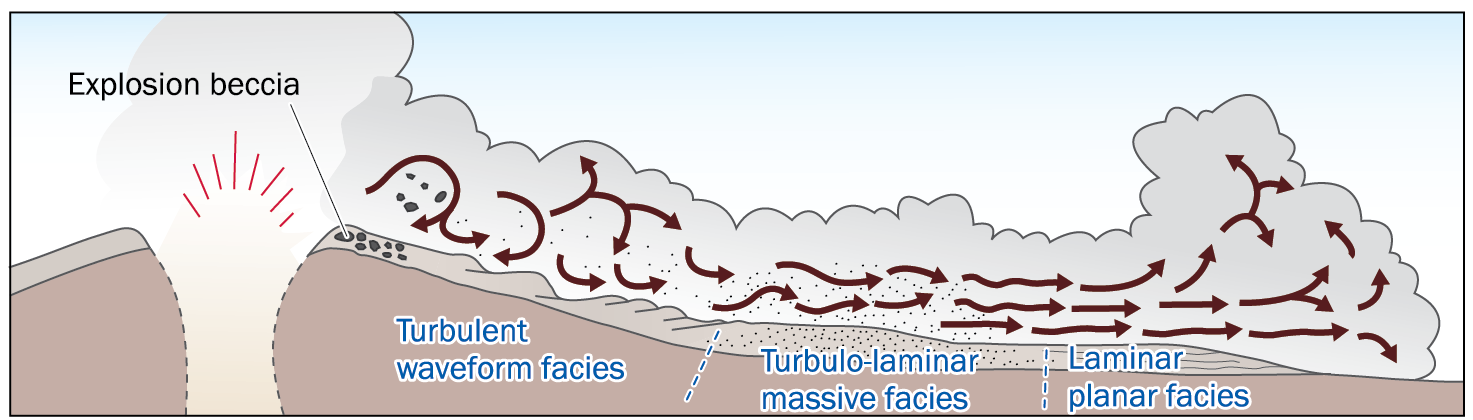
- Deposits
- Wave form/crossbed facies
- Erosional surfaces
- Evolve with distance from the vent
- Poorly-sorted
- Can overcome topography
Comparison of pyroclastic deposits
Relationship to topography
Emplacement dynamics